Mapo-gu, Songpa-gu, Yeongdeungpo-gu, Eunpyeong-gu, Gwangjin-gu, and Others Overflow with Ideas to Reduce Waste
The globe is suffering from heatwaves and heavy rains.
This is the result of failing to protect the Earth. Efforts by Seoul's autonomous districts to manage waste, which plays a major role in environmental destruction, are accelerating.
Waste management holds a very important place in district administration. If waste is not collected for even a day or two, the city comes to a standstill due to the enormous amount of waste generated.
For this reason, Seoul's autonomous districts are continuously upgrading their waste management systems.
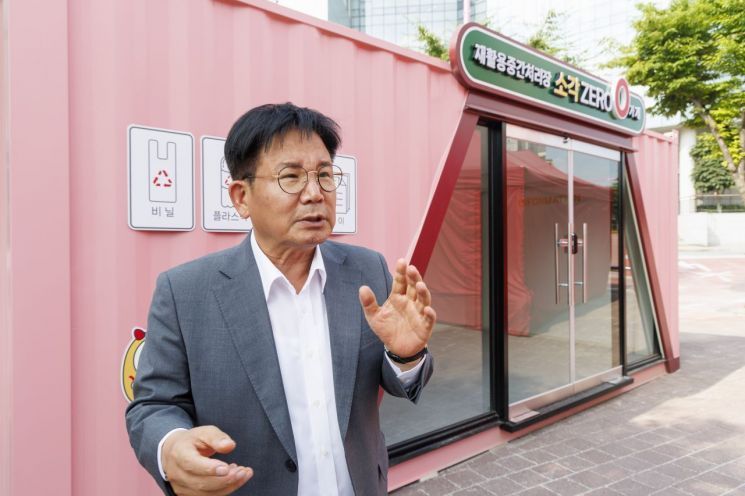
Mapo-gu installs 'Incineration Zero Store' recycling intermediate processing centers to reduce incinerable waste
Mapo-gu (District Mayor Park Gang-su) has increased the number of 'Incineration Zero (ZERO) Stores,' recycling intermediate processing centers installed and operated to reduce incinerable waste, to seven locations?the first among autonomous districts.
Since the pilot operation of the first Incineration Zero Store in March last year, the district announced that by May this year, a total of 11.2 tons of recyclable resources, including 3,743 kg of plastic, 4,478 kg of paper, and 620 kg of cans, were collected at one Incineration Zero Store.
Accordingly, based on the 'Seoul Special City Mapo-gu Waste Reduction Ordinance,' a blueprint for creating a 'city without incineration,' Mapo-gu has officially expanded the Incineration Zero Stores this year, adding six more locations on the 10th of this month.
Following the existing first store (Mapo Central Library), the six newly opened Incineration Zero Stores in July include five public facility types: ▲ Hongdae Red Road R1 ▲ Yonggang-dong Community Center ▲ Mangwon 1-dong Community Center ▲ Mapo Art Center ▲ Mapo Citizens' Sports Center, and one residential type: ▲ Mangwon 1st Daelim Apartment.
The 'Incineration Zero Store' measures 6 meters wide and 3 meters deep, with internal collection bins for recyclables such as vinyl, cans, plastic, and clothing. A compactor for transparent PET bottles and cans is also planned to be installed.
The district plans to assign resource managers at the six public facility-type Incineration Zero Stores to guide proper recycling methods and encourage resident participation by providing compensation such as volume-based waste bags according to the type and amount of waste disposed.
Park Gang-su, Mayor of Mapo-gu, stated, “We must move away from the outdated idea of indiscriminately landfilling and incinerating waste and find a macro solution to properly process and reduce waste.” He added, “I hope the Incineration Zero Stores become opportunities for everyone, from children to residents, to learn and practice correct waste disposal methods, and I earnestly ask all citizens to work together toward the ultimate goal of reducing household waste.”
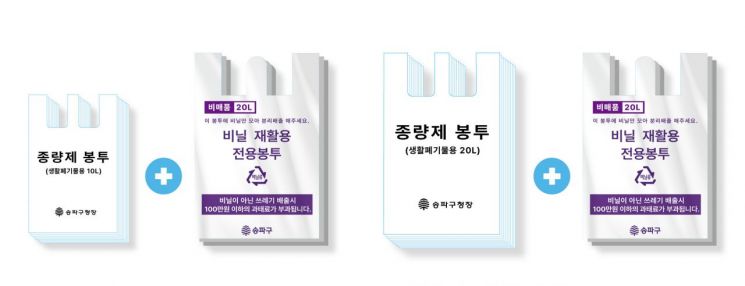
Songpa-gu provides free vinyl recycling bags as a bonus when purchasing volume-based waste bags
Songpa-gu (District Mayor Seo Gang-seok) will provide 'vinyl recycling exclusive bags' (hereafter referred to as exclusive bags) free of charge when purchasing volume-based waste bags starting September 23.
Currently, many people throw away waste vinyl in volume-based waste bags due to lack of knowledge or inconvenience in separating them, resulting in low recycling rates.
In fact, the amount of waste vinyl generated in Seoul was 730 tons per day in 2022, of which 55%, or 402 tons, was disposed of as general waste and incinerated or landfilled.
Therefore, the district will supply self-produced non-sale exclusive bags combined with volume-based waste bags to sales outlets. When purchasing volume-based waste bags, exclusive bags will be naturally included, improving convenience for both businesses and households to separate and dispose of waste vinyl.
The exclusive bags will be provided as three pieces (20ℓ) combined with bundled products of 10ℓ or 20ℓ volume-based waste bags commonly used in households.
The product will be sequentially supplied to volume-based waste bag sales outlets within the district starting September 23 and will be available for purchase by anyone.
Seoul City plans to fully introduce the district's improved distribution method to all 25 autonomous districts starting next year. The district explained that this decision was made because it is suitable for reducing the budget for exclusive bag distribution and addressing misdelivery issues.
Until December this year, the pilot project will also expand the items for vinyl separation disposal. All vinyl, including ▲ product packaging such as snack bags ▲ delivery vinyl with stickers ▲ thermal insulation packs ▲ onion nets, are subject to separate disposal. Severely contaminated vinyl must be cleaned before disposal. However, food packaging wrap should be disposed of in volume-based waste bags.
The district distributed vinyl recycling exclusive bags to 10,004 high-volume waste businesses such as restaurants, cafes, bakeries, pubs, chicken specialty stores, convenience stores, and lodging facilities in August and is conducting focused management and promotion for vinyl separation disposal.
Seo Gang-seok, Mayor of Songpa-gu, said, “We are implementing various policies to activate recycling in preparation for the ban on direct landfill of household waste in 2026,” and added, “We ask residents to actively participate in vinyl separation disposal.”
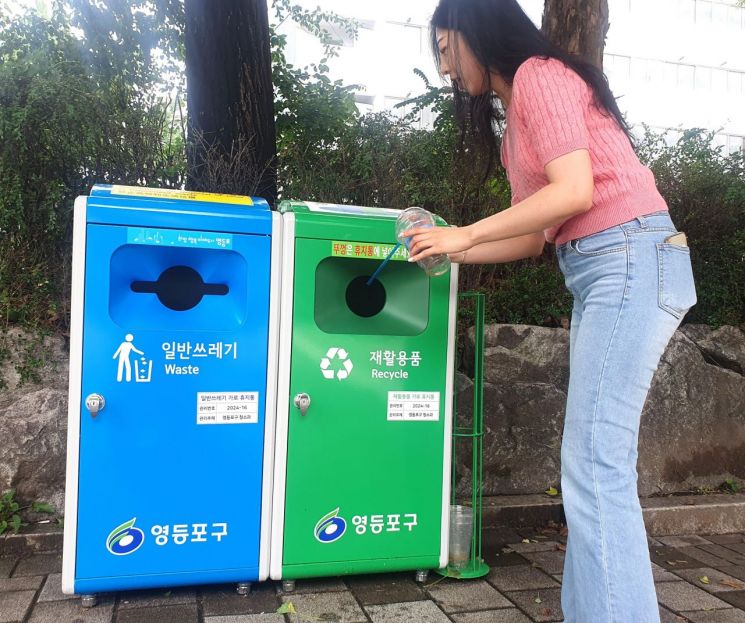
Yeongdeungpo-gu installs 42 street trash bins equipped with dedicated collection containers for disposable cups
Yeongdeungpo-gu (District Mayor Choi Ho-kwon) announced that it has expanded the installation of 42 'street trash bins' equipped with 'dedicated collection containers for disposable cups' to promote resource recycling and improve urban aesthetics.
The 'street trash bins' with 'dedicated collection containers for disposable cups' were first introduced last year. They feature a long cylindrical container attached next to the existing street trash bins specifically for disposable cups. This allows stacking a large number of disposable cups neatly, preventing scattered takeout cups and contributing to improving the city's appearance.
Especially as the number of disposable cups discarded on the streets increases, these street trash bins are playing a significant role.
The newly added 21 locations are places with high foot traffic but frequent illegal dumping due to lack of trash bins, mainly bus stops, subway stations, and restaurant-dense areas.
This enables people to easily dispose of takeout disposable cups while walking or just before boarding a bus. Additionally, the bins are painted in noticeable colors to distinguish between general waste and recyclables, enhancing convenience for waste separation. Stickers explaining 'How to dispose of takeout disposable cups' are attached at the top of the entrance to guide proper separation.
Furthermore, the district has designated personnel to thoroughly manage the street trash bins, regularly cleaning the 'dedicated collection containers for disposable cups' to prevent odors and insect infestations, thereby creating a pleasant walking environment.
Choi Ho-kwon, Mayor of Yeongdeungpo-gu, said, “We will continue to expand the replacement and installation of street trash bins to provide convenience to residents and create a clean urban environment,” adding, “By carefully observing changes in residents' needs and inconveniences like with these newly installed bins, we will take another step toward making Yeongdeungpo a city where everyone wants to live, a young city.”
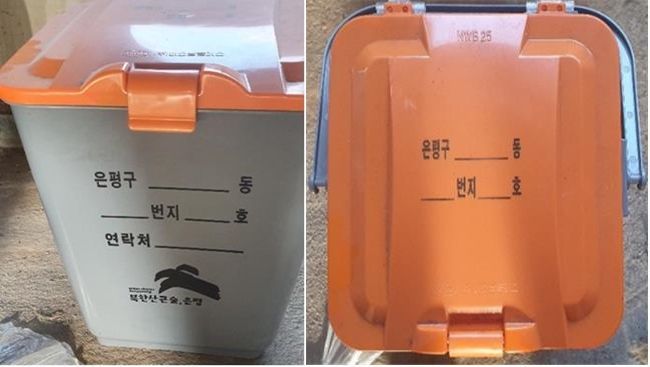
Eunpyeong-gu receives positive feedback for free distribution of household food waste storage containers
Eunpyeong-gu (District Mayor Kim Mi-kyung) is temporarily providing household food waste storage containers free of charge until December 31.
The application targets are single-family houses and apartment complexes with fewer than 20 households located in Eunpyeong-gu. Apartment complexes with 20 or more households are excluded because they must use dedicated food waste collection containers and dispose of waste using a payment certificate system.
Residents wishing to receive storage containers can visit their local community service center to fill out an application form and receive the containers.
Single-family households can receive one 10ℓ container per household, and apartment complexes with fewer than 20 households can receive up to two 25ℓ containers per building. However, if the supply runs out within the period, the distribution will switch to paid sales.
The district has expanded the free distribution project from two neighborhoods to all 16 neighborhoods and will continue until the end of the year. Satisfaction and improvement surveys will be conducted to reflect feedback in the 2025 policy.
Kim Mi-kyung, Mayor of Eunpyeong-gu, said, “Recently, wild animals such as cats, crows, and pigeons have damaged food waste bags, causing many complaints about odors and difficulties in collection.” She added, “Given Eunpyeong-gu's characteristics as a densely populated residential area, the free distribution of household food waste storage containers is expected to greatly help improve neighborhood aesthetics and odor issues, so we ask for much interest.”
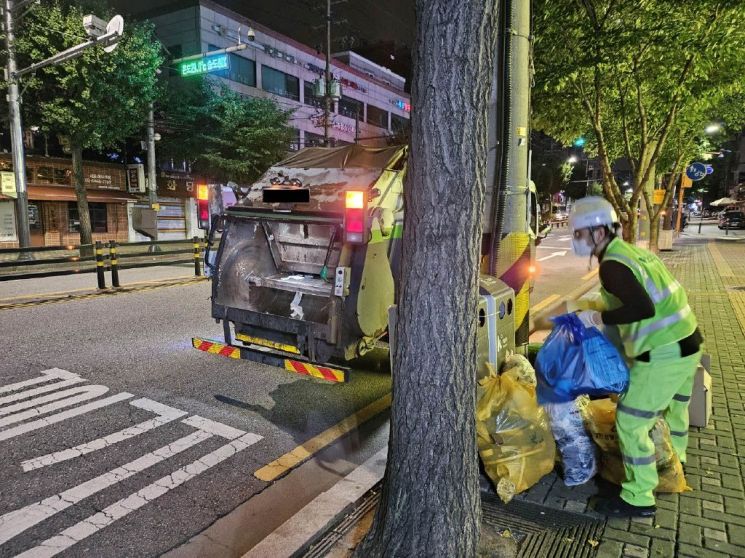
Gwangjin-gu's six-day-a-week household waste collection system selected as Seoul City's best autonomous district case for proactive administration in the second half of 2024
Gwangjin-gu (District Mayor Kim Kyung-ho)'s 'six-day-a-week household waste collection system' project was selected as the best case in the autonomous district category in Seoul City's '2024 Second Half Proactive Administration Excellence Case Selection.' Gwangjin-gu is the only autonomous district selected as the best case for proactive administration in the second half of this year.
The city selects excellent cases of proactive administration annually from city headquarters, autonomous districts, and local public institutions to spread a culture of proactive administration and discover and disseminate best practices.
This year's second half evaluation selected one best case, two excellent cases, and four encouragement awards (three for public corporations and public institutions) based on five indicators: ▲ citizen perception ▲ proactiveness ▲ importance and difficulty ▲ dissemination and sustainability ▲ creativity and expertise, through document review and citizen voting.
Gwangjin-gu introduced the six-day-a-week household waste collection system in January this year to resolve residents' inconvenience caused by the previous thrice-weekly collection. It also unified the recycling collection system, which was divided between direct management (6 neighborhoods) and contractors (9 neighborhoods), and improved collection routes efficiently.
As a result, confusion among residents caused by different collection days in each neighborhood was greatly reduced, and the innovative collection system was recognized for contributing to creating a clean urban environment, leading to its selection as the best case for proactive administration in the second half of this year.
Notably, Gwangjin-gu's 'six-day-a-week household waste collection system' project received the highest number of votes among 12 exemplary autonomous district cases in the Seoul City M-voting citizen poll conducted last month, demonstrating high satisfaction among Gwangjin-gu residents.
Kim Kyung-ho, Mayor of Gwangjin-gu, said, “This selection as Seoul City's best case for proactive administration is the result of Gwangjin-gu's continuous efforts to resolve residents' inconveniences and the active cooperation of all Gwangjin residents.” He added, “Going forward, Gwangjin-gu will actively discover and improve lifestyle-oriented projects that residents can feel based on communication.”
© The Asia Business Daily(www.asiae.co.kr). All rights reserved.



















