Zimbabwe Decides to Cull 200 Elephants
Namibia Also Utilizes Wildlife for Food
Following Namibia, Zimbabwe has also decided to cull elephants to supply food due to severe drought.
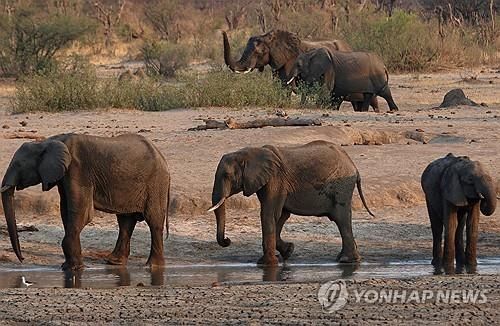
On the 18th (local time), UK Sky News reported that Zimbabwe's wildlife authorities plan to cull 200 wild elephants to provide food to communities suffering from the worst drought in 40 years. Tinashe Pharaoh, spokesperson for Zimbabwe National Parks and Wildlife Management Authority, stated, "Hunting permits for elephants will be issued in the Hwange, Umvire, Choloshyo, and Chirezi areas, and the authorities will also participate in culling some individuals."
Pharaoh further explained, "Once the hunting permits are issued, the measures will begin," adding, "Elephant meat will be distributed to communities affected by the drought." He also noted, "Zimbabwe's elephant population reaches 84,000, so 200 elephants are just a drop in the ocean."
In African countries, culling or allowing hunting is often decided to maintain wildlife populations at appropriate levels or for relief purposes. However, Zimbabwe's decision to take such measures is the first in 36 years since 1988.
Sitembiso Nyoni, Zimbabwe's Minister of Environment, explained that the parliament decided last week to implement a nationwide elephant culling program. Minister Nyoni said, "In reality, Zimbabwe has more elephants than we need and more than our forests can sustain," adding, "Like Namibia did, we are preparing to cull elephants and mobilize women to dry and package the meat so it can be supplied to some communities in need of protein."
Minister Nyoni cited Hwange, a dry region in western Zimbabwe, as an example. He explained that although more than 45,000 elephants currently live in this area, the ecosystem can only support about 15,000. In fact, Zimbabwe Parks Authority reported that at least 100 elephants died last year in Hwange due to drought continuing until December, when the dry season would normally end and the rainy season begin.
Countries in southern Africa, including Namibia and Zimbabwe, have been experiencing severe drought with below-average rainfall since early this year due to the effects of the El Ni?o phenomenon. Sky News estimated that the population suffering from food shortages caused by this drought, considered the worst in decades, could reach 68 million.
Earlier, the Namibian government announced plans last month to cull a total of 723 wild animals?including 83 elephants, 30 hippos, 60 buffaloes, 50 impalas, 100 nyus, 300 zebras, and 100 eland antelopes?and distribute the meat to residents facing a food crisis.
The government hired professional hunters to hunt the wildlife, and the meat obtained was allocated to relief programs. At that time, Namibia's Ministry of Environment stated, "This measure also complies with the constitutional obligation to use natural resources for the benefit of the Namibian people."
© The Asia Business Daily(www.asiae.co.kr). All rights reserved.

















