Ministry of Land, Finalizing Related Research
Includes Enforcement Decree of Living Logistics Service Act
Criticism Over PM Omission Creating 'Blind Spot'
As violent crimes centered around delivery riders continue to occur, government efforts to restrict violent criminals from working in the delivery industry have entered the final stages. However, there are concerns that blind spots in crime prevention remain, as personal mobility devices (PM), which have recently emerged in new forms, are excluded from the sanctions.
According to the Ministry of Land, Infrastructure and Transport (MOLIT) on the 23rd, the related research aimed at establishing detailed regulations to restrict the hiring of delivery workers with records of violent crimes such as sex offenses is nearing completion. After the partial amendment to the Act on the Development of Living Logistics Service Industry passed the National Assembly in December last year, MOLIT commissioned a research project in May this year titled "Research on Detailed Regulations to Restrict Delivery Industry Employment of Sex Offenders and Violent Criminals" and began related studies.
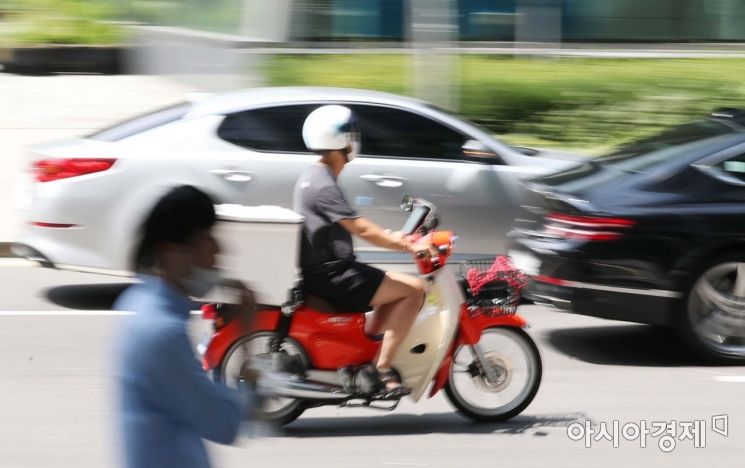
Based on the results of this research, MOLIT plans to mandate that delivery platform companies and local delivery agencies (hubs) must check the criminal records of job applicants when hiring delivery workers. This requirement will be included in the enforcement decree of the Living Logistics Service Act. If delivery platform companies or local delivery agencies fail to conduct criminal record checks, they will be subject to fines of up to 5 million KRW.
This measure comes in response to growing public anxiety following a series of violent crimes involving delivery workers. These crimes have targeted women living alone, exploiting the relatively easy access delivery workers have to their homes. For example, on the 18th, a 20-year-old delivery worker in Seodaemun-gu, Seoul, was arrested for sexually assaulting a woman he did not know and attempting to break into the home of another woman living alone with a weapon a few days later. In May last year, in Daegu, a delivery worker chased a woman living alone and attempted sexual assault; when the woman's boyfriend intervened, the delivery worker wielded a weapon, leaving the man unconscious.
According to the National Police Agency, there were 119 cases of residential intrusion sex crimes last year, a decrease from 226 cases the previous year, but still well over 100 cases. Over the past five years, residential intrusion sex crimes have consistently exceeded 200 cases annually: 271 in 2019, 233 in 2020, 268 in 2021, and 226 in 2022.
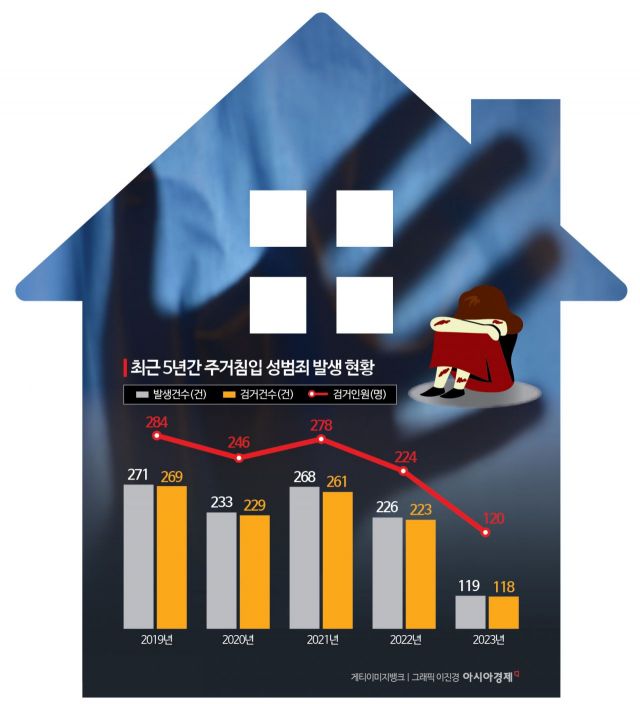
However, delivery methods using PMs such as electric kickboards are excluded from the scope of the law, leaving blind spots. Recently, it has become common to freely deliver using personal mobility devices like electric kickboards and bicycles during spare time, but these modes of transport are not covered under the current Living Logistics Service Act, creating a legal gap. Article 2 of the Living Logistics Service Act defines "living logistics services" as services that collect, package, store, and sort small and lightweight cargo upon consumer request, and deliver directly using two-wheeled motor vehicles or mediate such services through information and communication networks.
There are also concerns that the bill might excessively restrict the freedom to choose one's occupation. The Constitution guarantees freedom of occupational choice but allows restrictions by law if there are sufficient public interest reasons.
A MOLIT official stated, "Whether delivery workers contract directly with delivery platforms or work through local delivery agencies, all delivery workers must submit criminal record checks, although the procedures differ. However, under the current Living Logistics Service Act, modes of transport other than two-wheeled motor vehicles are excluded from sanctions, which appears to be a comprehensive consideration of the risks associated with the transport means and the necessity of regulation." The official added, "Since the sanctions apply only to new entrants into the delivery industry and not to those already working as delivery workers, concerns about infringing on freedom of occupational choice are excessive."
© The Asia Business Daily(www.asiae.co.kr). All rights reserved.


















