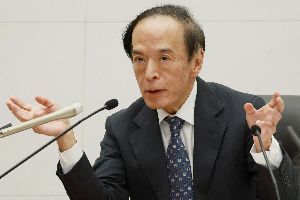
Japan's central bank, the Bank of Japan (BOJ), on the 20th kept its benchmark interest rate unchanged as expected by the market.
The BOJ held its monetary policy meeting on the day and decided to maintain the current benchmark interest rate at 0.25% without any adjustment. Previously, the BOJ raised the benchmark interest rate for the first time in 17 years in March, and then again in the July meeting, increasing it from 0~0.1% to 0.25%, so the prevailing expectation was that it would hold steady this time.
In July, the BOJ decided to raise interest rates as the yen's value fell to its lowest level in 37 years and 6 months since December 1986, during the bubble economy period. However, after the rate hike, concerns about a U.S. economic downturn arose, causing the yen to strengthen against the dollar and stock prices to plunge in early August, leading to volatility in the financial markets.
However, the BOJ appears likely to raise rates further within this year. BOJ Policy Board member Naoki Tamura stated in a lecture on the 12th that if economic and inflation trends align with the BOJ's outlook, the benchmark interest rate should be raised "to at least around 1%."
While the United States has entered a rate-cutting cycle by implementing a 'big cut,' lowering the benchmark interest rate by 0.5 percentage points from the previous 5.25~5.50% to 4.75~5.0%, Japan is taking the opposite path. Japan has pursued ultra-low interest rates and quantitative easing policies to overcome the long-standing deflation it has experienced, and with recent confirmation of a moderate inflation trend, it is now attempting to raise interest rates.
© The Asia Business Daily(www.asiae.co.kr). All rights reserved.

















