The harvesting of pine mushrooms is expected to intensify from the end of this month. Unlike the low growth volume due to the recent heatwave, it is anticipated that the amount of pine mushrooms that can be harvested will increase from the end of this month when the temperature difference between day and night becomes greater.
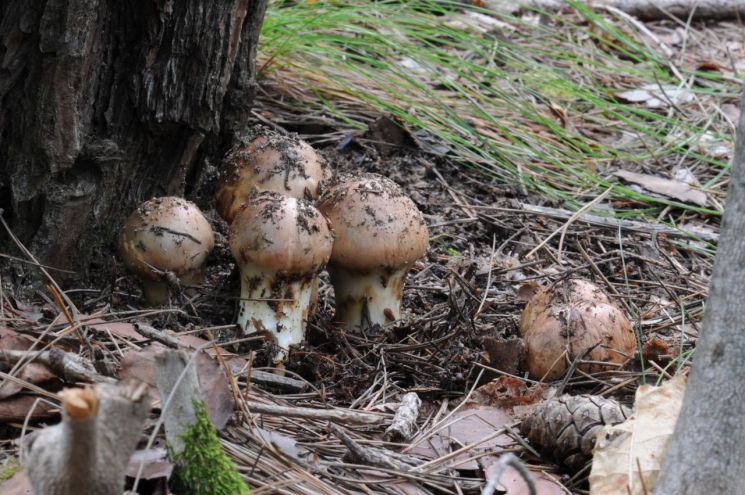
According to the Korea Forest Service on the 20th, pine mushrooms cannot be artificially cultivated and can only be harvested from the wild. In Korea, they are mainly produced in mountainous areas such as Yangyang-gun and Inje-gun in Gangwon-do, and Uljin-gun, Bonghwa-gun, and Yeongdeok-gun in Gyeongsangbuk-do.
Typically, pine mushrooms can be harvested between late August and late October. In particular, the most active harvesting period is known to be from late September to early October, when the daytime temperature is 24-25°C and the nighttime temperature is 10-14°C, showing a large temperature difference.
In fact, when comparing the pine mushroom auction volumes over the past three years, production after mid-September accounts for more than 70% of the total.
The annual pine mushroom auction volumes by the Korea Forest Cooperative (based on after September 16) were 58.6 tons (71.4%) in 2021, 49.5 tons (74.2%) in 2022, and 164.3 tons (99.8%) in 2023.
Last year, the high temperatures persisted until mid-September, resulting in low pine mushroom production, but after mid-September, the growth environment was maintained, leading to a sharp increase in production.
This year, with the heatwave continuing through the Chuseok holiday, considering the low pine mushroom growth volume until recently, there is reason to expect an increase in pine mushroom production after the end of this month.
Separately, the National Institute of Forest Science has been conducting research on the artificial production of pine mushrooms since 2001 to expand supply. In this process, the institute succeeded in artificially cultivating a total of 42 pine mushrooms using pine seedlings inoculated with pine mushroom spores in experimental forests.
Park Eun-sik, Director of the Forest Industry Policy Bureau at the Korea Forest Service, said, “The Korea Forest Service supports 20-40% of the budget for the ‘Pine Mushroom Forest Management’ project to stabilize the income of households harvesting pine mushrooms and to create a growth environment for pine mushrooms. We will promote various policies to increase pine mushroom production so that the public can fully enjoy pine mushrooms, which are renowned for their aroma and taste.”
© The Asia Business Daily(www.asiae.co.kr). All rights reserved.
![Clutching a Stolen Dior Bag, Saying "I Hate Being Poor but Real"... The Grotesque Con of a "Human Knockoff" [Slate]](https://cwcontent.asiae.co.kr/asiaresize/183/2026021902243444107_1771435474.jpg)











