Subway, Bus, and Gas Price Hikes Announced for Second Half of Year
Concerns Raised Over Inflation and Domestic Demand Slump
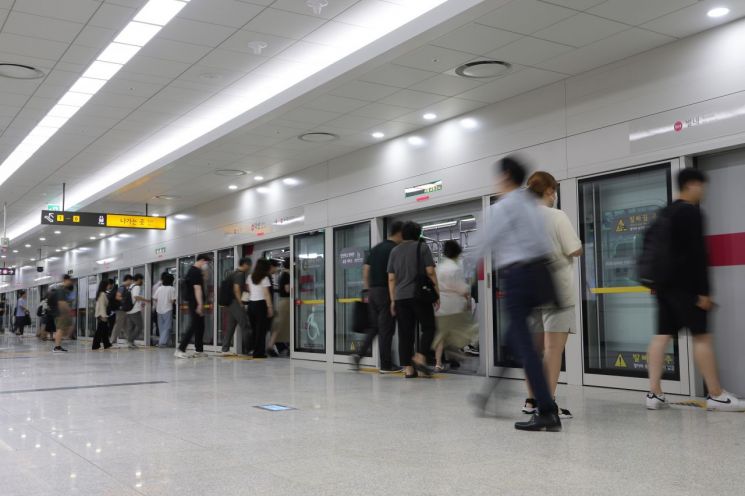 An increase in public utility fees, including Seoul subway fares, is expected in the second half of the year. The photo shows Dasan Station on Subway Line 8 in Namyangju-si, Gyeonggi-do, on the morning of August 12.
 [Photo by Yonhap News]
As the recent consumer price inflation rate has dropped to 2%, showing signs of stabilization, there are expectations that the government and public institutions will raise public utility fees that have been frozen until now.
According to related ministries on the 19th, Seoul City is in discussions with Gyeonggi Province, Incheon City, and the Ministry of Land, Infrastructure and Transport regarding subway fare increases. Initially, Seoul City planned to raise subway fares by 300 won, implementing the increase in two phases last October and in the second half of this year. Although the government urged to delay the fare hike, Seoul has postponed it, but the prevailing view is that further delays will be difficult. This is because the cumulative deficit of the Seoul subway system reached 17.68 trillion won last year, swelling like a snowball.
Bus fares in Gyeonggi Province are also expected to rise starting next year. Earlier this month, labor and management of bus companies agreed to a 7% wage increase for both quasi-public and private routes, making a bus fare hike inevitable to alleviate the financial burden on bus operators caused by the wage increase. The most recent increase in Gyeonggi bus fares was in September 2019. Considering that fares have typically been raised every 4 to 5 years and the current wage increase rate, a decision on fare hikes is expected to be made in the first half of next year.
Gas fees are also expected to rise soon. Korea Gas Corporation already raised residential city gas prices last month, but there are expectations that additional increases will be unavoidable to resolve the issue of rising unpaid bills.
The announcement of public utility fee hikes in the second half of the year is raising concerns about inflation and sluggish domestic demand. Some argue that even if fare increases are accepted, measures to stimulate domestic consumption and expand support for vulnerable groups must follow.
© The Asia Business Daily(www.asiae.co.kr). All rights reserved.
![Clutching a Stolen Dior Bag, Saying "I Hate Being Poor but Real"... The Grotesque Con of a "Human Knockoff" [Slate]](https://cwcontent.asiae.co.kr/asiaresize/183/2026021902243444107_1771435474.jpg)
















