56% of Coastal Vessel Crew Are Over 60
"Long-term Boarding Incentives Needed for Young Seafarers"
As the aging of the workforce engaged in the marine and fisheries industry becomes more severe, the entire budget related to promoting the employment of young seafarers has been cut. The Ministry of Oceans and Fisheries (MOF) considers securing even a small amount of related budget crucial and plans to persuade the National Assembly during the review process.
According to related ministries on the 20th, the Ministry of Economy and Finance cut the entire budget for the Seafarer Savings Deduction requested by the MOF during the process of finalizing the marine and fisheries sector budget. Previously, the MOF requested a budget of 400 million KRW for the deduction project to support lump-sum savings upon long-term boarding as one of the measures to attract young seafarers. This was because, when announcing the seafarer policy implementation plan last year, it was judged through government consultations that the project needed to be promoted.
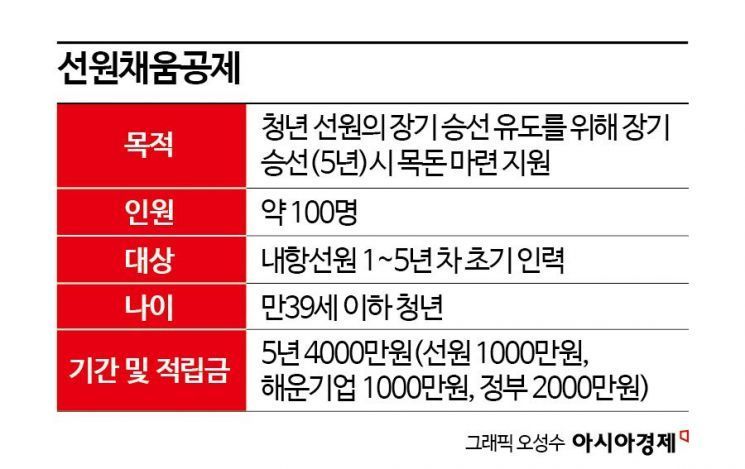
The MOF is hopeful to secure the budget during the National Assembly review process to promote the hiring of young seafarers, as the shortage of marine personnel has become chronic. A MOF official explained, “As part of last year’s seafarer job measures, it was announced that this project would be launched from next year,” adding, “Since such projects are necessary to maintain seafarers’ jobs, we plan to persuade members of the standing committee during the review process.”
The Seafarer Savings Deduction is a project where young seafarers working on domestic coastal vessels accumulate an annual deduction of 2 million KRW, and combined support from shipping companies and the government provides a performance reward of up to 40 million KRW after five years. The MOF is targeting about 100 young seafarers under the age of 39 initially. If a young seafarer saves 2 million KRW annually, the shipping company and the government each support 2 million KRW and 4 million KRW respectively, allowing the seafarer to receive 24 million KRW plus interest after three years and 40 million KRW after five years.
The MOF emphasized the need to strengthen incentives to secure young personnel in response to the aging problem of seafarers. In particular, a significant portion of navigational personnel on coastal vessels, where the average monthly wage is relatively low, are elderly. According to MOF statistics, 56% of seafarers on coastal vessels are aged 60 or older. Another MOF official pointed out, “If aging worsens over time, the imbalance in the supply and demand of national seafarers could become a problem for the marine industry.” Especially, since wages on coastal vessels are not high compared to ocean-going vessels, the disruption in the influx of young personnel is a more serious issue.
A MOF official said, “Since the Ministry of Economy and Finance decided not to include the related budget due to the termination of the Naeil Chaeum Deduction project targeting youth, it was probably difficult to promote policies specialized only for seafarers in terms of policy consistency,” but added, “If the aging of marine personnel prolongs, there could be difficulties in manpower supply in the future.”
© The Asia Business Daily(www.asiae.co.kr). All rights reserved.

















