Using the Joseonjok Name for Chinese National Heritage Registration
China's Intangible Cultural Heritage Law Emphasizes "Excellence of the Zhonghua Minzu"
Utilized in Advertising for Chinese Bibimbap Franchise
Amid China's ongoing 'cultural engineering' efforts claiming Korean representative cultural elements such as Hanbok and Kimchi as the culture of the Chinese Joseonjok (ethnic Koreans in China), it has recently come to light that Jilin Province in China designated the cooking technique of stone pot bibimbap as a cultural heritage three years ago. On the 18th, Hankook Ilbo reported that the Jilin provincial government in northeastern China approved 65 items as the 5th batch of provincial-level intangible cultural heritage on its official website in December 2021, including the stone pot bibimbap cooking method in the list of regional intangible cultural heritage.
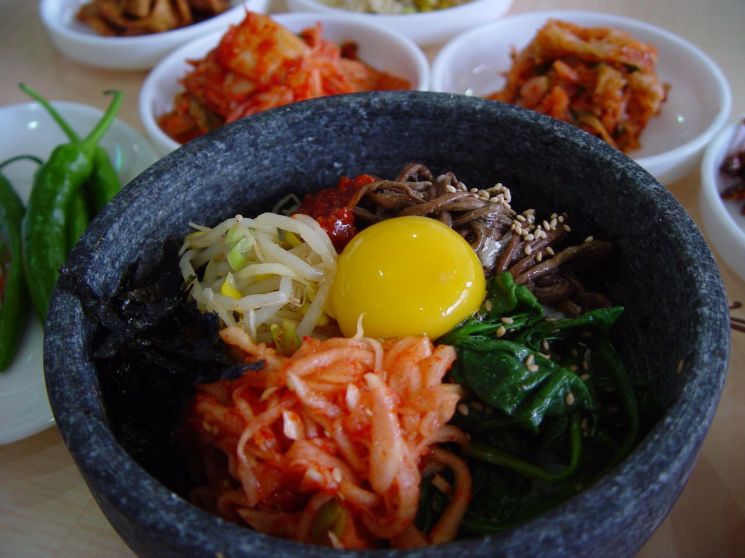 Amid China's ongoing "cultural engineering" campaign claiming Korean representative cultural elements such as hanbok and kimchi as the culture of the ethnic Korean minority in China, it has recently come to light that Jilin Province in China designated the stone pot bibimbap cooking technique as a cultural heritage three years ago.
 [Photo source=Pixabay]
According to the Hankook Ilbo report, the recommendation to designate stone pot bibimbap as a provincial-level cultural heritage came from the Yanbian Korean Autonomous Prefecture within Jilin Province. Rice cake cooking methods such as Garaetteok were also registered as intangible cultural heritage together. The document released by China at the time listed the item as "Joseonjok stone pot bibimbap production skill (cooking technique)." A bigger issue is that under the Intangible Cultural Heritage Law enacted by the Chinese government in 2011, local governments can apply to the central government for the elevation of provincial-level intangible cultural heritage to national-level intangible cultural heritage. Once designated as a national intangible cultural heritage, the possibility of becoming a UNESCO Intangible Cultural Heritage increases. In fact, China changed our Nongakmu (농악무, traditional Korean farmers' music and dance) to "Joseonjok Nongakmu" and designated it as a national intangible cultural heritage in 2008, then registered it as a UNESCO Intangible Cultural Heritage in 2009.
The government is reported to have been unaware of this fact, and currently, stone pot bibimbap is not registered as a national intangible heritage of Korea. Only Jeonju bibimbap was designated as an intangible heritage of Jeonbuk Province in 2008. The Cultural Heritage Administration told Hankook Ilbo, "Whether to promote the registration of intangible heritage of the Joseonjok is a matter for the Chinese government to decide," but added, "If China applies for the Joseonjok intangible heritage to be recognized as a UNESCO Intangible Cultural Heritage of Humanity, we will review whether there is an accurate understanding of the ethnic origin and historicity of our people and respond accordingly."
'Joseonjok' Labeling and China's Cultural Engineering to Claim Heritage, Official Protests Difficult
According to the 'Korean Food Culture Dictionary' created by the Korea Cultural Centers Federation under the Ministry of Culture, Sports and Tourism, stone pot bibimbap is a combination of a Gopdol (curved stone) pot and bibimbap. The Gopdol pot was originally a vessel favored by the aristocracy and wealthy classes since the Baekje period. Gopdol is a unique type of stone called 'Gopdol,' a kind of stepping stone found only in Haeju, Hwanghae Province, and Jangsu, Jeonbuk Province, and was considered superior to cast iron or copper pots. On the other hand, Baidu Encyclopedia, China's largest portal site, describes stone pot bibimbap as "a rice dish unique to the northeastern Chinese provinces of Heilongjiang, Jilin, and Liaoning, including the Korean Peninsula." Among these, a stone pot bibimbap franchise in China even promotes stone pot bibimbap by stating, "The Joseonjok stone pot bibimbap production technique is an intangible cultural heritage of Jilin Province."
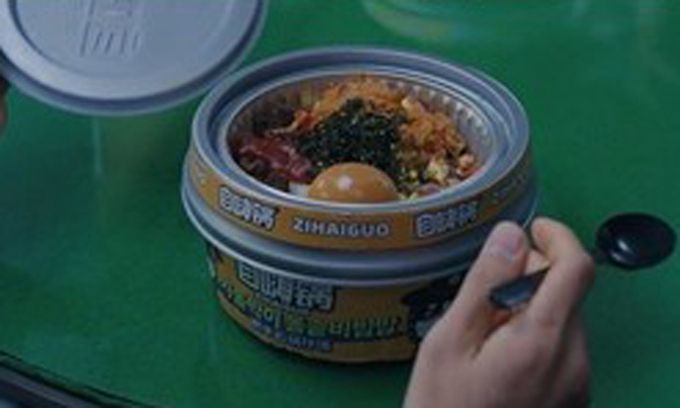 Previously, a Chinese company's bibimbap appeared as product placement (PPL) in a domestic Korean drama, sparking controversy. At the time, Professor Seokyung Deok from Sungshin Women's University expressed concern, saying, "It could potentially cause overseas viewers to misunderstand bibimbap as Chinese food."
 [Photo by tvN drama 'Vincenzo']
Previously, a domestic drama featured bibimbap made by a Chinese company as product placement (PPL), sparking controversy. At the time, Professor Seo Kyung-deok of Sungshin Women's University expressed concern, saying, "It could easily cause overseas viewers to misunderstand bibimbap as Chinese food." He also emphasized, "Recently, China has been making absurd claims that Kimchi, Hanbok, Pansori, and other cultural elements are 'their own culture.'" He pointed out, "Bibimbap served in disposable containers with Chinese writing could easily mislead overseas viewers into thinking it is Chinese food."
Meanwhile, China's 'cultural engineering' efforts are not solely aimed at Korea. They have been carried out as part of an effort to integrate all 55 ethnic minorities, including the Joseonjok, into the 'Zhonghua Minzu' (Chinese nation). The purpose of the Intangible Cultural Heritage Law, which states "to inherit the excellent traditional culture of the Zhonghua Minzu," reflects this. Jilin Province's 2021 intangible cultural heritage list includes not only stone pot bibimbap but also "Mongolian sausage cooking method," "Manchu folk houses," and others.
The National Ethnic Affairs Commission, responsible for minority affairs in China, summoned senior officials in charge of minority policies nationwide in January and instructed them to "establish a historical data system and theoretical framework regarding the Zhonghua Minzu community, and scientifically clarify the reasons and theories behind the formation and development of the Zhonghua Minzu." As a result, concerns are rising that China's cultural engineering efforts will accelerate in the future.
© The Asia Business Daily(www.asiae.co.kr). All rights reserved.
![Clutching a Stolen Dior Bag, Saying "I Hate Being Poor but Real"... The Grotesque Con of a "Human Knockoff" [Slate]](https://cwcontent.asiae.co.kr/asiaresize/183/2026021902243444107_1771435474.jpg)

















