Minister Cho Kyu-hong: "No Major Emergency Medical Chaos... Thanks to Medical Staff and the Public"
The number of patients visiting emergency rooms during the Chuseok holiday decreased compared to previous holiday periods. The government stated that thanks to the dedication of medical staff and the cooperation of the public, the emergency medical system did not experience as much disruption as initially feared.
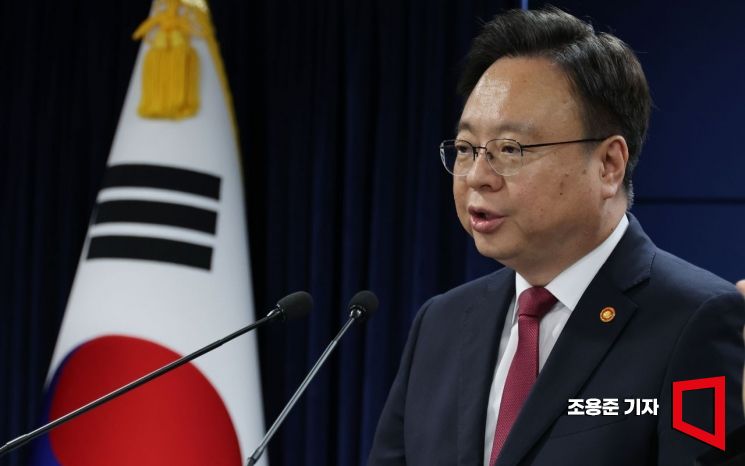 Minister of Health and Welfare Cho Kyu-hong is giving a briefing on the pension reform promotion plan on the 4th at the Government Seoul Office in Jongno, Seoul. Photo by Jo Yong-jun jun21@
On the 18th, Cho Kyu-hong, Minister of Health and Welfare, held a briefing at the Government Seoul Office regarding emergency medical and other emergency response measures, announcing these findings.
According to the Ministry of Health and Welfare, the average number of medical institutions open daily from the 14th to the 17th was 9,781, which is 827 more than the initially expected 8,954. This is 9% more than the 5,020 institutions open during last year’s Chuseok holiday and 167% more than the 3,666 institutions open during this year’s Lunar New Year holiday. On Chuseok day itself, 2,223 medical institutions were open, about 600 more than during this year’s Lunar New Year and last year’s Chuseok.
Regarding emergency rooms, 408 out of 411 nationwide operated 24 hours daily throughout the holiday period. Sejong Chungnam National University Hospital operated only during daytime on the 14th and 15th but has been operating 24 hours since the 16th throughout the Chuseok holiday.
Minister Cho explained, "Geon-guk University Chungju Hospital and Yongin Myeongju Hospital did not operate emergency rooms during the Chuseok holiday, but the emergency medical system has been functioning through cooperation with local medical centers and clinics."
The average daily number of emergency room visits during the holiday was 27,505, which is more than 20% lower compared to 39,911 during last year’s Chuseok and 36,996 during this year’s Lunar New Year. In particular, the number of mild cases decreased by more than 30%, from 26,003 during last year’s Chuseok and 23,647 during this year’s Lunar New Year to 16,157 this Chuseok.
The number of medical institutions capable of treating 27 types of severe emergency diseases was between 87 and 92 during the holiday period as of noon, which is a decrease compared to the average of 99 institutions in the first week of September before the holiday.
As of the 17th, the number of doctors working at 180 regional and local emergency medical centers nationwide was 1,865, which is over 400 fewer than the approximately 2,300 doctors in the fourth quarter of last year.
Minister Cho stated, "This is understood to be due to a decrease of more than 500 residents. Thanks to the cooperation of the public, emergency rooms were able to focus on treating severe patients with fewer medical personnel than usual, and emergency medical care was maintained thanks to the medical staff who gave up their holidays and steadfastly stayed by patients’ sides."
Minister Cho added, "Since the holiday is not yet over, I ask medical staff, related officials, and the public to continue their cooperation. The government will also maintain vigilance and closely monitor and respond to the emergency medical situation."
© The Asia Business Daily(www.asiae.co.kr). All rights reserved.

















