Additional 850 Billion Won Invested in Existing Safety Budget
Establishing Smart Safety Systems and Replacing Aging Facilities
Introducing Worker Safety Training Programs
"Mobilizing All Available Power to Strengthen Safety Management"
Hanwha Ocean, which has recently experienced a series of worker fatal accidents, is embarking on a company-wide innovation to establish an advanced safety culture. The company plans to expand its regular budget for safety prevention and invest an additional approximately 850 billion KRW to address potential factors that could cause accidents.
On the 18th, Hanwha Ocean announced that it will invest 1.976 trillion KRW by 2026 to fundamentally improve its safety system.
The regular budget for safety prevention will be expanded annually, with a total of 1.13 trillion KRW allocated over the next three years. This year, the investment will increase by 28.8 billion KRW from last year’s 321.2 billion KRW to 350 billion KRW. It will further expand to 380 billion KRW in 2025 and 400 billion KRW in 2026.
To resolve potential hazards threatening safety at work sites, an additional total of 846 billion KRW will be invested across six areas during the same period. Specifically, these include ▲establishing a comprehensive smart safety system throughout the shipyard (65 billion KRW) ▲proactive replacement of aging facilities and equipment (700 billion KRW) ▲building an advanced safety culture (9 billion KRW) ▲establishing a safety academy focused on experiential education (50 billion KRW) ▲supporting partner companies’ safety and expanding safety personnel (15 billion KRW) ▲regular safety evaluations and enhancement of safety management levels through external professional organizations (7 billion KRW).
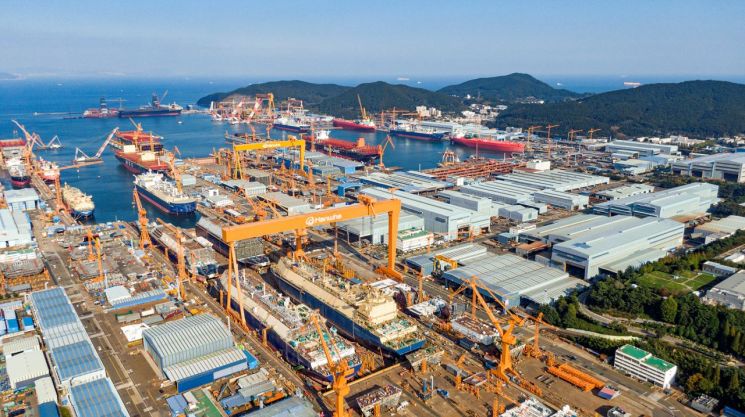
The largest amount, 700 billion KRW, will be used for replacing aging facilities and equipment. Rather than simply replacing outdated equipment, a proactive and preventive equipment replacement standard has been established to block potential risks that could lead to major accidents in advance. Equipment and facilities expected to pose potential risks will be proactively and extensively replaced regardless of aging or malfunction.
To build a comprehensive smart safety system throughout the shipyard, 65 billion KRW will be invested. An integrated control center utilizing artificial intelligence (AI) technology will automatically detect unsafe situations, fires, explosions, leaks, and other hazards throughout the shipyard. Automated safety systems for heavy machinery and other hazardous equipment, as well as effective safety monitoring systems for safety-vulnerable areas such as confined spaces inside ships, will be established. Personal safety equipment such as body cams, tablets, and smartwatches will be provided to all workers who need them.
Thirty billion KRW will be invested annually to implement programs for building an advanced safety culture. Hanwha Ocean plans to create a new safety culture where employees can openly discuss unsafe behaviors of their colleagues without hesitation. To this end, consultations are underway with professional safety consulting firms that have led safety culture development at global companies (such as JMJ, DNV, Dupont), and the most suitable final program will be adopted by the end of the year.
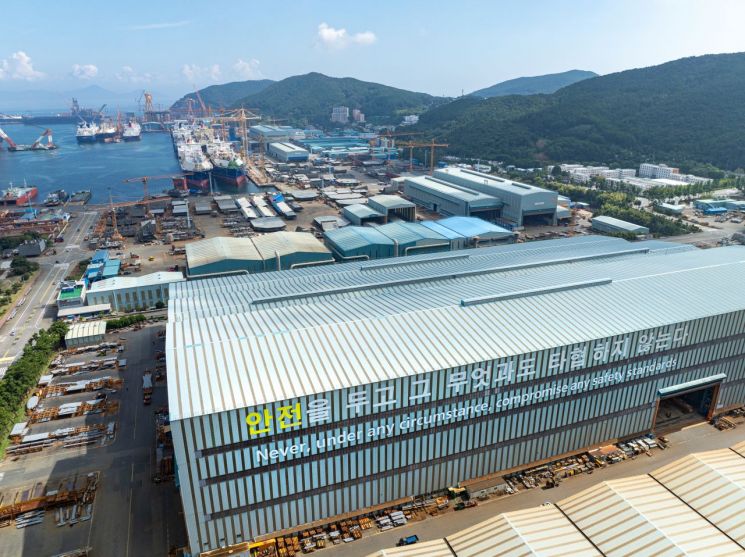
About 50 billion KRW will be invested through collaboration with major external professional institutions to establish a safety experience academy. Hanwha Ocean plans to shift its safety education method to an experiential approach to enhance workers’ safety awareness and knowledge, operating customized advanced experiential safety education programs tailored to length of service and job types.
Hanwha Ocean will also work together with partner companies to create a safe working environment. To this end, it will provide 5 billion KRW annually to partner companies to mandate safety officers. The current workforce of 130 on-site safety personnel will be expanded to 250. One hundred additional personnel have already been recruited and deployed to work sites. The number of safety experts holding professional safety certifications, currently about 70, will also be increased to 140.
Kim Hee-cheol, CEO of Hanwha Ocean, said, "We have determined that a comprehensive re-examination of the existing safety management system is necessary," adding, "We intend to conduct a more thorough and fundamental review of safety management." He continued, "We will actively incorporate internal and external opinions and closely cooperate with external experts and related organizations to further strengthen the safety management system, mobilizing all available company resources."
© The Asia Business Daily(www.asiae.co.kr). All rights reserved.


















