Assault on Medical Staff, Equipment Damage, and Staff Shortages Also Considered 'Justifiable' Reasons for Refusing Treatment
From now on, medical staff at emergency medical institutions will be exempt from liability even if they refuse to treat patients with mild or non-emergency conditions such as colds or diarrhea, or refuse treatment due to staff shortages. This clarifies the previously ambiguous standards for medical staff exemption from liability.
According to the government and medical community on the 16th, the Ministry of Health and Welfare sent a notice titled "Guidelines on Justifiable Reasons for Refusal of Treatment under the Emergency Medical Service Act" the day before to 17 cities and provinces nationwide, the Korean Hospital Association, the Korean Medical Association, and the Korean Nurses Association.
Article 6 of the Emergency Medical Service Act requires emergency medical personnel to provide immediate medical treatment when requested or when an emergency patient is found during work. Through these guidelines, the Ministry of Health and Welfare specified cases of justifiable refusal of treatment.
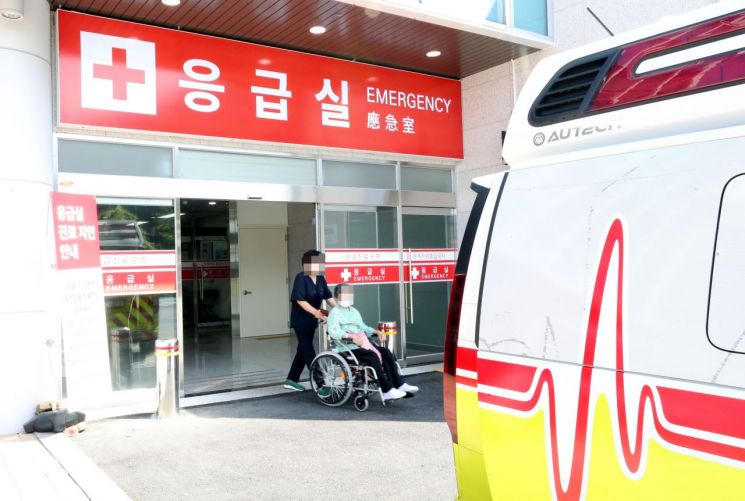
First, the Ministry decided that medical staff will not be held responsible even if they do not admit mild or non-emergency patients classified as KTAS levels 4 to 5 under the Korean Triage and Acuity Scale (KTAS) in the emergency room. According to the Ministry, KTAS level 4 corresponds to semi-emergency, and level 5 to non-emergency patients. Level 4 includes symptoms such as delirium (mental disorder) or urinary tract infection, while level 5 typically includes symptoms like colds, enteritis, and diarrhea.
Exempting medical staff from responsibility for not accepting these patients is intended to allow emergency room personnel to focus on severe patients in line with their primary purpose.
However, considering that many patients find it difficult to accurately assess their own condition or severity and often visit the emergency room as a precaution, this guideline may still lack specificity and could cause confusion in the field.
The Ministry also defined cases where violence occurs or is likely to occur in the emergency room as justifiable refusal or avoidance of treatment. This includes assault, threats, coercion, or damage to medical facilities or equipment against emergency medical personnel. Additionally, if patients or guardians create situations that could constitute crimes such as insult, defamation, assault, or obstruction of business, preventing medical staff from performing normal medical activities, this will also be considered justifiable refusal of treatment.
Furthermore, the Ministry allowed medical staff to justifiably refuse treatment when emergency medical institutions lack personnel, facilities, or equipment to provide appropriate emergency care, or when disasters such as communication or power outages or fires prevent patient admission. Medical staff may also refuse treatment if patients or guardians refuse to follow the medical staff’s treatment plan or demand treatment methods that contradict the medical staff’s conscience and professional knowledge.
A Ministry of Health and Welfare official explained, "We have clarified the previously ambiguous standards for justifiable refusal of treatment," adding, "This will apply not only during the Chuseok holiday but continuously going forward."
However, the Ministry noted in the notice that while the guidelines were established to clarify the scope of justifiable refusal of treatment under the Emergency Medical Service Act and the Medical Service Act, "the scope may change due to amendments to laws, changes in precedents, or authoritative interpretations."
© The Asia Business Daily(www.asiae.co.kr). All rights reserved.
![Clutching a Stolen Dior Bag, Saying "I Hate Being Poor but Real"... The Grotesque Con of a "Human Knockoff" [Slate]](https://cwcontent.asiae.co.kr/asiaresize/183/2026021902243444107_1771435474.jpg)
















