Essential for Business... Drinking Gatherings Decrease Due to Gwandan
Chinese Government That Encouraged Gwandan Also Cautious of Excessive Craze
The game called Gwandan (관단), which means "throwing a bomb," is sweeping across China. Gwandan is reportedly changing the entertainment culture in the financial sector and bureaucratic society. Foreign media such as The Guardian, The Economist, and Bloomberg have recently published reports on the sensational popularity of Gwandan. The Economist recently reported, "Just as corporate executives worldwide once learned golf for business, Chinese corporate executives are now learning Gwandan."
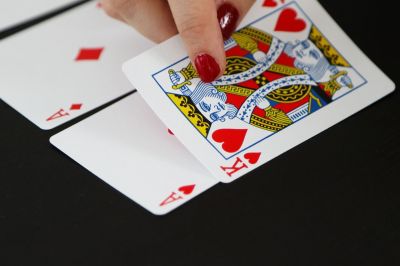
Gwandan, which originated in Huai'an, Jiangsu Province in the 1960s, is a team game played by four people divided into two teams. It uses two slightly larger specialized decks of cards compared to traditional card games like poker. After dealing the cards, players take turns placing one card at a time according to the rules, and the team that first discards all their cards wins. The rules are more complex than popular card games such as poker and bridge. Supporting teammates through "Qingshang (情商, social intelligence or tact)" is also essential.
It is estimated that about 140 million people across China are enthusiasts of Gwandan. The sudden surge in Gwandan's popularity is analyzed to be due to the COVID-19 pandemic and the intensifying US-China tensions, which sharply reduced Western investment in China. Previously, the Chinese financial industry favored Texas Hold'em, popular among Anglo-American investors, but recently, investors from wealthy southern regions like Jiangsu and Zhejiang have become more important, bringing attention to Gwandan, a game they enjoyed in their hometowns. As Gwandan replaces golf, it has even earned the nickname "paper golf."
There are also rumors that the Gwandan craze has caused a decline in Maotai's stock price. Maotai, which held the top spot in China's market capitalization since 2022, recently lost that position to Industrial and Commercial Bank of China. The stock price dropped from 2050 yuan at the beginning of 2022 to 1478 yuan, and some analyses attribute this to Gwandan's popularity. The logic is that as Gwandan replaces drinking, excessive alcohol consumption has decreased, leading to reduced Maotai consumption.
The Chinese government had recently encouraged the Gwandan craze. While mahjong and golf were viewed as extravagant entertainments and targeted in anti-corruption campaigns, Gwandan was considered a relatively wholesome sport because it only requires cards and a table and has low gambling elements. However, as Gwandan's popularity overheated and side effects such as a surge in "Gwandan addicts" appeared, the government's stance has begun to change.
Beijing Youth Daily, under the Beijing Party Committee, harshly criticized Gwandan as a social evil in articles published for three consecutive days starting from the 5th. It pointed out that civil servants gathering to enjoy Gwandan have become a "poison bomb" causing corruption, and that young people wasting time playing Gwandan promote the "Tangping" (lying flat, doing nothing) culture. Beijing Youth Daily criticized, "The passion to strive has disappeared into the game, and proactive willpower has been lost in entertainment."
Taiwan's Central News Agency reported on the 12th that "there is analysis that Chinese authorities are taking desperate measures by separating officials and civilians, starting crackdowns on Gwandan within the civil servant community first." Although no measures have yet been implemented to control or ban Gwandan in specific situations or environments, there are forecasts that the government's vigilance toward Gwandan may gradually increase.
© The Asia Business Daily(www.asiae.co.kr). All rights reserved.

















