Only 8% of Rest Areas Use Domestic Ingredients
As the Chuseok holiday begins and crowds head home, it has been revealed that the price of walnut cookies, a popular snack at highway rest areas, varies by more than double depending on the rest area.
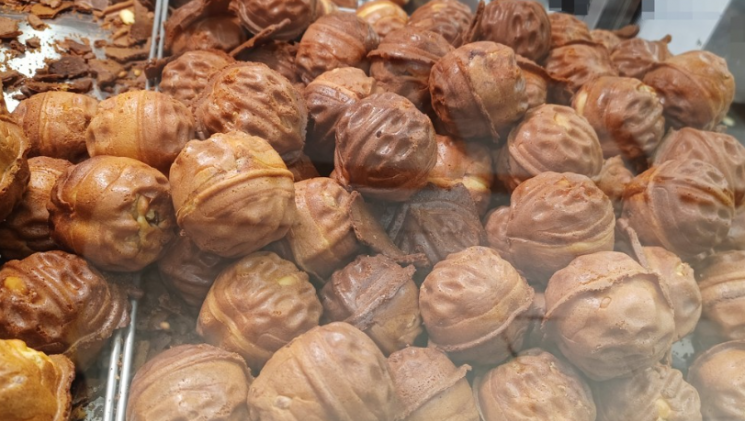
According to data submitted by the Korea Expressway Corporation to Yeom Tae-young, a member of the National Assembly's Land, Infrastructure and Transport Committee from the Democratic Party of Korea, the price of walnut cookies at 208 highway rest areas nationwide ranged from approximately 13.8 to 29.4 KRW per gram. This means the price difference of walnut cookies between rest areas is about 2.12 times. Even when purchasing the same 3,000 KRW worth of walnut cookies, the weight varied from 140 to 210 grams, and the quantity ranged from 7 to 10 pieces depending on the rest area.
Many of the ingredients were imported. Only two rest areas, Cheonan Samgeori (Seoul) and Cheonan Walnut (Busan), used domestic walnuts and red beans. Even when adding those that stated they used domestic ingredients such as flour (13 places), rice flour (2 places), and pine nuts (1 place), the proportion of rest areas using domestic ingredients in walnut cookies was only about 8%. Representative Yeom pointed out, "Most of the ingredients for walnut cookies, which are called a national snack, are imported, and the prices vary greatly. It is necessary to carefully examine whether the excessively large price differences among walnut cookies are reasonably set."
Rest Area Food Prices Up 21% in 4 Years... A Burden for Holiday Travelers
Complaints about rest area food are nothing new. In fact, the prices of foods available on the way home for the holidays have surged by more than 21% over the past four years. According to data on the price changes of the top 10 selling foods at highway rest areas from 2020 to 2024 (based on July each year), submitted by the Korea Expressway Corporation to Democratic Party lawmaker Ahn Tae-jun, the average price of udon noodles this year was 6,623 KRW, up 21.4% from 5,455 KRW in 2020.
The average price of pork cutlet dishes exceeded 10,000 KRW. Over the past four years, it rose 21.3% from 8,779 KRW to 10,653 KRW, marking the second highest increase rate. Pork cutlet was the first among the top 10 rest area foods to surpass an average price of 10,000 KRW. During the same period, bibimbap dishes also increased by 17.6%, from 8,207 KRW to 9,650 KRW.
As dissatisfaction with rest area prices grows, the Korea Expressway Corporation has taken steps to manage food prices through 'value meals' and 'budget snacks.' Value meals are sold at each rest area with two meal types priced below 7,000 KRW, ramen below 4,000 KRW, and bottled water below 700 KRW. Budget snacks include more than 10 popular snacks such as walnut cookies and so-tteok so-tteok (skewered sausage and rice cake), sold for under 3,500 KRW. The corporation plans to strengthen on-site inspections and monitoring to ensure proper value food is provided. Additionally, excellent rest areas will receive incentives in operational service evaluations.
© The Asia Business Daily(www.asiae.co.kr). All rights reserved.

















