$1.85 Billion Net Selling of Domestic Stocks by Foreigners in August
Significant Increase in Net Inflow of Domestic Bonds
Similar Trend Expected in September if IT Peak Controversy Persists
Last month, due to uncertainties surrounding the global growth of artificial intelligence (AI), foreign investors sold approximately 2.47 trillion KRW worth of domestic stocks on a net basis. Conversely, domestic bonds saw a net purchase of about 7.308 trillion KRW, driven by increased short-term arbitrage trading amid heightened volatility in international financial markets. If the overall conditions, including ongoing debates about the peak of the IT industry, remain unchanged, foreign investment flows this month are expected to follow a similar pattern to August.
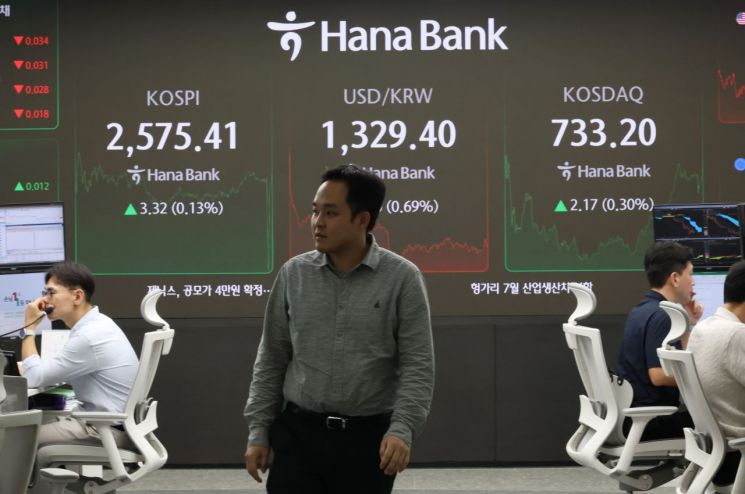
According to the Bank of Korea on the 15th, foreign investment in domestic stocks recorded a net outflow of 1.85 billion USD in August. Based on the end-of-month KRW-USD exchange rate (1,336 KRW), this corresponds to a net outflow of approximately 2.47 trillion KRW. This marks the first net outflow of foreign investment in domestic stocks in 10 months since October last year. The outflow was mainly due to increased selling in the electrical and electronics sector amid uncertainties about the growth potential of the global AI industry.
On the other hand, foreign investment in domestic bonds amounted to 5.47 billion USD, a significant increase compared to 380 million USD in the previous month. Based on the end-of-month exchange rate, this equates to a net inflow of about 7.308 trillion KRW. The recent expansion of volatility in international financial markets has increased incentives for short-term arbitrage trading, leading to a substantial rise in inflows, particularly in short-term bond investments.
Although stocks experienced net outflows, the substantial increase in net inflows into bonds resulted in a continued net inflow of foreign investment in overall securities (stocks and bonds) for the fifth consecutive month. In August, foreign securities investment recorded a net inflow of 2.63 billion USD, maintaining positive inflows for 10 consecutive months. The net inflow amount also slightly increased compared to July’s 2.24 billion USD.
Looking ahead, the flow of foreign investment in domestic securities is expected to mirror the pattern seen in August. This is because investments in Korean stocks are primarily focused on IT companies, and the arbitrage incentive (over three months) remains high at around 40 basis points (bp). The arbitrage incentive rose sharply from 16 bp in July to 42 bp in August.
A Bank of Korea official stated, "Foreign investors in Korean stocks mainly invest in major companies influenced by the global IT industry, such as Samsung Electronics and SK Hynix. If debates about the peak of the IT industry continue, domestic stock investment funds are likely to show a similar trend. Bond investments are also expected to follow a similar pattern in September, as the arbitrage incentive remains around 40 bp."
However, the official added, "This similar trend will hold only if overall conditions such as the Federal Reserve’s rate cut magnitude or monetary policy direction, the U.S. presidential election, and geopolitical risks do not change significantly."
© The Asia Business Daily(www.asiae.co.kr). All rights reserved.
![Clutching a Stolen Dior Bag, Saying "I Hate Being Poor but Real"... The Grotesque Con of a "Human Knockoff" [Slate]](https://cwcontent.asiae.co.kr/asiaresize/183/2026021902243444107_1771435474.jpg)











