US Rate Cut Likely on 17-18th
Korea's Household Debt May Determine Timing
As central banks around the world accelerate interest rate cuts, attention is focused on the decision of the U.S. Federal Reserve (Fed) during the Chuseok holiday period. The Fed is highly likely to cut interest rates in this upcoming policy rate decision. The timing of South Korea's rate cut is expected to depend on the household debt situation.
On the 12th (local time), the European Central Bank (ECB) cut its deposit rate by 0.25 percentage points from 3.75% to 3.50%, marking its second rate cut this year. Major countries such as Canada and Switzerland are also preparing for additional rate cuts. On the 4th, Canada held a monetary policy meeting and implemented its third consecutive rate cut, with further cuts expected next month. Sweden began cutting rates in May and is expected to implement an additional cut of more than 0.25 percentage points on the 25th. Switzerland, which started cutting rates in March, cut rates again in June and is expected to cut further on the 26th. The United Kingdom also began cutting rates in August, held rates steady in September, and is expected to cut by 0.25 percentage points in November.
On the other hand, Japan has stepped away from the rate-cutting trend and raised its policy rate twice this year. The Bank of Japan (BOJ) raised its short-term policy rate in March for the first time in 17 years, exiting negative interest rates. It raised the rate again in July, increasing the policy rate from 0?0.1% to 0.25%. Recently, BOJ board members have made statements suggesting further rate hikes, and if economic and inflation trends align with BOJ forecasts, additional rate increases are likely to be considered.
U.S. to Cut Rates on 17?18th... South Korea’s Household Debt is Key
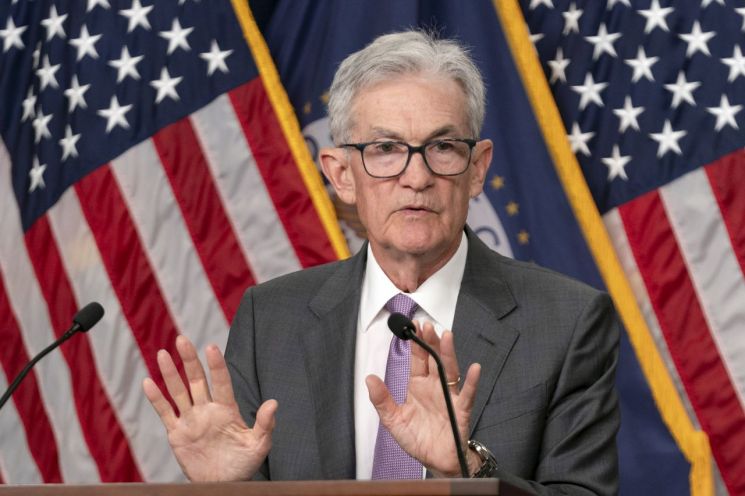
The United States is expected to join the rate-cutting trend at the Federal Open Market Committee (FOMC) meeting on the 17th?18th (local time). According to the Chicago Mercantile Exchange (CME) FedWatch tool, the futures market predicts a 100% probability that the Fed will cut rates on the 18th. However, due to mixed recent economic indicators such as inflation and employment, forecasts are divided between a 'baby cut' (0.25 percentage point cut) and a 'big cut' (0.5 percentage point cut).
 Bank of Korea Governor Lee Chang-yong is presiding over the Monetary Policy Committee plenary meeting at the Bank of Korea headquarters in Jung-gu, Seoul, on the 22nd. Photo by Joint Press Corps
With the Bank of Korea (BOK) scheduled to decide on the policy rate on the 11th of next month, the trajectory of household debt driven by rising housing prices is expected to determine the timing of a rate cut. Currently, South Korea’s August consumer price inflation has fallen to the BOK’s inflation stabilization target of 2%, and the exchange rate has somewhat stabilized around 1,330 won, creating conditions favorable for a rate cut. However, the steep rise in housing prices continues to cause financial instability.
The BOK has recently issued repeated warnings about the rising housing prices. At a press conference following the Monetary Policy Board meeting last month, BOK Governor Lee Chang-yong stated, "Currently, the Monetary Policy Board members agree that the BOK will not conduct monetary policy in a way that supplies excessive liquidity and fuels real estate price increases." Monetary Policy Board member Shin Sung-hwan also recently remarked, "If housing prices rise further relative to income, it could significantly undermine financial market stability," and unusually hinted at the possibility of a rate hike by saying, "Personally, I think monetary policy should be on standby."
Monetary Policy Board member Hwang Geon-il also emphasized in the Monetary and Credit Policy Report released on the 12th, "When deciding the timing and pace of future rate cuts, the growth trend and the degree of financial stability risk from policy rate adjustments will be the most important considerations." He added, "From a financial stability perspective, the ratio of household debt linked to rising housing prices is already acting as a risk to the financial sector and is at a level that restricts growth. Therefore, decisions on rate cuts must consider their impact on both growth and financial stability simultaneously."
If the rise in housing prices and household debt growth are not controlled, there is a possibility that rates will remain unchanged until the end of the year. At a press conference following the release of the Monetary and Credit Policy Report on the 12th, BOK Deputy Governor Park Jong-woo said, "If the BOK cuts rates within this year, it will be in a situation where various government policies are clearly effective." Currently, the BOK has kept rates unchanged for 13 consecutive times, the longest period in history, since raising the policy rate to 3.5% in January last year.
© The Asia Business Daily(www.asiae.co.kr). All rights reserved.
![Clutching a Stolen Dior Bag, Saying "I Hate Being Poor but Real"... The Grotesque Con of a "Human Knockoff" [Slate]](https://cwcontent.asiae.co.kr/asiaresize/183/2026021902243444107_1771435474.jpg)

















