Article 15-2(1) of the Youth Sexual Protection Act
First Supreme Court Ruling on Interpretation Issued
Second Trial's Broad Scope Acceptance
The Supreme Court has ruled that messages sent by an adult male to a 10-year-old girl containing phrases such as 'kiss,' 'marriage,' and 'I am excited' can be considered 'conversations that may arouse sexual desire, shame, or disgust' under the Act on the Protection of Children and Juveniles Against Sexual Abuse (Youth Sexual Protection Act).
In this case, the interpretation of Article 15-2, Paragraph 1 of the Youth Sexual Protection Act (Conversations for the Purpose of Sexual Exploitation of Children and Juveniles) was disputed between the first and second trial courts. The Supreme Court upheld the second trial court's judgment that the content of 'conversations that may arouse sexual desire, shame, or disgust' in Subparagraph 1 of Paragraph 1 does not have to be interpreted restrictively to the extent comparable to Subparagraph 2 of the same paragraph (acts of inducing or encouraging sexual intercourse, etc.). This is the Supreme Court's first ruling on the interpretation of this provision.
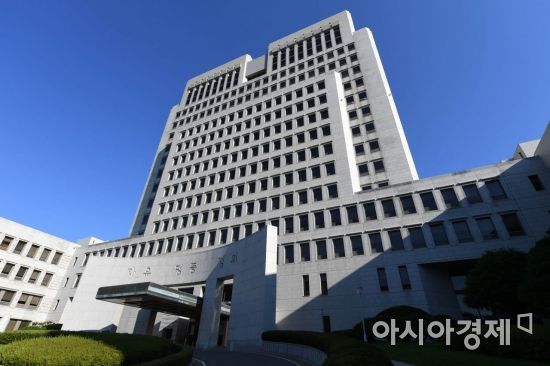
On the 13th, the 2nd Division of the Supreme Court (Presiding Justice Kwon Young-jun) confirmed the original sentence of Kim (age 40), who was indicted for violating the Child Welfare Act (emotional child abuse) and the Youth Sexual Protection Act (conversations for the purpose of sexual exploitation), sentencing him to two years in prison with a three-year probation, 200 hours of community service, 40 hours of sexual violence treatment lectures, and a five-year employment ban at child and youth-related or disability-related institutions.
The court stated the reason for dismissing Kim's appeal was that "there was no error in the original court's guilty verdict that violated the rules of logic and experience, exceeded the limits of free evaluation of evidence, or misinterpreted the legal principles regarding the establishment of the offense of violating the Youth Sexual Protection Act (conversations for the purpose of sexual exploitation)."
Kim was tried on charges of emotionally abusing and repeatedly engaging in sexual conversations by sending messages that could cause sexual shame to A, an elementary school girl 28 years younger than him (then 10 years old), a total of 45 times through an application chat in January 2022 when he was 38 years old.
From the time Kim started chatting with A, whom he met while playing an online game, he knew that A was 10 years old. On January 6, 2022, around 5 a.m., he sent a message saying, "Remember 179. If it's 141, I can get a kiss lol," and repeatedly sent messages containing expressions that could be interpreted sexually, such as "When A uses honorifics, I get excited" and "B (alias) is now Kim OO's property."
Kim also asked A to take and send photos such as "lips for kissing," "open mouth saying 'ah'," "teeth," and "messy hair," or demanded specific actions like "Write a marriage vow by hand secretly without your mom knowing" or "Record your voice saying you like me and send it."
In response to these demands from Kim, A actually took photos of her face and sent them to Kim and wrote the marriage vow by hand, but she did not comply with some requests and showed signs of fear that her mother might find out about the conversations with Kim.
At trial, Kim claimed that he sent these messages out of pure romantic feelings toward A.
The first trial court recognized only Kim's violation of the Child Welfare Act (child abuse) and sentenced him to one year and six months in prison with a three-year probation. The court also ordered 120 hours of community service and 40 hours of child abuse recidivism prevention lectures and imposed a five-year employment restriction.
However, the court acquitted Kim of violating the Youth Sexual Protection Act, interpreting Article 15-2, Paragraph 1, Subparagraph 1 narrowly.
Article 15-2 (Conversations for the Purpose of Sexual Exploitation of Children and Juveniles), Paragraph 1 of the Youth Sexual Protection Act states that "If a person aged 19 or older commits any of the following acts through an information and communication network for the purpose of sexual exploitation of children or juveniles, they shall be punished by imprisonment for up to three years or a fine of up to 30 million won." Subparagraph 1 refers to "continuously or repeatedly engaging in conversations that may arouse sexual desire, shame, or disgust or continuously or repeatedly involving children or juveniles in such conversations," and Subparagraph 2 refers to "acts of inducing or encouraging acts corresponding to any of the items in Article 2, Subparagraph 4."
Article 2, Subparagraph 4 defines "acts of buying sex from children or juveniles" as providing or promising money or property benefits to protectors or supervisors of children or juveniles in exchange for sexual intercourse, oral or anal sexual acts using body parts or tools, acts of touching or exposing all or part of the body that cause sexual shame or disgust to the general public, or acts of masturbation or causing children or juveniles to perform such acts.
Article 15-2, Paragraph 2 states that "If a person aged 19 or older commits any of the acts in Paragraph 1 against a child or juvenile under 16 years old through an information and communication network, they shall be punished with the same penalty as in Paragraph 1."
Since the victim A was under 16 years old, Paragraph 2 of Article 15-2 applied in this case. Unlike Paragraph 1, Paragraph 2 does not require the purpose of sexual exploitation.
The issue was the interpretation of Subparagraph 1 of Paragraph 1.
The first trial court held that "the 'conversations that may arouse sexual desire, shame, or disgust' in Article 15-2, Paragraph 1, Subparagraph 1 must contain content that, when such conversations are continuous or repeated, can hinder the sound formation and development of sexual values of children or juveniles to an extent comparable to inducing or encouraging sexual intercourse, etc. (Subparagraph 2)."
Regarding this case, the court said, "The defendant did not directly mention sexual intercourse or other sexual acts or sexually descriptive expressions that directly evoke such acts, nor did he use direct or metaphorical expressions about specific body parts, objects, or places that could cause sexual desire or shame. Therefore, it is difficult to conclude beyond a reasonable doubt that the defendant continuously or repeatedly engaged in conversations that may arouse sexual desire, shame, or disgust with a victim under 16 years old," and acquitted Kim of violating the Youth Sexual Protection Act.
The court's reasoning was that since Subparagraph 1 is listed in parallel with Subparagraph 2, it should be interpreted narrowly to a degree comparable to Subparagraph 2.
However, the second trial court's judgment was different.
The second trial court found all of Kim's charges guilty and increased the sentence to two years in prison with a three-year probation.
The second trial court stated, "The content of 'conversations that may arouse sexual desire, shame, or disgust' in Article 15-2, Paragraph 1, Subparagraph 1 of the Youth Sexual Protection Act does not have to be interpreted restrictively to the extent comparable to Subparagraph 2 (acts of inducing or encouraging sexual intercourse, etc.) of the same paragraph."
It added, "Considering the overall content of the messages sent by the defendant to the victim, the context before and after, the relationship between the defendant and the victim, the victim's gender and age, the victim's feelings and coping methods, and the circumstances under which the defendant sent the messages, it is reasonable to conclude that the messages sent by the defendant constitute conversations that cause sexual shame or disgust not only to the victim but also to ordinary and average people of the same gender and age group as the victim, and that such conversations were continuous or repeated in terms of period and frequency," overturning the first trial court's acquittal.
Regarding sentencing, the court said, "The defendant committed the offenses by continuously sending messages that could be sent in a romantic relationship to a child and juvenile victim who was only 10 years old, whom he met through an online game for about 20 days. Considering the nature and circumstances of the offenses, the circumstances after the offenses, the very bad nature of the crimes, and the fact that the crimes were committed against children and juveniles whose sexual values and judgment abilities are not yet established, the blameworthiness is very high. It appears that the victim and her family suffered great shock and mental distress, and the victim's parents have petitioned for severe punishment of the defendant, which is considered an unfavorable factor."
However, the court took into account favorable factors such as Kim not appealing the partial guilty verdict in the first trial and showing remorse, being a first-time offender with no prior criminal record, and making efforts to apologize by depositing 20 million won in criminal escrow for the victim during the second trial, although he was not forgiven by the victim's side, when determining the sentence.
In Kim's case, since he committed two crimes simultaneously?violation of the Child Welfare Act and violation of the Youth Sexual Protection Act?by the same act, he was punished under the Child Welfare Act, which carries a heavier statutory penalty.
Kim appealed again, but the Supreme Court found no problem with the second trial court's judgment.
© The Asia Business Daily(www.asiae.co.kr). All rights reserved.

















