It was found that traffic accidents increased by about 40% and drunk driving by about 20% on the day before the Chuseok holiday compared to usual.
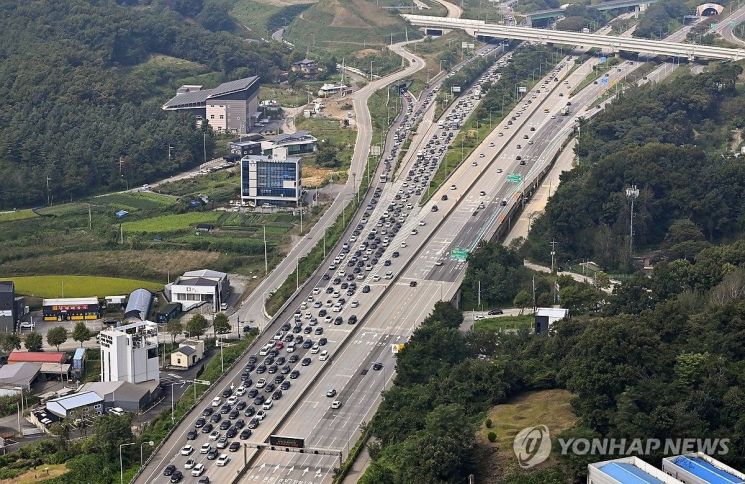
According to the National Police Agency on the 14th, the average number of traffic accidents on the day before the Chuseok holiday over the past five years (2019?2023) was 797.4 cases, which is 40.3% higher than the five-year overall daily average (568.2 cases). In particular, drunk driving traffic accidents occurred 23.1% more on the day before the Chuseok holiday (51.2 cases) and 25.0% more on the first day of the holiday (52.0 cases) compared to the five-year overall daily average (41.6 cases).
Over the past five years during the Chuseok holiday, highway traffic accidents were most frequent on the Gyeongbu Line (54 cases), the Seoul Metropolitan Area 1st Ring Expressway (30 cases), and the Seohaean Line (28 cases), in that order. By time of day, the highest proportion of accidents occurred in the afternoon (12:00?18:00) at 45.7%, followed by the morning (6:00?12:00) at 24.6%, nighttime (18:00?24:00) at 18.5%, and late night (24:00?6:00) at 11.2%. This is interpreted as being due to many accident-inducing factors such as drowsy driving caused by long traffic jams during the afternoon hours.
The National Police Agency will implement special traffic safety measures in cooperation with related organizations during this Chuseok holiday. Before the official start of the holiday, safety activities on highways will be strengthened for large group transport vehicles in response to the increase in travelers, and police forces will be intensively deployed to manage traffic at traditional markets, large supermarkets, and public cemeteries where visitors concentrate for holiday preparations. In cases of traffic accident casualties, close cooperation with related organizations such as fire departments, road management agencies, and medical institutions will be ensured for prompt hospital transport.
Major traffic violations such as reckless driving, designated lane violations, and driving on the shoulder will be monitored using undercover patrol cars and vehicle-mounted unmanned enforcement equipment. Each city and provincial government will select locations with a high likelihood of drunk driving by holiday visitors and conduct continuous daytime and nighttime enforcement.
© The Asia Business Daily(www.asiae.co.kr). All rights reserved.

















