Choi Kwanghyuk LS Securities Researcher
Domestic Growth Needed to Counter Export Decline
No Policy Effect... Domestic Slump to Continue
Due to rising real estate prices and a surge in household debt, it is assessed that domestic demand growth will be difficult to achieve quickly through government measures alone.
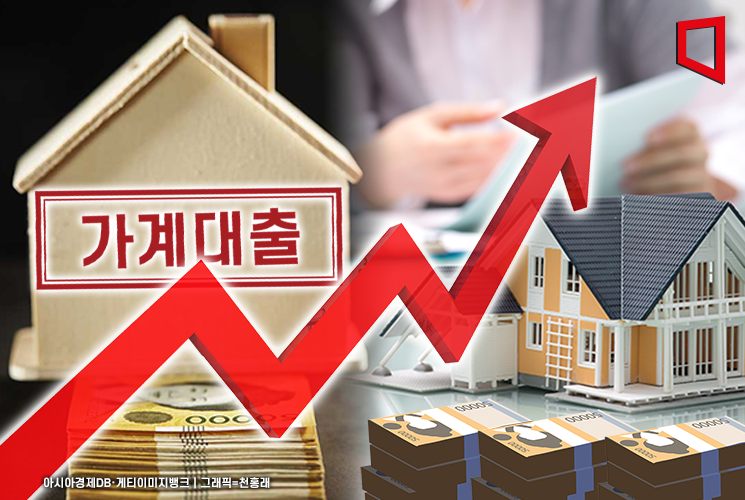
Choi Kwang-hyuk, a researcher at LS Securities, stated in a report released on the 13th, "While the U.S. needs to confirm an industrial recovery trend in response to a slowdown in consumption, Korea is at a point where domestic demand growth corresponding to a decline in exports must be confirmed," adding, "However, it is judged that domestic demand growth will be difficult to appear rapidly due to government responses to rising real estate prices and a surge in household debt."
Among recent domestic issues to watch are household debt burdens and rising real estate prices, along with the financial investment income tax in the financial market.
Researcher Choi said, "The problem is that most likely policy directions tend to slow down domestic demand growth," and added, "Although there is an expectation that value-up programs could lead to asset price increases, the impact of asset, especially stock market, rises on Korea's domestic consumption is extremely limited, so it is judged to have little significance in contributing to domestic demand growth."
For these reasons, he expects domestic demand sluggishness to continue for the time being. Researcher Choi forecasted, "Ultimately, the starting point will be a cut in the base interest rate and easing of financial policies, but given the current situation, it is difficult to have anticipations for proactive or aggressive policies, so it is highly likely that domestic demand sluggishness will continue for some time."
The trade balance in September continued to maintain a surplus trend. According to the Korea Customs Service on the 11th, the trade balance recorded a surplus of 222 million dollars. From the 1st to the 10th of last month, there was a deficit of 2.951 billion dollars. The monthly trade balance has shown a surplus for 15 consecutive months from June last year to last month.
Researcher Choi Kwang-hyuk explained, "If interpreted positively, the headline could be 'Korean Economy Maintains Surplus for 15 Consecutive Months,'" adding, "It is true that the surplus continues and that expectations for exports are high, so it is not easy for counterarguments to arise."
However, Researcher Choi judged that cautious approaches are necessary as, in terms of Korea's economic growth, net exports have been the only positive influence over the past four quarters, and the trade balance is maintained at a declining level even in exports.
He pointed out, "While Korea's export growth rate in August recorded 11%, which is positive, a significant portion of the trade surplus is due to sluggish imports, and considering the same growth trend, there is a high possibility of a peak-out (peak and subsequent decline) in the export growth rate, which is negative."
He further stated, "What is needed to have confidence in Korea's additional growth path is not the continuation of semiconductor exports but whether domestic demand can transition to growth," adding, "Here, domestic demand encompasses not only simple household consumption but also private consumption, facility investment, and construction investment."
© The Asia Business Daily(www.asiae.co.kr). All rights reserved.

















