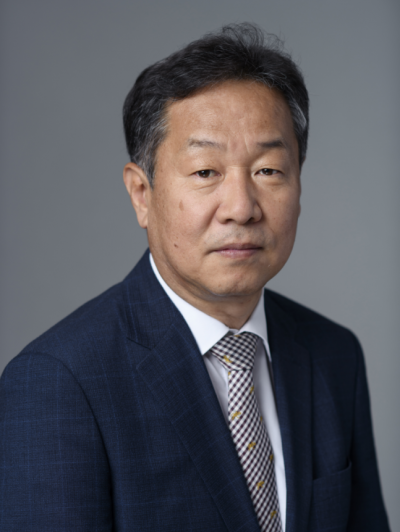
Hwang Geon-il, a member of the Monetary Policy Committee at the Bank of Korea, stated that the degree of financial stability risk will be the most important factor in determining the timing and pace of future base rate cuts.
On the 12th, Hwang explained the future direction of base rate operations through the Monetary and Credit Policy Report released by the Bank of Korea.
Hwang said, "Confidence is growing that inflation will converge to the target level, and the exchange rate level is also being adjusted downward by one step," adding, "Accordingly, when deciding the timing and pace of future rate cuts, the degree of financial stability risk resulting from base rate adjustments, along with growth trends, will be the most important consideration."
He emphasized, "From the perspective of financial stability, the household debt ratio linked to rising housing prices is already acting as a risk to the financial sector and has risen to a level that constrains growth," and added, "We must make judgments while simultaneously considering the impact of rate cuts on growth and financial stability."
Regarding economic growth trends, he assessed, "There is an increasing need to proactively respond to domestic demand and growth, which are recovering more slowly than expected."
Accordingly, he argued, "To minimize the degree of conflict between the goals of financial stability and economic improvement, an appropriate policy mix of monetary policy, fiscal policy, and macroprudential regulation is more crucial than ever."
© The Asia Business Daily(www.asiae.co.kr). All rights reserved.
![Clutching a Stolen Dior Bag, Saying "I Hate Being Poor but Real"... The Grotesque Con of a "Human Knockoff" [Slate]](https://cwcontent.asiae.co.kr/asiaresize/183/2026021902243444107_1771435474.jpg)
















