Voting and Counting on the 27th... New Japanese Prime Minister to be Nominated Early Next Month
Koizumi and Ishiba Leading... Possibility of Third Candidate Consolidation
In fact, a record nine candidates have entered the Liberal Democratic Party (LDP) leadership election, which effectively determines the next Prime Minister of Japan.
The Nihon Keizai Shimbun (Nikkei) reported on the 12th that the number of candidates officially registered for the LDP leadership election is nine, the highest ever since the current nomination system requiring 20 endorsers was introduced in 1972. The previous record was five candidates in both 2008 and 2012.
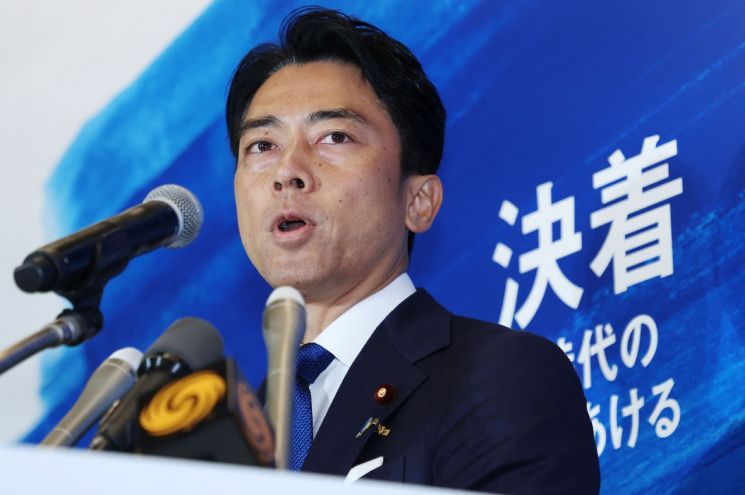
According to the party's election management committee, candidate registration began at 10 a.m. and closed around 10:15 a.m. on the same day. The candidates will hold a policy presentation session in the afternoon and start official election events such as a joint press conference the following day. The committee announced the schedule for speeches and debates held in eight locations nationwide, including Tokyo and Ishikawa Prefecture. Voting and counting will take place on the 27th of this month. The newly elected leader is expected to be appointed as Prime Minister Kishida’s successor at an extraordinary Diet session scheduled for early next month.
Major Japanese media outlets anticipate a fierce contest given the unprecedented number of candidates.
The current frontrunners are 43-year-old former Environment Minister Koizumi Shinjiro, who is gaining attention as a representative of the "40s generation change," and former LDP Secretary-General Ishiba Shigeru, known for his "four attempts, five tries" persistence. They are neck and neck in major opinion polls, forming a two-horse race. In an NHK poll conducted from the 6th to 8th, Ishiba led with 28% support, while a JNN poll from the 7th to 8th showed Koizumi leading with 28.5%.
Other candidates include Sanae Takaichi, Minister in charge of Economic Security; Taro Kono, Minister of Digital Affairs; Takayuki Kobayashi, former Minister in charge of Economic Security; Yoshimasa Hayashi, Chief Cabinet Secretary; Yoko Kamikawa, Minister of Foreign Affairs; Toshimitsu Motegi, Secretary-General; and Katsunobu Kato, former Chief Cabinet Secretary.
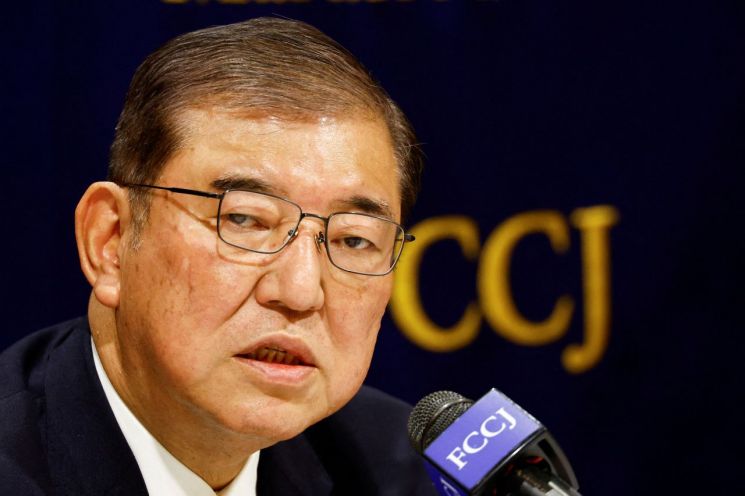
However, the final outcome is difficult to predict. Both leading candidates are considered moderate conservatives within the LDP, but there is speculation that the party’s largest faction, including the Abe faction and other hardline conservatives, may unite to support a third candidate. Mentioned as possible contenders are Minister Takaichi, dubbed the "Little Abe," and former Minister Kobayashi, who is backed by younger members of the Abe faction.
The winner will be the candidate who secures a majority of votes from 367 Diet members and 367 votes from party members (Japanese nationals who pay party dues) and party supporters (members of LDP-affiliated political organizations). If no candidate obtains a majority, a runoff will be held between the top two candidates, combining 367 Diet member votes and 47 votes from prefectural chapters.
If the election proceeds to a runoff, securing support from Diet members will be decisive. Japanese media predict that with nine candidates, no one will achieve a majority in the first round, leading to a runoff to decide the party leader.
NHK and others foresee that political reform related to faction slush fund scandals, economic policies addressing inflation, and social security policies such as childcare will be the main issues in this election. The dissolution of the House of Representatives and an early general election are also key tasks. Kyodo News, citing sources, reported that the House of Representatives is expected to be dissolved around the 9th of next month, with voting and counting scheduled for the 27th.
© The Asia Business Daily(www.asiae.co.kr). All rights reserved.


















