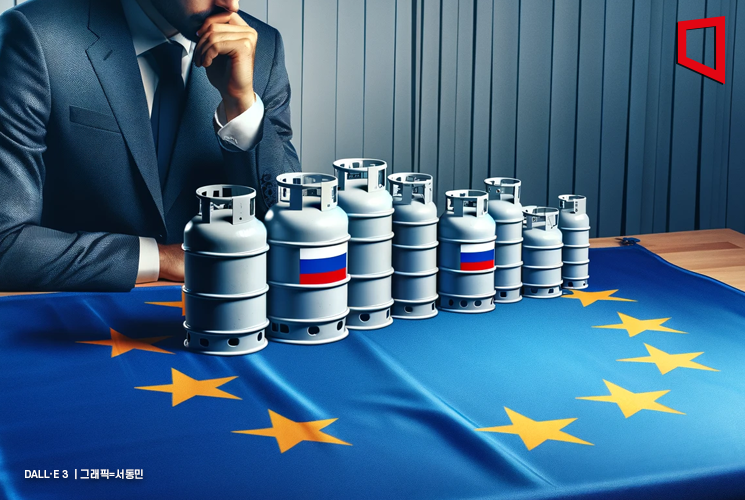
The European Union (EU) announced on the 11th (local time) that it is prepared to stop importing Russian natural gas routed through Ukraine by the end of this year. However, since the EU still heavily depends on Russian gas, a full-scale sanction is not expected to be implemented.
Kadri Simson, EU Commissioner for Energy, held a press conference in Brussels, Belgium, in the afternoon to present the "Energy Union State of Play 2024" report, stating, "The EU is ready to live without Russian gas coming through Ukraine." She also emphasized that there are sufficient gas reserves to meet heating demand this winter.
Ukraine signed a five-year contract with Russia's Gazprom in December 2019, allowing the use of pipelines passing through its territory, and has maintained this contract even after the outbreak of war. With the contract expiring at the end of this year, Ukraine has expressed its intention not to renew it.
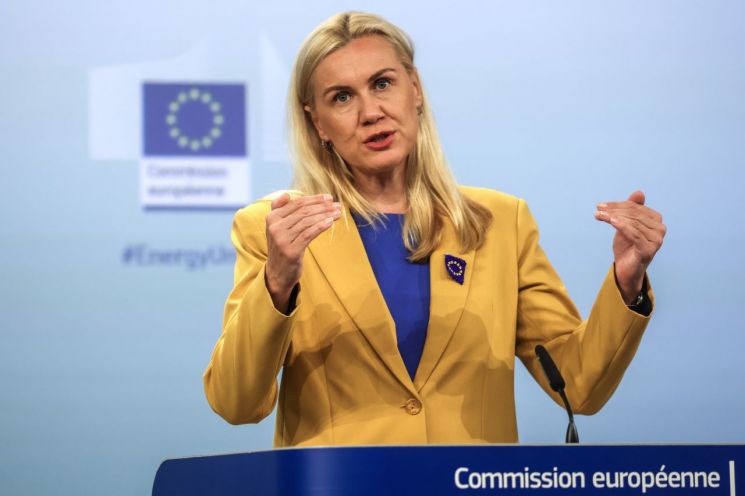
Regarding this, Commissioner Simson said, "We are committed to completing the phased cessation of Russian gas imports." She added, "We have been preparing for the expiration of the gas transit agreement through Ukraine with member states for several months and have found alternative suppliers."
The EU hesitated to impose a full ban on Russian gas. Commissioner Simson avoided giving a direct answer when asked about a ban on Russian liquefied natural gas (LNG) imports.
Since the outbreak of the war in Ukraine, Russia drastically reduced natural gas supplies to Europe, causing an energy crisis. The EU has focused on reducing dependence on Russian fossil fuels. According to Commissioner Simson, Russian gas currently accounts for 18% of the EU's total gas imports. Although this is a significant decrease from 45% in 2021 before the war, the dependency remains considerably high.
For this reason, the EU included Russian crude oil in its sanctions but excluded gas from the sanctions list. As of last year, the largest sources of natural gas used in Europe are from Norway and the United States, with Russia ranking third.
In the "Energy Union State of Play" report released that day, the Commission also expressed concern that the pace of energy transition away from Russian fossil fuels remains slow. Although electricity production using renewable energy surpassed fossil fuels in the first half of this year, the report pointed out that infrastructure development for wind and solar power must accelerate further to achieve the 2030 target of 42.5% share of green energy.
© The Asia Business Daily(www.asiae.co.kr). All rights reserved.
![Clutching a Stolen Dior Bag, Saying "I Hate Being Poor but Real"... The Grotesque Con of a "Human Knockoff" [Slate]](https://cwcontent.asiae.co.kr/asiaresize/183/2026021902243444107_1771435474.jpg)

















