Special Guarantee and Card Fee Support Project for Small Business Owners' Livelihood Stability
Full Commitment to Small Business Capacity Building through Small Business Support Center Operation
Gumi City in North Gyeongsang Province is strengthening various support policies to help revitalize the local economy and enable small business owners to enjoy a prosperous Chuseok holiday.
In particular, the city is focusing on financial support and infrastructure expansion to stabilize the management and enhance the competitiveness of small business owners who are struggling due to the aftermath of COVID-19 and the economic downturn.
First, in the first half of the year, the city eased the loan interest burden for over 530 small business owners through a special guarantee program worth 15 billion KRW. The program saw such high participation that the budget was fully exhausted within just two months of implementation. In the second half of the year, the city will expand this support by providing an additional guarantee of 20 billion KRW.
Additionally, through the small business card terminal fee support project, which was implemented for the first time in the country last year, a total of 434 million KRW was provided to 4,696 businesses, allowing small business owners to receive up to 100,000 KRW in terminal fee support. Starting this September, with a total budget of 1.5 billion KRW, small business owners with annual sales of less than 100 million KRW will be eligible for card fee support of up to 300,000 KRW.
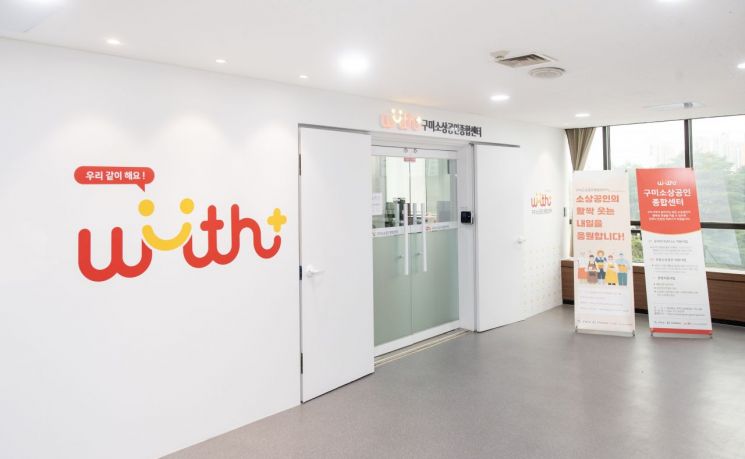
The Gumi Small Business Comprehensive Center is also playing an important role in strengthening the capabilities of small business owners. In line with Mayor Kim Jangho's pledge for the 8th popularly elected administration, the center opened last June and has been providing various customized support programs. In particular, the online platform promotion and marketing support program, which provides up to 1 million KRW, was so popular that applications closed in just two days. The brand development and renewal program, worth 3.5 million KRW, also attracted significant interest, with 55 businesses applying for only 15 available spots.
Gumi City is also actively addressing the issue of low birth rates. The "Small Business Owner Childcare Support Project," launched for the first time this year, provides up to 2 million KRW per month for up to six months to cover substitute labor costs for small business owners experiencing management gaps after childbirth. In addition, the "Job Convenience Store Project," designed to address women's employment and childcare needs, helps reconcile work and family life through short-term job placement and childcare support systems, while also alleviating labor shortages for small business owners.
The city has also issued the "Gumi Love Gift Certificate" in 2,000 KRW denominations to boost the local economy. This year, 10,000 certificates worth a total of 20 million KRW have been issued and will be used in conjunction with local events such as the "Gyeongbuk Provincial Residents' Life Festival," "Gumi Sweet Romantic Night Market," "Citizen Marathon," "Gumi National Park Golf Tournament," and "Gumi Ramen Festival." Part of the admission fees at tourist attractions and festivals will be refunded with the gift certificates to encourage spending. This initiative is expected to increase sales in local commercial districts and revitalize the local economy.
The city is also steadily progressing with parking lot construction projects to improve accessibility to traditional markets. The Indong Market parking lot project (66 spaces) is scheduled for completion by the end of September with a total budget of 6 billion KRW. Parking lots at Seonsan Bonghwang Market (3.6 billion KRW, 29 spaces) and Gumi Saemaeul Central Market (3.2 billion KRW, 25 spaces) are also planned for completion by next year.
In addition, a budget of 300 million KRW is being used to improve the exterior walls and restroom plumbing at Gumi Saemaeul Central Market, Hyeonggok Central Market, Gumi Industrial Distribution Complex, and Geumo Market. Projects to refurbish fire safety facilities and support fire insurance premiums are also underway to create a safer environment in traditional markets.
Efforts are also being made to strengthen the competitiveness of the lodging and restaurant industries. In preparation for various international events, 850 million KRW was invested to improve the environment of 30 lodging establishments, and 50 restaurants were provided with foreign language menus in four languages via QR codes.
This year, a new digital transformation project for the food service industry based on food tech was launched. A total of 59 million KRW was invested to support smart devices such as table order systems and kiosks, helping small business owners overcome management and labor shortages.
The restaurant facility improvement support project was expanded to 125 businesses this year, and the support limit was raised from 1.5 million KRW to 4 million KRW. This project focuses on improving sanitary conditions in small restaurants by supporting restroom and kitchen tile work, ventilation installation, and kitchen equipment, and has received high satisfaction from participating business owners. Accordingly, the city plans to increase the project budget and expand the support limit next year.
The table conversion support project, the first of its kind in the province, provided 250 million KRW to 88 restaurants, converting over 200 floor-seating tables to Western-style tables by this year.
Gumi City plans to continue strengthening support for small business owners through expanded loan support, card fee reduction, and improvements to traditional market environments. The city will also develop practical support measures to help small business owners adapt to the changing market environment through digital transformation support.
Mayor Kim Jangho stated, "We will prepare various policies for small business owners, who are the backbone of the local economy, and discover effective support methods to respond to the rapidly changing lodging and food service environment," expressing a strong commitment to the recovery of the local economy.
© The Asia Business Daily(www.asiae.co.kr). All rights reserved.
![Clutching a Stolen Dior Bag, Saying "I Hate Being Poor but Real"... The Grotesque Con of a "Human Knockoff" [Slate]](https://cwcontent.asiae.co.kr/asiaresize/183/2026021902243444107_1771435474.jpg)











