International Oil Prices Hit Yearly Low Amid Economic Slowdown Concerns
Potential Economic Stimulus Effect if US Lowers Interest Rates
Possible Increase in Oil Demand
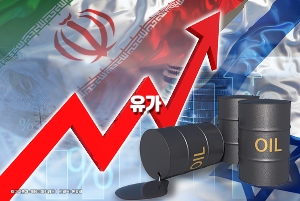
There is an opinion that international oil prices, which hit their lowest point of the year due to concerns over economic slowdown, could rebound following the U.S. interest rate cut this month. As interest rates decrease, the economy is stimulated, and oil demand in major countries revives, which could exert upward pressure on oil prices.
According to the New York Mercantile Exchange on the 10th (based on data from the 9th local time), the price of West Texas Intermediate (WTI) crude oil stood at $68.71. After hitting a yearly low of $67.67 on the 6th, WTI prices slightly increased on this day. Last week alone, WTI plunged 8%, marking the largest weekly drop since early October 2023. This was due to growing concerns over economic slowdown as U.S. employment and manufacturing indicators showed weakness.
The market expects international oil prices to continue declining for the time being. Morgan Stanley lowered its oil price forecast citing weak demand in China and economic slowdown in the U.S., while Citigroup also downgraded its outlook, pointing to an oversupply of crude oil.
Despite the downward outlook, there is also speculation that if the U.S. cuts its benchmark interest rate this month, oil prices could rebound. The rationale is that the economic stimulus effect of the rate cut could boost global oil demand.
According to a report titled "Correlation between Interest Rates and International Oil Prices" published by the Korea National Oil Corporation on the 5th, oil prices showed an upward trend when the U.S. began cutting rates after maintaining high interest rates for an extended period.
The report assessed that the current situation might be similar to the U.S. interest rate cut cycle in 2007. In September 2007, as the U.S. real estate market contracted, the Federal Reserve (Fed) cut the benchmark interest rate seven times over about eight months, reducing it by 3.25 percentage points. At that time, due to the Fed's rate cuts and economic stimulus policies, oil demand increased and international oil prices rose sharply.
It is analyzed that, similar to now, the rate cuts after a prolonged period of high interest rates increased oil demand. Yoon Ji Lee, a researcher at the Korea National Oil Corporation Smart Data Center who authored the report, stated, "The interest rate cut increases the money supply in the market and speculative demand rises, which may lead to an overestimation of geopolitical risks," adding, "If the U.S. cuts the benchmark interest rate, oil prices are expected to rise."
However, during periods of clear economic recession when benchmark rates were sharply cut, oil prices also declined. During the 2008 global financial crisis and the 2020 COVID-19 pandemic, international oil prices fell alongside rate cuts. A representative example is when Lehman Brothers filed for bankruptcy in July 2008, and the Fed sharply cut rates, causing international oil prices to plummet. The researcher explained, "In the event of large-scale, cascading financial crises like the subprime mortgage crisis, oil prices may fall even if interest rates are cut."
© The Asia Business Daily(www.asiae.co.kr). All rights reserved.

















