When Did Taiwan's Chuseok Barbecue Parties Begin?
Started with Soy Sauce Company Ads in the 1980s
Complaints Surge Over Air and Water Pollution and Trash
"Fines Imposed" as Countermeasure
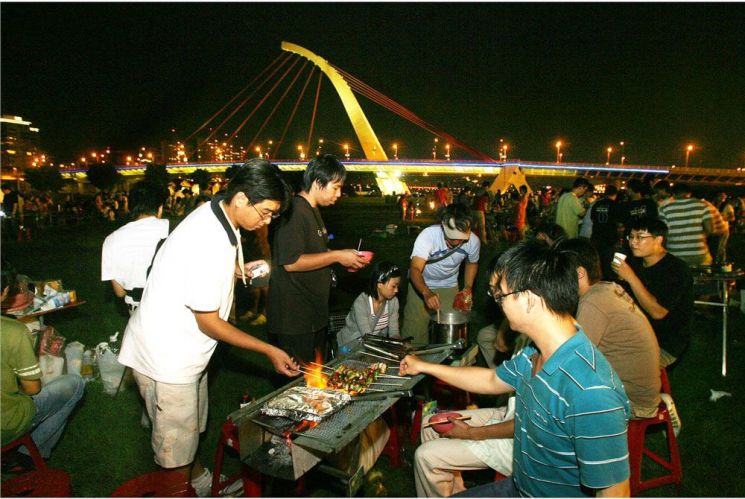 Taiwanese citizens grilling barbecue by the riverside during the Mid-Autumn Festival holiday in Taiwan. [Image source=YouTube capture]
The Taiwanese Ministry of Water Resources has put a halt to the barbecue festivals held at riverside parks in major cities during the Mid-Autumn Festival (中秋節) holiday. While barbecuing by the riverside was allowed throughout the holiday in previous years, this year it will be permitted only in a limited time frame from the night before the holiday until the day of the festival. Unlike other East Asian countries, Taiwan has had barbecuing as a traditional Mid-Autumn Festival food since the 1980s, attracting large crowds to the riverside for barbecue festivals, which has caused serious air and water pollution problems during this period.
Taiwan Ministry of Water Resources Shortens Riverside Park Barbecue Opening Hours... "To Prevent Air and Water Pollution"
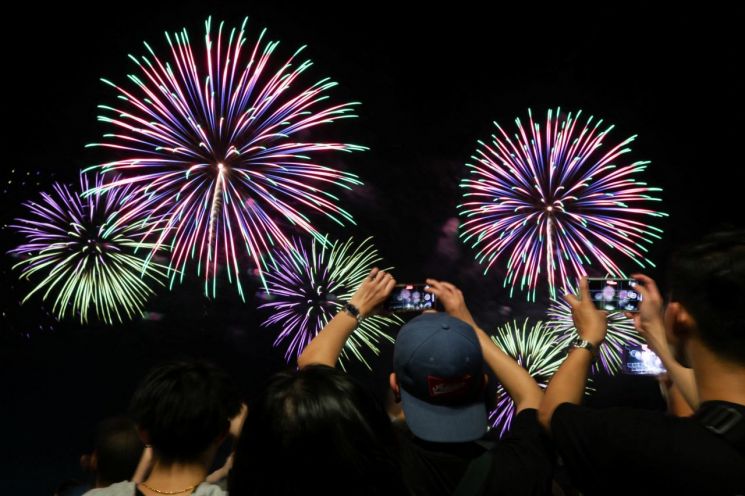
According to local media United Daily News, the Taiwanese Ministry of Water Resources has significantly restricted the hours during which barbecue parties can be held at Dajia Riverside Park, located beside the river in the capital city Taipei, during the Mid-Autumn Festival holiday. Accordingly, barbecue party spaces will only be allowed from 5 p.m. on the day before the festival, the 16th, until midnight on the 17th, the day of the festival. The Ministry stated that other parks will also have their barbecue space opening hours designated sequentially.
During last year’s Mid-Autumn Festival holiday, barbecue spaces in major city parks across Taiwan, including Dajia Riverside Park, were open for five days. However, this led to severe air and water pollution and a large amount of waste, resulting in a flood of complaints from local residents. The Ministry of Water Resources warned, "This year, we plan to dispatch personnel directly to strengthen patrols," adding, "Depending on the number and circumstances of violations, fines ranging from 1,200 to 6,000 New Taiwan Dollars (approximately 50,000 to 250,000 Korean Won) may be imposed immediately upon detection."
In Taiwan, since the 1980s, it has become customary for residents to hold barbecue festivals by the riverside during the Mid-Autumn Festival holiday. The festivals were completely banned in 2019 and 2020 due to the COVID-19 pandemic but resumed in 2021.
Started in the 1980s by Soy Sauce Company Marketing... Barbecue More Popular than Mooncakes
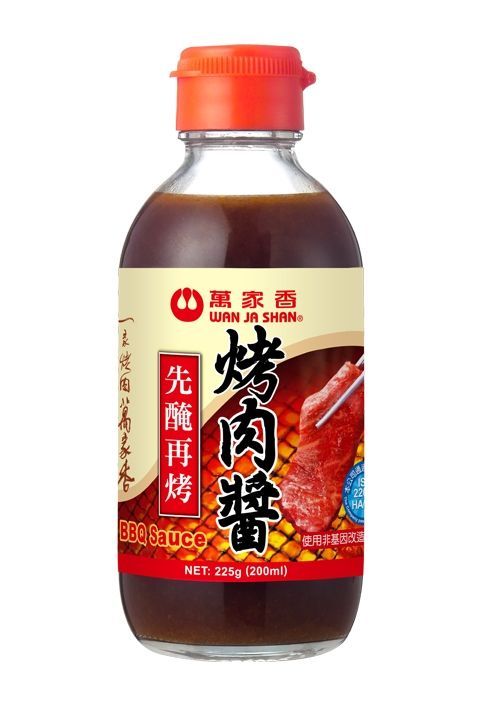
Unlike other Asian countries such as Korea and China, Taiwan uniquely enjoys barbecue festivals during the Mid-Autumn Festival holiday. This tradition is known to have originated from corporate marketing efforts. Marketing campaigns promoting barbecue sauce by soy sauce manufacturers and the promotion of oven sales in the Hsinchu Industrial Park overlapped, leading to the establishment of the barbecue custom during the Mid-Autumn Festival holiday starting in the 1980s.
The year 1982 marked the official start of Taiwan’s Mid-Autumn Festival barbecue festival. At that time, Taiwanese soy sauce company Wanjiaxiang (萬家香) launched a barbecue sauce advertisement with the catchphrase, "The smell of barbecue grilled in one house spreads to ten thousand households during the Mid-Autumn Festival," which sparked a wave of barbecue sauce promotions by other soy sauce companies and helped spread the barbecue culture during the festival.
Later, in 1987, the establishment of the semiconductor foundry company TSMC’s factory in Hsinchu City, Taiwan, rapidly transformed the city’s industry from home appliances such as gas stoves and ovens to the semiconductor industry, which also acted as a catalyst for the spread of barbecue culture.
As oven exports produced in Hsinchu sharply declined and industrial transformation began, home appliance companies started aggressively selling domestically priced ovens aimed at the domestic market by lowering prices. Combined with soy sauce companies’ Mid-Autumn Festival barbecue promotions, the barbecue festival during the Mid-Autumn Festival became firmly established as a custom in Taiwan.
© The Asia Business Daily(www.asiae.co.kr). All rights reserved.
![Clutching a Stolen Dior Bag, Saying "I Hate Being Poor but Real"... The Grotesque Con of a "Human Knockoff" [Slate]](https://cwcontent.asiae.co.kr/asiaresize/183/2026021902243444107_1771435474.jpg)


















