Temperatures Expected to Be Higher Than Average During Chuseok Holiday
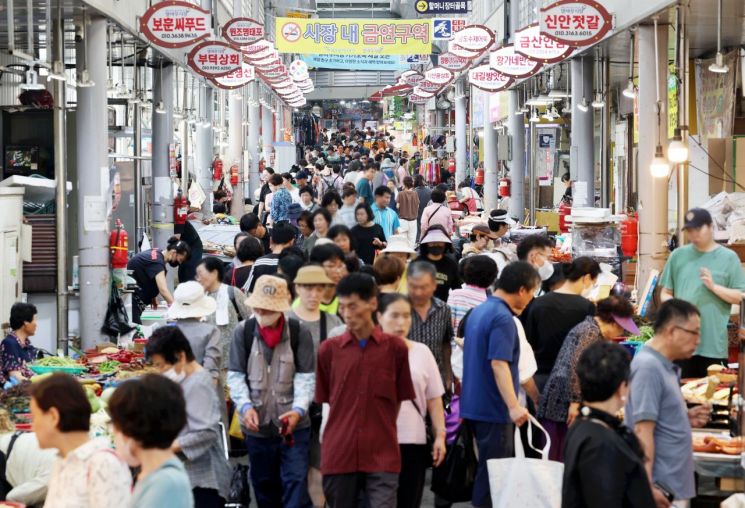
There appears to be no 'escape from the heatwave' even during the Hangawi holiday. An unusual September heatwave continues, with heatwave warnings issued for 80% of the country.
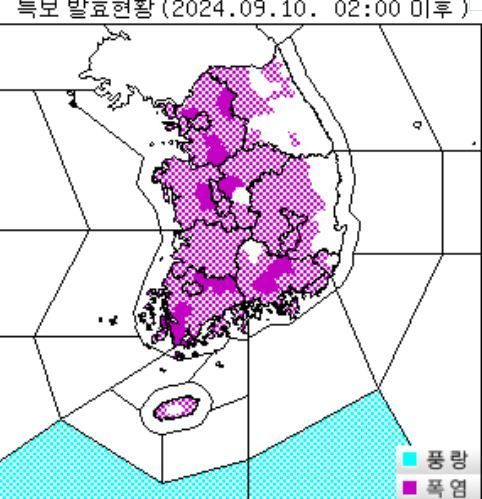
As of 10 a.m. on the 9th, the Korea Meteorological Administration (KMA) has issued heatwave warnings for 148 out of 183 weather warning zones nationwide, accounting for 80%. The warning status updated at 2 a.m. on the 10th showed little change. Except for some areas in Gangwon-do and Gyeongbuk, the entire country is still suffering from temperatures above 30 degrees Celsius.
Since 2020, the KMA has been issuing heatwave warnings based on the perceived temperature. This is the first time heatwave warnings have continued into September this year. In particular, regions such as Daejeon, Jeongseon in Gangwon, and Hongseong in Chungnam have set new daily high-temperature records for September, with temperatures significantly higher than average.
The reason the heat does not subside until mid-September is due to layers of hot air accumulating in the upper atmosphere. The upper atmosphere is experiencing hot, dry winds influenced by the Tibetan high-pressure system, while the lower atmosphere is receiving hot, humid southeast winds that block cold air.
Because of this, the KMA expects the heatwave to continue into next week during the Chuseok holiday. The KMA predicts that the average temperature over the next ten days from the 12th will be a morning low of 18?26 degrees Celsius and a daytime high of 25?32 degrees Celsius, far exceeding the normal range (14?21 degrees and 24?28 degrees, respectively).
Meanwhile, due to the worst heatwave on record, electricity bills surged last month. Korea Electric Power Corporation (KEPCO) announced on the 9th that the average electricity consumption per household nationwide last month was 363 kWh for 25.22 million households. This is a 9% increase compared to last year (333 kWh), and the average residential electricity bill is expected to rise by 13% to 63,610 won compared to the same period last year.
Households with increased electricity bills numbered 19.22 million, accounting for 76% of the total, while only 1% of households saw no change.
© The Asia Business Daily(www.asiae.co.kr). All rights reserved.


















