Medium-scale Film Production... Alleviating the 'Rich Get Richer, Poor Get Poorer' Phenomenon
Encouraging Creative and Challenging Works... Brightening the Film Industry
Theaters "Lowering Movie Ticket Prices? Testing from Multiple Angles"
A much-needed relief is expected to come to the film industry suffering from a production drought. The government has allocated 10 billion won in next year's budget for a mid-sized commercial film production support project.
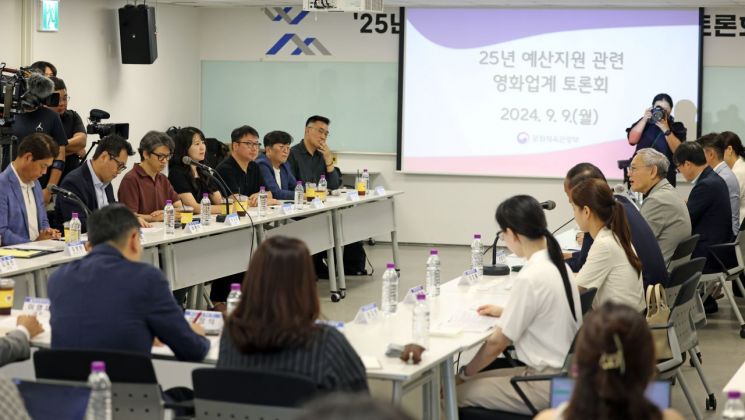
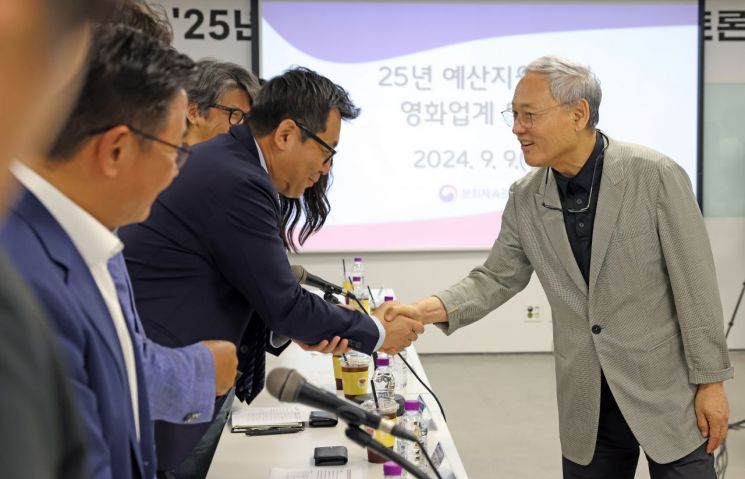
On the 9th, the Ministry of Culture, Sports and Tourism held a 'Budget Support Film Industry Forum' at the National Museum of Modern and Contemporary Art in Seoul. They explained next year's support plans in advance to stakeholders from theaters, production companies, distributors, and investors, and gathered industry opinions. This is the first time the Ministry has held a discussion with filmmakers regarding the budget.
The Ministry recently set next year's film industry support budget at 82.9 billion won, 9.2 billion won (12.5%) more than this year. Of this, 10 billion won will be used to support mid-sized commercial film productions. The intention is to alleviate the 'rich get richer, poor get poorer' phenomenon in the film industry while encouraging more creative and challenging works.
A Ministry official said, "After COVID-19, due to capital shortages, investment has concentrated on large commercial films that guarantee stable profits, causing mid-sized film production to shrink significantly," adding, "We expect this support to strengthen the backbone of Korean cinema."
The blueprint is a reenactment of 2003. At that time, several fresh mid-sized commercial films emerged in Chungmuro, including director Bong Joon-ho's Memories of Murder, director Park Chan-wook's Oldboy, and director Jang Joon-hwan's Save the Green Planet!. These films secured diversity in the market and served as a growth ladder for filmmakers.
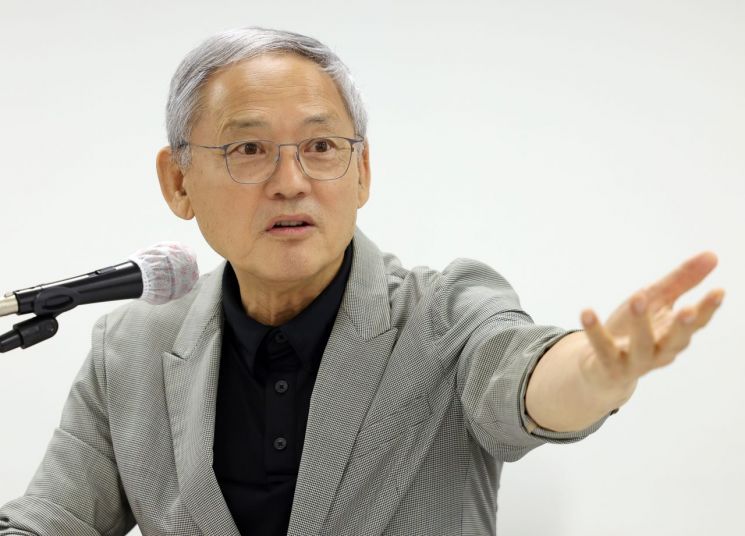
Minister Yoo said at the forum, "It seems that private investment is not happening as much as before," promising, "The Ministry of Culture, Sports and Tourism will take on that role more actively." He added, "We will not just review support projects through paperwork but will verify them through processes such as demo videos."
The film industry generally welcomed the move. Kim Tae-wan, CEO of Lewis Pictures, said, "While preparing Jam (2023) with a production budget of 5 billion won, we faced difficulties securing funds due to COVID-19," adding, "I hoped for policies that could support mid-sized films, so I am glad the Ministry is talking about this."
Director Lee Kyu-man, who directed Blood of the Landscape (2022) and Children... (2011), said, "The Ministry's film production support holds great significance for directors," and added, "It will provide vitality and hope to creators passing through the long tunnel after COVID-19."
Director Kim Se-hwi, who directed She Died (2024), said, "Considering commerciality, the unique charm of a film sometimes varies depending on the investor," adding, "Since niche elements like in Pamyo (2024) can also attract public interest, I hope this support helps new directors' fresh attempts."
The Ministry will also expand support for film festivals but plans to clarify evaluation criteria and carefully check whether requirements are met. Minister Yoo said, "We will accurately assess what the goals of the film festivals are and what achievements they have made," adding, "The principle is not to support festivals that fall outside the evaluation criteria."
The forum also discussed the recently highlighted holdback system and movie ticket prices. The holdback system imposes a waiting period before films screened in theaters can be distributed on IPTV or over-the-top (OTT) services. It is not legislated in Korea. Theater operators generally argue that holdback should be mandatory, while the OTT industry opposes it, saying it restricts viewing rights.
Heo Min-hoe, CEO of CGV, said, "Many viewers say they don't come to theaters because they can watch movies for free on OTT if they wait a little," emphasizing, "Even if the Ministry supports the budget, movies need to succeed at the box office for a virtuous cycle, so holdback is essential."
Nam Yong-seok, CEO of Megabox, explained, "Foreign filmmakers say they learned from Korea that the film ecosystem collapses without holdback," adding, "In France, where holdback is well established, the film industry has recovered to 90% of pre-COVID-19 levels."
Minister Yoo said, "The Ministry also tried to introduce holdback, but the stakeholders have not reached a consensus."
When asked whether theaters plan to lower movie ticket prices, which have steadily increased since COVID-19, theater representatives did not give a clear answer. CEO Heo said, "If lowering prices leads to better business, we will do so, but conditions are not right now," adding, "We need to test the pricing issue from various angles."
© The Asia Business Daily(www.asiae.co.kr). All rights reserved.
!["The Woman Who Threw Herself into the Water Clutching a Stolen Dior Bag"...A Grotesque Success Story That Shakes the Korean Psyche [Slate]](https://cwcontent.asiae.co.kr/asiaresize/183/2026021902243444107_1771435474.jpg)


















