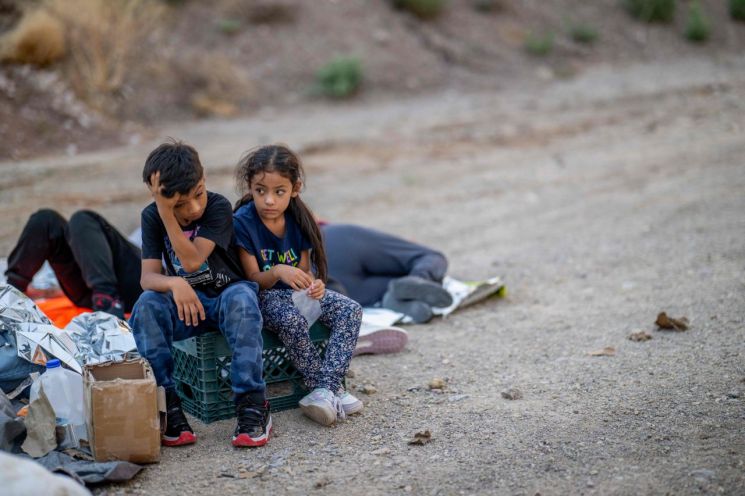
About half of the world's refugee children of school age are unable to attend school.
According to a report released on the 9th (local time) by the United Nations High Commissioner for Refugees (UNHCR), 7.2 million refugee children were not receiving education based on school enrollment data from 2022 to 2023. This accounts for about half of the 14.8 million school-age refugee children worldwide.
The enrollment rates of refugee children by education level were recorded as 37% for early childhood education, 65% for primary education, and 42% for secondary education. In particular, the enrollment rate in higher education institutions such as universities was only 7%.
UNHCR cited unstable environments for refugee children, exclusionary education policies in host regions, insufficient educational facilities, high tuition fees, and language barriers as reasons for the widespread lack of preschool attendance.
Although the number of refugee students receiving higher education increased by about 50,000 this year, the overall increase in the refugee population meant that the school enrollment rate remained unchanged.
Additionally, the report emphasized that gender disparities in access to education for refugees persist, and that over 600,000 migrant children and youth from Ukraine are unable to attend school due to the ongoing war in their homeland.
Filippo Grandi, the UNHCR High Commissioner, stated, "Education can save lives. It reduces the likelihood of adolescent pregnancy or early marriage and lowers the chances of engaging in risky behaviors such as youth violence," adding, "We must not deprive refugees of educational opportunities that open access to the labor market and enable them to sustain their livelihoods."
© The Asia Business Daily(www.asiae.co.kr). All rights reserved.
![User Who Sold Erroneously Deposited Bitcoins to Repay Debt and Fund Entertainment... What Did the Supreme Court Decide in 2021? [Legal Issue Check]](https://cwcontent.asiae.co.kr/asiaresize/183/2026020910431234020_1770601391.png)