The Wall Street Journal (WSJ) reported on the 8th (local time) that local banks in Iraq have been caught illegally transferring hundreds of billions of dollars to Iran over the past decade. It was investigated that this was done by exploiting loopholes in the temporary financial system established by the United States after invading Iraq in 2003.
According to an audit report by the U.S. financial audit and advisory firm K2 Integrity, three banks owned by Iraqi financial entrepreneur Ali Ghulam ? Iraq Middle East Investment Bank, Al Ansari Islamic Bank, and Al Qabid Islamic Bank ? had been illegally transferring funds overseas for over ten years until 2022, when the U.S. Treasury Department banned dollar transactions with them.
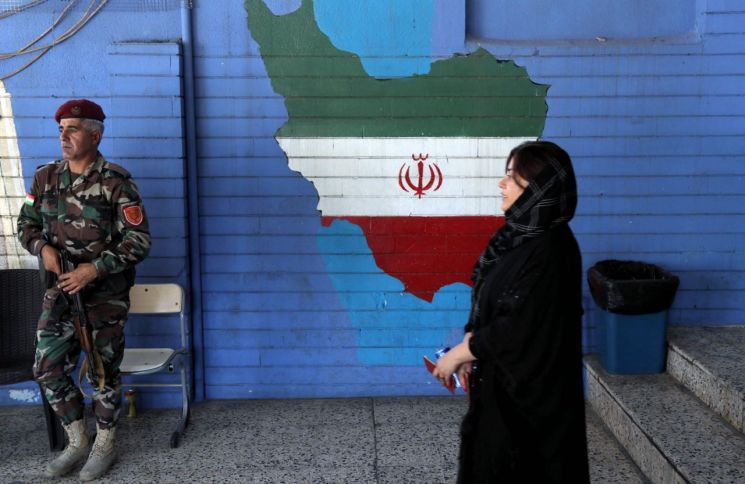
These banks transferred a total of $3.5 billion (approximately 4.7 trillion KRW) overseas in the six months prior to the U.S. authorities' sanctions, with most of the funds sent to several companies in the United Arab Emirates (UAE) whose identities remain unclear. On some days, more than $250 million was transferred, of which 80% was untraceable, and part of the amount was found to have flowed to the Iranian Revolutionary Guard Corps and the anti-American militias they support.
The report added that the invoice information related to these funds was limited and overly simplistic, calling it a "red flag for money laundering." However, Ghulam denied the allegations in an interview with WSJ, stating, "I have no involvement in money laundering or any relationship with Iran."
These fund transfers were reportedly conducted through the temporary financial system established by the U.S. after invading Iraq in 2003. At that time, the U.S. stored Iraq's oil sales revenue at the Federal Reserve Bank of New York and then sent it back to Iraq, creating a system where local private banks handled commercial remittance operations. However, the temporary system did not require detailed disclosure of the overseas recipients of Iraqi remittance funds, resulting in insufficient monitoring functions.
U.S. officials believe that about 20 Iraqi banks, including Ghulam's banks, were involved in supplying dollars to Iran and its proxy forces using forged invoices and other means. A senior U.S. Treasury official reportedly pointed out to Iraqi officials at a meeting held in Baghdad last January that local banks deliberately abused access to U.S. dollars to support the Quds Force, a paramilitary organization of the Iranian Revolutionary Guard Corps (IRGC), and Iraqi militias.
There is also speculation that funds may have flowed to Hamas, the Palestinian armed faction currently at war with Israel, and Hezbollah, the Lebanese armed faction. Brian Nelson, former Deputy Assistant Secretary for Terrorist Financing and Financial Crimes at the U.S. Treasury, explained, "The U.S. took action against suspicious Iraqi banks using the Federal Reserve (Fed) system to transfer dollars," adding, "It is the Treasury Department's primary mission to ensure that funds are not used to support the Iranian regime."
© The Asia Business Daily(www.asiae.co.kr). All rights reserved.
!["The Woman Who Threw Herself into the Water Clutching a Stolen Dior Bag"...A Grotesque Success Story That Shakes the Korean Psyche [Slate]](https://cwcontent.asiae.co.kr/asiaresize/183/2026021902243444107_1771435474.jpg)
















