Medical AI company Lunit announced on the 9th that it will present research results predicting the efficacy of immuno-oncology combination therapy in patients with advanced gastric cancer using Lunit Scope IO, an AI biomarker, at the 2024 European Society for Medical Oncology (ESMO 2024) held in Barcelona, Spain from June 13 to 17.
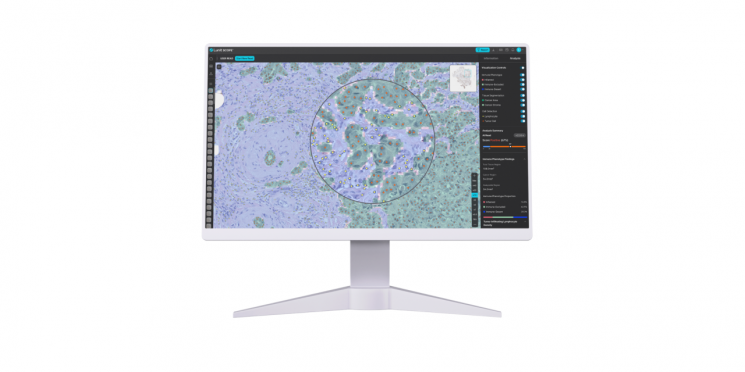
Recently, combination therapy of immunotherapy and chemotherapy has been approved and used as the first-line treatment for advanced gastric cancer. However, since treatment responses vary among patients, there has been a growing need to discover biomarkers that can accurately predict treatment efficacy. This study was conducted as part of efforts to address such clinical demands.
Led by research teams from multiple large hospitals in Korea, this study involved a total of 585 patients with advanced gastric cancer. Among them, 275 patients received combination therapy of the immuno-oncology drug Opdivo and chemotherapy, while 310 patients received chemotherapy alone. The research team analyzed their tissue data using Lunit Scope IO to identify patients' immune phenotypes and examined the association with treatment response to immuno-oncology therapy.
The analysis showed that the median progression-free survival (mPFS) in the combination therapy group was 8.2 months, an improvement compared to 5.9 months in the chemotherapy-only group. mPFS refers to the period during which half of the clinical participants survive without cancer progression or recurrence and is a key indicator for evaluating anticancer drug efficacy. Notably, in the immune-active patient group (228 patients) classified by Lunit Scope IO, mPFS was 11 months, approximately twice as long as that of the chemotherapy-only group, highlighting the pronounced effect of combination therapy. On the other hand, in the immune-inactive patient group classified by Lunit Scope IO, mPFS was 7.3 months even with combination therapy, showing no significant improvement. Additionally, combination therapy was more effective in non-signet ring cell carcinoma patients than in signet ring cell carcinoma patients, whose cancer cells appear ring-shaped and have a poor prognosis.
Seobum Seok, CEO of Lunit, said, "This study once again confirmed the hypothesis that immune phenotype classification by Lunit Scope can predict treatment response in gastric cancer patients, who account for 7.7% of cancers worldwide." He added, "We will continue to strive to ensure that Lunit Scope provides important indicators in the process of selecting the most appropriate immuno-oncology-based treatment for patients."
© The Asia Business Daily(www.asiae.co.kr). All rights reserved.
![Clutching a Stolen Dior Bag, Saying "I Hate Being Poor but Real"... The Grotesque Con of a "Human Knockoff" [Slate]](https://cwcontent.asiae.co.kr/asiaresize/183/2026021902243444107_1771435474.jpg)
















