After Two Years of the 8th Elected Term, Average Monthly Population Decline Eased by 80%
Demand-Oriented... Bold and Rapid Gumi-Style Population Policy Shows Results
After steadily reducing the rate of population decline since 2022, the population of Gumi began to increase again in August, drawing attention to Gumi-style population policies.
The population of Gumi, which had been declining since 2018, dropped to an average monthly decrease of around 300 people in 2020. In 2022, the population decreased by a record 4,471, raising concerns that the population could fall below 400,000 this year.
However, following the launch of the 8th popularly elected administration and the implementation of differentiated population policies with a focus of all administrative resources, the population decline rate improved by more than 40% last year. This year, the average monthly decrease has dropped to around 80 people, marking an improvement of nearly 80% in the decline rate.
Notably, the population increased by 41 people last month, and one of the direct causes of this reversal in the declining trend appears to be an increase in the number of births, suggesting that Gumi’s efforts to overcome low birth rates are gradually showing results.
The natural increase (the difference between the number of births and deaths) recorded double-digit growth for two consecutive months in July and August, and the average monthly number of births this year has increased by about 4% compared to last year. While this is a modest achievement, it is considered encouraging and hopeful in the context of the national low birth rate crisis.
This positive change in population figures is interpreted as the result of Gumi-style population policies that focus on fundamental problem-solving, such as consumer-centered, meticulous policy design, small innovations through a shift in perspective, and building child-friendly infrastructure and promoting work-life balance culture, rather than relying on short-term effects from cash support.
The top priority of the 8th popularly elected administration is population recovery. Gumi City established the Population and Youth Division in January last year, and in July this year launched the Future Education and Childcare Bureau, focusing on creating a “city that is good for raising children,” where young people can settle and women can realize their potential.
First, Gumi is strengthening the competitiveness of public education to nurture future local talent through effective and differentiated educational support. In particular, the Gumi Career and Admissions Support Center, which opened last October, provides systematic educational consulting and special lectures, increasing demand for admissions counseling not only among high school students preparing for college entrance but also among middle school students.
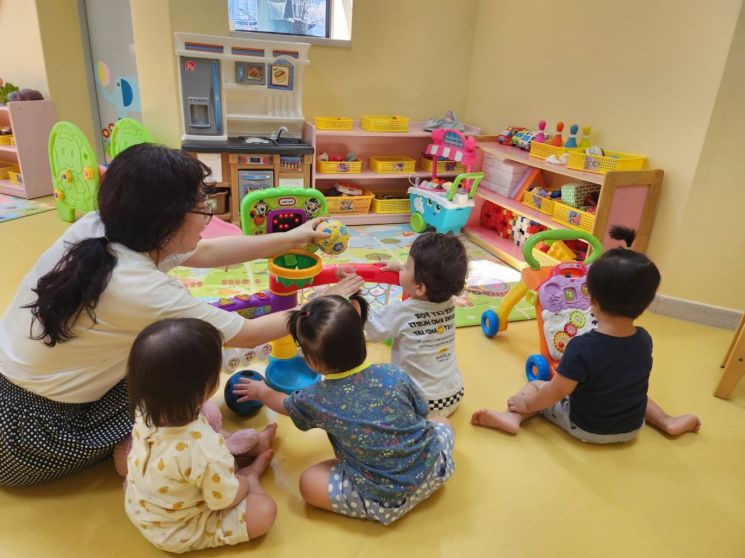
In addition, Gumi is building a comprehensive childcare system by providing 24-hour care services within a 10-minute radius in each district. To reduce the waiting list for the highly demanded child care service, the city has hired 20 additional caregivers, increasing the total from 282 to 302, and expanded the number of care service consignment agencies from one to two to address care gaps.
The Gumi 24-hour Childcare Center, the first of its kind in the country, and the newly established Sandong 24-hour Childcare Center have provided extended nighttime care to over 2,000 children. From September this year, the number of dedicated 24-hour elementary care facilities will be expanded to six, gradually establishing a district-based care system.
Especially amid the nationwide risk of pediatric care system collapse, the city and hospitals have made all-out efforts to open the “365 Pediatric and Adolescent Medical Center,” a top-priority pledge project, to address gaps in pediatric emergency care. Gyeongbuk’s first Sick Child Care Center is also being operated to reduce the childcare burden on dual-income families.
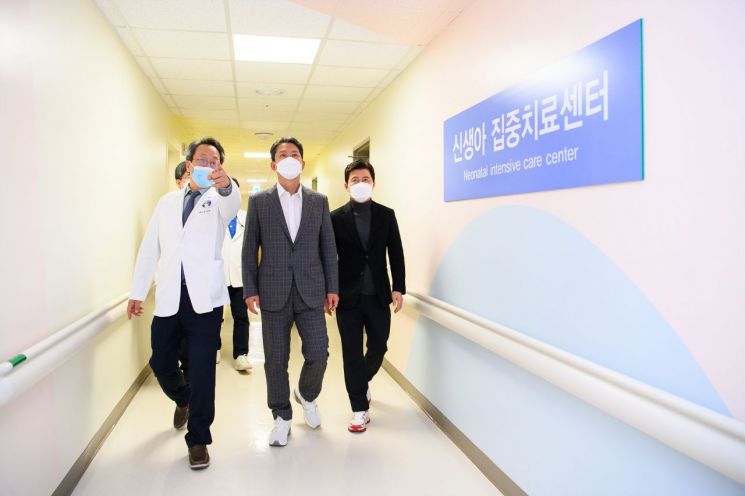
In April this year, the “Gumi+ Neonatal Intensive Care Center,” the only one in Gyeongbuk for specialized treatment of high-risk newborns, opened, establishing an essential pediatric medical system for both Gumi and the midwestern region of Gyeongbuk.
Additionally, Gumi is expanding practical policies such as easing the criteria for multi-child families and offering benefits like the Multi-Child Priority Card and K-MOM Taxi for pregnant women, with the spirit of treating pregnant women and multi-child families at the level of national merit recipients.
Efforts are also ongoing to transform Gumi from a “boring city where people only work” into a “romantic and fun city” where people want to stay and enjoy life.
The “Gumi Ramen Festival,” which attracted 80,000 visitors last year and was designated an outstanding festival in Gyeongbuk, along with the region’s largest outdoor festival, the “Gumi Food Festival,” and the “Youth Geumocheon Cherry Blossom Festival,” have become representative local festivals.
The “Gumi Sweet Romance Night Market,” created to revitalize traditional markets and offer citizens a variety of food, sights, and entertainment, attracted about 260,000 visitors from April to June, helping establish Gumi as a city where people want to stay.
Since the start of the 8th administration, large-scale corporate investments totaling nearly 5.7 trillion won have created quality jobs, accelerated urban redevelopment, and supported the city’s population policies with a record-high 2 trillion won budget.
Furthermore, Gumi has been consecutively selected for key government regional projects, including the semiconductor materials and parts specialized complex, the defense industry innovation cluster, the education development special zone, and the opportunity development special zone, laying the foundation for achieving the goal of restoring the population to 420,000.
Going forward, Gumi City will continue to prioritize population recovery, especially by strengthening life-cycle support policies for women and young people, fostering advanced industries such as semiconductors and defense, and preparing for the era of the integrated new airport, thereby enhancing the city’s future value.
Mayor Kim Jangho said, “As a result of focusing on overcoming the population crisis for two years under the 8th administration, we have achieved a small but meaningful result of reversing the population decline. We will do our best to make Gumi a city where young people gather, settle, get married, have children, and dream of the future through bold and rapid implementation of demand-centered policies.”
© The Asia Business Daily(www.asiae.co.kr). All rights reserved.


















