Gyeongwon Line is a Golden Route Passing Yongsan, Wangsimni, Cheongnyangni, Gwangwoon University, and Changdong Stations
Seven Seoul District Mayors Form 'Gyeongwon Line Underground Relocation Promotion Council'
"Move the Railroad Underground and Integrate Development of Railroad Upper Area and Surrounding Regions"
Efforts to Reflect in Ministry of Land, Infrastructure and Transport's Leading Project for Integrated Railroad Underground Development
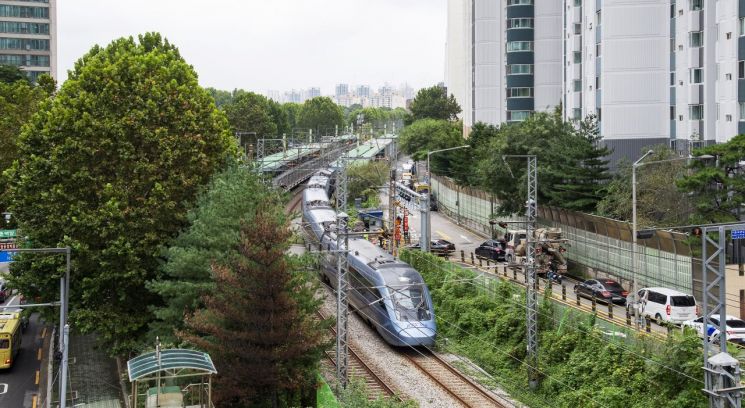
#The Gyeongwon Line is an above-ground railway section connecting Yongsan Station to Dobongsan Station within Seoul city. Yongsan District includes 4 stations such as Yongsan Station (6 km section), Seongdong District has 3 stations including Wangsimni Station (4.4 km), Dongdaemun District has 4 stations including Cheongnyangni Station (4.6 km), Seongbuk District has 2 stations including Seokgye Station (0.83 km), Nowon District has 4 stations including Kwangwoon University Station (3.6 km), and Dobong District has 4 stations including Chang-dong Station (6.0 km). Jungnang District is connected to the Gyeongwon Line via branch lines, the Jungang Line and the Gyeongchun Line.
The seven autonomous districts of Seoul have agreed to jointly work on the 'Gyeongwon Line Railway Underground Project' and recently formed a promotion council. According to Nowon, Dobong, Dongdaemun, Seongdong, Seongbuk, Yongsan, and Jungnang Districts on the 8th, the seven districts established the 'Gyeongwon Line Underground Promotion Council' at Dongdaemun District Office on the 23rd of last month and began discussions on railway undergrounding and integrated development of the railway upper and surrounding areas.
Among the Gyeongwon Line stations, five locations including Yongsan Station, Wangsimni Station, Cheongnyangni Station, Kwangwoon University Station, and Chang-dong Station are on the routes of the Metropolitan Area Express Railway (GTX) B and C lines. The goal of the seven districts is to have the Gyeongwon Line included in the Ministry of Land, Infrastructure and Transport’s leading projects and comprehensive plans for railway underground integrated development. The core objective is to relocate the railway, which has divided the city center, underground and to innovatively recreate urban space by integrating development of the railway upper and surrounding areas.
Since the enactment of the 'Railway Underground Integrated Development Act' in January this year, the Ministry of Land, Infrastructure and Transport has started research for establishing a comprehensive plan, and Seoul City along with each local government is also promoting upper area development planning. The districts belonging to the promotion council held working-level meetings with teams and department heads in May and June to advance the Gyeongwon Line undergrounding project.
The district heads of the promotion council stated, “Through this meeting of heads, cooperation among autonomous districts will be strengthened, and momentum for the smooth progress of the Gyeongwon Line undergrounding project will be gained.” They added, “We will conduct in-depth discussions on the project’s direction and council operation plans shared during the meeting and express our opinions to Seoul City to ensure the Gyeongwon Line is undergrounded.”
Lee Seung-ro, Mayor of Seongbuk District, said, “Due to the Gyeongwon Line railway and the Imun (Seokgwan) train depot, residents of Seongbuk District have suffered from noise, dust, and regional division, so the undergrounding of the Gyeongwon Line railway is absolutely necessary.”
Park Hee-young, Mayor of Yongsan District, explained the reason for joining the council, saying, “The above-ground railway has caused regional division, traffic congestion, and deterioration of residential environments, acting as a limiting factor for regional development.”
Lee Pil-hyung, Mayor of Dongdaemun District, was elected as the inaugural chairman to lead the Gyeongwon Line Underground Promotion Council for two years.
Meanwhile, Seodaemun District is also promoting the 'Gyeongui Line Underground Project,' which involves undergrounding the 5.8 km section from Seoul Station to Gajwa Station and restructuring the upper vacant land into a mixed-use complex for business, commercial, and residential purposes.
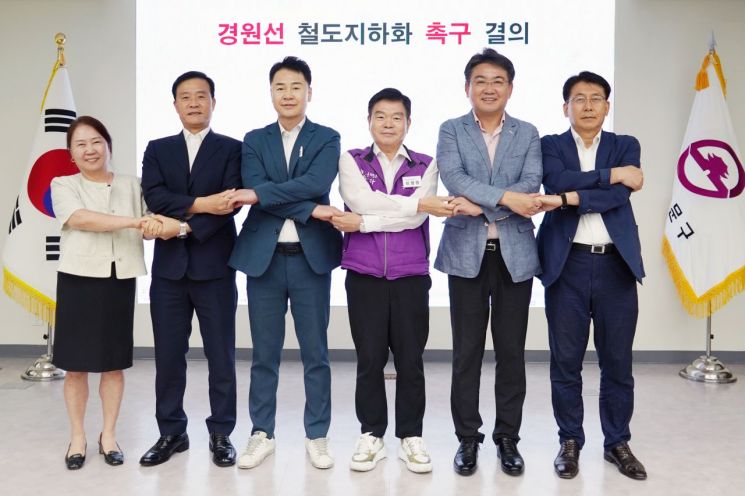 Six districts attended the 'Gyeongwon Line Undergrounding Promotion Council' meeting recently held at Dongdaemun District Office. From the left: Kim Seonsu, Deputy Mayor of Yongsan District; Lee Seungro, Mayor of Seongbuk District; Oh Eunseok, Mayor of Dobong District; Lee Pilhyung, Mayor of Dongdaemun District; Oh Seungrok, Mayor of Nowon District; Yoo Bohwa, Deputy Mayor of Seongdong District. Provided by Seongbuk District.
© The Asia Business Daily(www.asiae.co.kr). All rights reserved.
![User Who Sold Erroneously Deposited Bitcoins to Repay Debt and Fund Entertainment... What Did the Supreme Court Decide in 2021? [Legal Issue Check]](https://cwcontent.asiae.co.kr/asiaresize/183/2026020910431234020_1770601391.png)

















