Decrease in Mosquito Population Due to Abnormal Climate This Summer
Increase in Mosquitoes in Early Autumn... Beware of Japanese Encephalitis
This summer, unprecedented heatwaves and prolonged tropical nights have led to a decrease in the mosquito population compared to several years ago. On the other hand, since September, the number of mosquitoes has been relatively increasing, and Japanese encephalitis vector mosquitoes are also rampant, requiring caution against autumn mosquitoes.
According to the Infectious Disease Portal of the Korea Disease Control and Prevention Agency on the 7th, a total of 4,990 mosquitoes were collected from livestock farms at 13 sites in 11 cities and provinces nationwide over two months from July 1 to August 31. This is about 20% less than the average of 5,972 mosquitoes during the same period from 2020 to 2022.
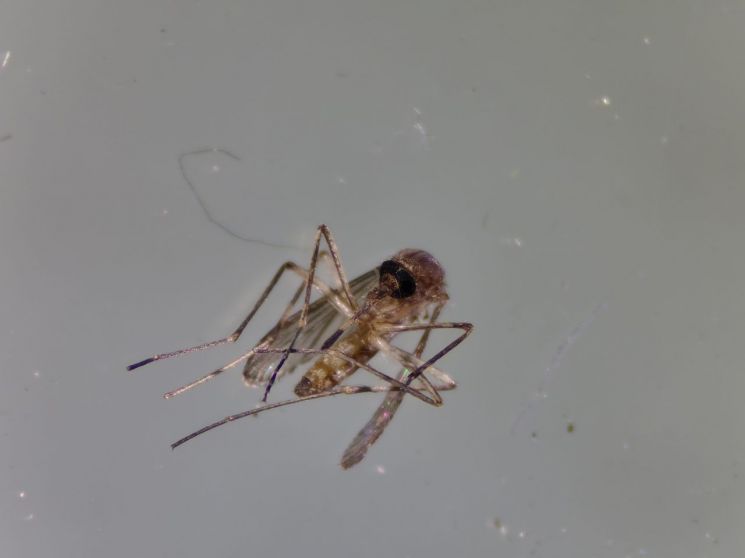
This is attributed to the record-breaking heatwaves and tropical nights that prevailed this summer. The Ministry of the Interior and Safety reported 22 days of heatwaves this year, ranking third in history after 2018 and 1994. Mosquitoes are cold-blooded animals and cannot regulate their body temperature, so prolonged high temperatures accelerate their metabolism excessively, shortening their lifespan. Additionally, mosquitoes tend to be inactive in heat above 30 degrees Celsius, and this year, with tropical nights continuing even at night, mosquito activity is believed to have decreased further.
However, as the intense heat subsides and early autumn approaches, the number of mosquitoes collected recently is showing an increasing trend compared to the past. According to the latest weekly data from August 25 to 31 (the 35th week of this year), 725 mosquitoes were collected during this period. This is more than 200 mosquitoes higher than the average of 583 mosquitoes in previous years.
In particular, a large number of Japanese encephalitis vector mosquitoes were collected, and on August 29, two domestic Japanese encephalitis patients were confirmed simultaneously for the first time this year, prompting health authorities to urge compliance with preventive measures.
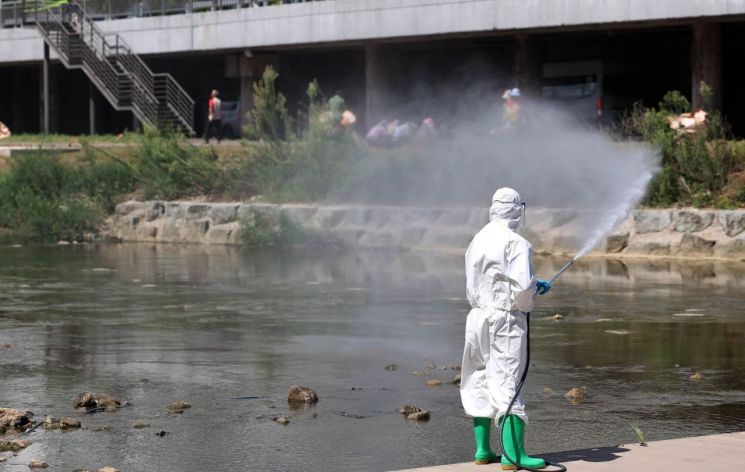 On the 29th of last month, the Infectious Disease Control Team of the Buk-gu Health Center in Gwangju conducted disinfection work around Seobangcheon in Im-dong, Buk-gu to prevent infectious diseases.
 [Photo by Yonhap News]
The number of Japanese encephalitis vector mosquitoes collected this year reached 322, nearly double the average of 171 during the same period in previous years. Japanese encephalitis is transmitted by the small brown house mosquito, which mainly inhabits rice paddies, water celery fields, animal barns, and puddles. Infection with the Japanese encephalitis virus causes fever and headache, and in rare cases, progresses to encephalitis. Encephalitis symptoms include high fever, seizures, neck stiffness, confusion, convulsions, and paralysis; 20-30% of cases may result in death, and 30-50% may suffer various neurological complications depending on the affected area. In Korea, Japanese encephalitis cases mainly occur from May to November, with 80% of cases concentrated in September and October.
Health authorities recommend the following preventive measures against Japanese encephalitis: ▲ getting vaccinated ▲ avoiding outdoor activities during mosquito-active nighttime hours ▲ wearing light-colored long clothing and using mosquito repellents when going out at night ▲ refraining from using strong perfumes or cosmetics that may attract mosquitoes ▲ maintaining window screens and using mosquito nets ▲ eliminating standing water around homes such as puddles and clogged drains.
© The Asia Business Daily(www.asiae.co.kr). All rights reserved.


















