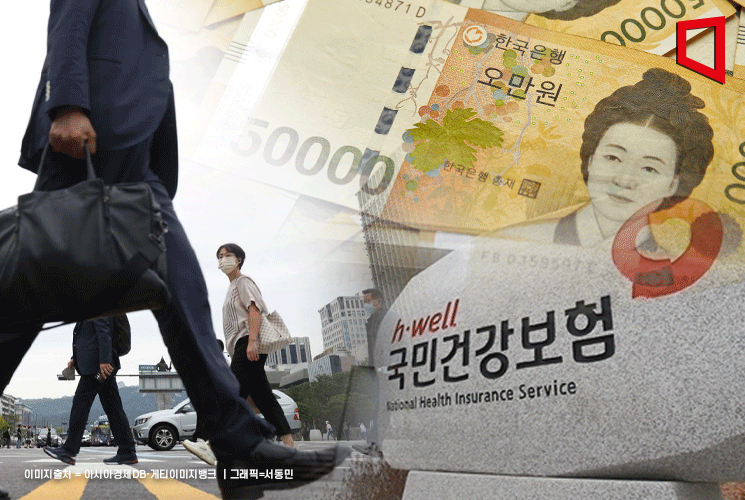
The health insurance premium rate has been frozen for the first time for two consecutive years.
On the afternoon of the 6th, the Ministry of Health and Welfare held the 17th meeting of this year of the Health Insurance Policy Deliberation Committee (Geonjeongsim), the highest decision-making body for health insurance, and decided the health insurance premium rate for next year to be 7.09%. This is the first time the health insurance premium rate has been frozen for two consecutive years. The freeze next year marks the fourth time in history, including 2009, 2017, and 2024.
Until now, the health insurance premium rate has steadily increased almost every year. The rates increased as follows: 4.9% in 2010, 5.9% in 2011, 2.8% in 2012, 1.6% in 2013, 1.7% in 2014, 1.35% in 2015, and 0.9% in 2016, before being frozen in 2017. Subsequently, the rates rose by 2.04% in 2018, 3.49% in 2019, 3.2% in 2020, 2.89% in 2021, 1.89% in 2022, and 1.49% in 2023.
According to the Ministry of Health and Welfare, as of the end of July this year, the health insurance reserve fund stands at 27 trillion KRW. The Ministry plans to continue investing in essential medical services through health insurance even if the premium rate remains unchanged.
So far, six major priorities have been set: severe, emergency, high-difficulty essential treatment, nighttime and holiday care, pediatric and maternity care, and medically underserved areas. Since January of this year, an investment of 1.2 trillion KRW has been made through the introduction of public policy fees in areas requiring focused compensation. The government plans to invest 10 trillion KRW by 2028. Additionally, to innovate the training environment for residents and expand regional and essential medical services, the government will invest another 10 trillion KRW in national finances over five years starting next year, totaling more than 20 trillion KRW in investment.
© The Asia Business Daily(www.asiae.co.kr). All rights reserved.

















