Government Announces 'Electric Vehicle Fire Safety Management Measures'
Aiming to Alleviate Public Anxiety and Ensure EV Safety
BMS Adoption Rate at 73%... Free Installation and Updates Promoted
Three-Stage 'Battery Risk Standard' to Be Established Within the Year
Mandatory Installation of Wet Sprinklers in New Buildings
Legislation for Fire-Resistant Materials in Underground Parking Lots Established
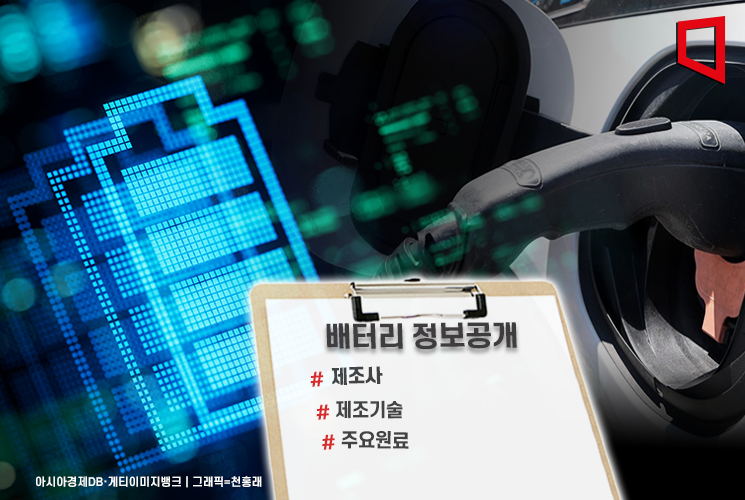
The government will mandate battery manufacturers to provide information on manufacturing technology and key raw materials to reduce concerns about electric vehicle (EV) fires. It will also work to improve the performance of the electric vehicle Battery Management System (BMS) and expand its adoption. Within this year, a BMS battery risk standard will be established, and a pilot project will be launched to automatically notify fire authorities if a vehicle reaches a risk stage. Major vehicle manufacturers such as Hyundai Motor Company and Kia will install BMS safety features free of charge on older EV models that lack them.
On the 6th, the government officially announced the "Electric Vehicle Fire Safety Management Measures" at the State Affairs Ministers' Meeting chaired by Prime Minister Han Duck-soo. This plan includes various measures to alleviate public anxiety following increased safety concerns about EVs, such as the fire in an underground parking lot of an apartment complex in Incheon in August.
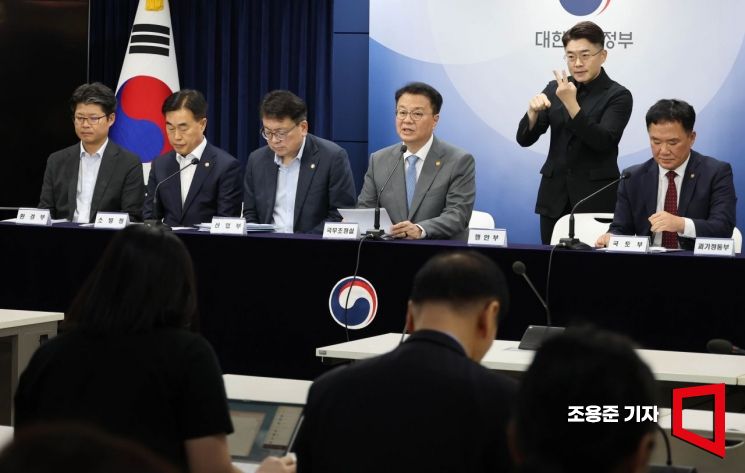 Bang Gi-seon, Director of the Office for Government Policy Coordination (fourth from the left), is announcing the 'Electric Vehicle Fire Safety Management Measures' on the 6th at the Government Seoul Office in Jongno, Seoul. Photo by Jo Yong-jun jun21@
Increasing Battery Information Disclosure and Expanding BMS Adoption
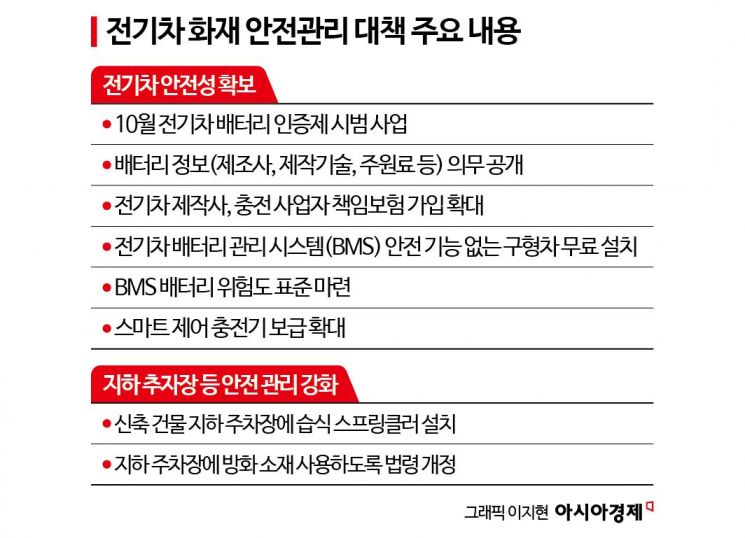
The government will strengthen management systems throughout the entire process of EV production and operation. Battery information disclosure, which was previously only recommended, will be made mandatory so that the public can access key information. Not only battery manufacturers but also manufacturing technologies and main raw materials, including cathode materials, will be fully disclosed. The EV battery certification system, originally scheduled for implementation in February next year, will be advanced to October for a pilot project.
Battery inspection items during regular EV inspections will be significantly increased. Detailed checks will be conducted on cell voltage, battery temperature, charging status, and other conditions. Additionally, inspection infrastructure such as EV battery diagnostic devices will be rapidly expanded at both Korea Transportation Safety Authority inspection centers and private inspection centers. The battery history management system will be implemented as planned in February next year.
To ensure battery safety, BMS functions will be improved and their adoption expanded. The BMS monitors and warns about the EV battery status in real time. Currently, among the approximately 600,000 EVs in South Korea, about 440,000 (approximately 73%) are equipped with BMS. About 100,000 vehicles (17%) can have BMS safety features installed via vehicle updates, while about 60,000 early models (10%) cannot be updated.
Major manufacturers such as Hyundai Motor Company and Kia will promote free installation of BMS safety features on older EVs without them. Vehicles already equipped will receive free performance updates. The free service period for BMS connection and notification functions, which allow drivers to immediately recognize battery abnormalities, will be extended from 5 years to 10 years.
The government plans to establish a "BMS Battery Risk Standard" within this year, categorizing risk into three stages: caution, warning, and danger. Starting in the first half of next year, a pilot project will be conducted where, with the vehicle owner's consent to information provision, the vehicle will automatically notify fire authorities if it reaches a danger stage.
Expanding Smart Controlled Charger Adoption... "Purpose is Additional Safety Devices Beyond BMS"
To strengthen business operator responsibility, the government will expand liability insurance enrollment for EV manufacturers and charging service providers. From next year, automakers not enrolled in product liability insurance will be ineligible for EV subsidies. The government is also pursuing mandatory product liability insurance enrollment. Currently, 14 domestic and international manufacturers have liability insurance, covering about 97% of EV providers in the country.
To prevent fires, the adoption of smart controlled chargers that regulate charging amounts will be increased. This year, 20,000 units and 71,000 units next year are planned for distribution. These smart controlled chargers do not limit charging to a specific percentage but monitor the vehicle for problems and control charging during risk situations. Existing slow chargers will be sequentially replaced with smart controlled chargers. Installation of fast chargers with smart control functions will also increase.
Bang Gi-seon, Director of the Office for Government Policy Coordination, explained at a briefing after the State Affairs Ministers' Meeting, "It has not been proven that fires are caused by overcharging," but added, "You can think of this as having double or triple safety devices." He further stated, "Vehicles equipped with BMS have sufficient overcharge prevention functions, but if there is a problem with the battery or BMS, the charger must check again," and "This is to ensure all safety devices are fully in place."
Installation of Wet Sprinklers... Use of Fire-Resistant Materials in Parking Lots
All new buildings' underground parking lots will be required to install "wet sprinklers" that detect and activate quickly in case of fire. Buildings with sprinklers will be encouraged to improve their performance. The government will also consider strengthening fire detector installation standards and expanding mandatory installation targets for new buildings. Illegal acts such as arbitrarily blocking or shutting off fire facilities like sprinklers will be strictly punished.
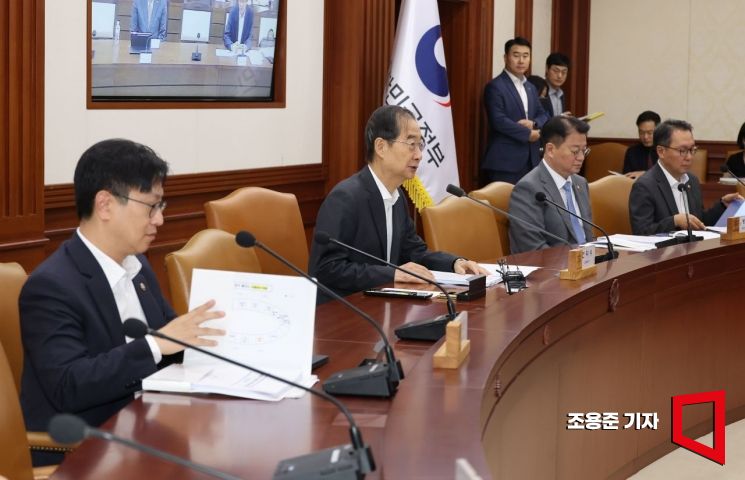 Prime Minister Han Duck-soo (second from the left) is attending and speaking at the Cabinet Meeting on National Issues held at the Government Seoul Office in Jongno, Seoul, on the 6th. Photo by Jo Yong-jun jun21@
To prevent fire spread in underground parking lots, fire-resistant materials will be applied to interior walls, ceilings, and pillars. To this end, the government plans to amend the Enforcement Decree of the Building Act by the first half of next year. Considering public concerns, the mandatory implementation of expanding EV parking zones and charging facilities (2%), originally scheduled for January next year, will be postponed by one year through cooperation with local governments. Director Bang explained, "This is a one-year postponement of the mandate, not a postponement of the distribution of charging facilities."
Changes to the locations of EV charging facilities will be reviewed after gathering opinions from various channels. This is because the residential type is mainly apartments, and newly built apartments often lack above-ground parking lots. Since this is not a matter the government can decide unilaterally, further consultations with residents and local governments will be conducted.
Development and Distribution of Unmanned Small Fire Trucks Next Year
The government will expand the distribution of EV fire suppression equipment such as mobile water tanks and spray devices to all 240 fire stations nationwide by next year to facilitate smooth fire suppression by fire authorities. Through public-private cooperation, unmanned small fire trucks capable of entering underground parking lots will be developed within this year and distributed next year using military technology. Regulations will also be amended to mandate the provision of information such as the location and blueprints of EV charging facilities to fire stations.
In the mid to long term, to reduce fire risks caused by internal battery short circuits, the government will develop additives to improve separator stability and battery pack fire suppression technologies. Development of "all-solid-state batteries," which replace the electrolyte between the battery's cathode and anode from liquid to solid, will also continue. The government will also advance BMS fire diagnosis and control performance.
The government plans to swiftly promote related legal and institutional improvements to ensure the smooth implementation of these measures. Additional matters requiring review will be discussed and improvement tasks continuously identified by the "Underground Parking Lot EV Fire Safety Task Force (TF)," which includes the Fire Agency and related ministries, by the end of the year.
Prime Minister Han said, "For the EV industry to grow, thorough safety management must be guaranteed," and urged, "Related ministries should highly enhance safety at both production and usage stages of EVs to prevent accidents in advance and minimize damage in case of fire, ensuring full commitment to implementing these measures."
© The Asia Business Daily(www.asiae.co.kr). All rights reserved.
![Clutching a Stolen Dior Bag, Saying "I Hate Being Poor but Real"... The Grotesque Con of a "Human Knockoff" [Slate]](https://cwcontent.asiae.co.kr/asiaresize/183/2026021902243444107_1771435474.jpg)


















