KDCA Takes Proactive Measures Against New and Variant Infectious Disease Pandemics
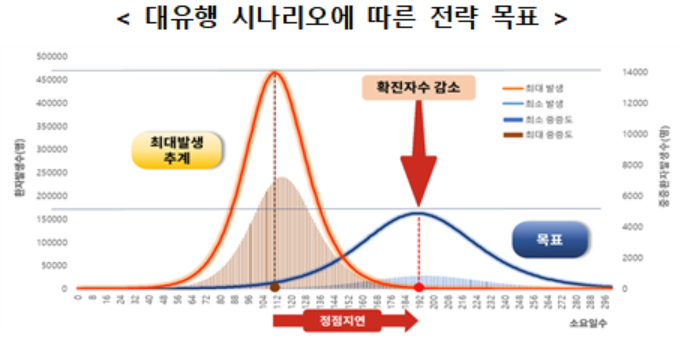
Reduces Patient Numbers by 35% and Delays Peak Period to 190 Days
The government has decided to expand the number of sentinel surveillance medical institutions from the current 300 to 1,000 to enable early response to infectious disease pandemics such as novel influenza. In the event of an infectious disease pandemic, the strategy is to reduce the number of patients through quarantine measures, delay the peak of the outbreak, and rapidly develop vaccines.
On the 6th, the Korea Disease Control and Prevention Agency (KDCA) announced the "Novel Influenza Pandemic Preparedness and Response Plan" with these details to prepare for infectious disease pandemics. This plan, originally established in 2006 and revised twice in 2011 and 2018, has been comprehensively updated after six years. It reflects the World Health Organization's (WHO) recommendation to prioritize novel influenza as a likely candidate for the next pandemic and to prepare national plans accordingly.
The KDCA explained that the need for proactive preparation has increased, especially as the risk level is rising with continuous reports of avian influenza infections in humans and the upcoming fall migration of wild birds, which could trigger avian influenza outbreaks.
Regarding the scale of damage from novel and variant influenza pandemics, the KDCA estimated that without intervention, up to approximately 40% of the population could be infected within 300 days, with the peak occurring around 110 days. Under such a pandemic scenario, quarantine measures aim to reduce the maximum number of patients at the peak to about 35% of that level and delay the peak period from 110 days to 190 days, during which vaccines will be rapidly developed.
First, to detect the emergence of novel viruses early, the information verification system will be strengthened by expanding overseas information collection. For domestic surveillance, the number of sentinel surveillance medical institutions will be increased from 300 to 1,000. Laboratory surveillance for pathogen genetic analysis will also be expanded from 180 to 200 institutions, and coordination between medical institutions and public testing agencies to detect avian influenza will be reinforced. A new surveillance system for respiratory infection patients visiting emergency rooms and outpatient clinics with unknown causes will also be established.
In terms of resources, treatment drugs sufficient to cover 25% of the entire population for the initial six months will be stockpiled, along with protective gear and masks. These quarantine supplies will be managed and supplied rapidly using an integrated disaster management resource system.
A one-step testing method for rapid diagnosis has been developed to reduce the current 72-hour testing time to within 12 hours. To prepare for large-scale testing and bed demand during outbreaks, genetic-based testing and rapid testing infrastructure will be expanded, and the number of infectious disease hospital beds will be increased from about 1,100 to approximately 3,500.
The goal for vaccine development is to produce vaccines within 100 or 200 days after an outbreak. Vaccines or prototypes for predicted epidemic antigen types will be developed in advance to enable rapid development (within 100 days) during an outbreak. Alternatively, if a strain different from the pre-developed antigen type emerges, vaccine development will start from the strain introduction stage and take about 200 days. Both scenarios will be prepared.
The KDCA explained, "Currently, an H5N1 avian influenza vaccine has been developed domestically, and if a pandemic occurs with a subtype of this strain, the vaccine can be developed within 90 days after undergoing strain modification procedures."
Animal influenza surveillance will be expanded from the current system focused on poultry and wild birds to include mammals and companion animals. Additionally, an early warning system will be established by tracking viruses derived from humans and animals and linking and analyzing information on habitats and migratory bird movements to identify risks early and take action.
Jiyoungmi, Director of the KDCA, stated, "Infectious disease pandemics can affect not only public health but also essential social services, including education and industry, so prior preparation is crucial. Since influenza has response tools such as vaccines and antiviral drugs, we will develop vaccine prototypes tailored to the characteristics (antigen types) of novel influenza viruses and stockpile sufficient treatments and quarantine supplies to respond appropriately in the early stages of an outbreak."
© The Asia Business Daily(www.asiae.co.kr). All rights reserved.


















