China's Largest Luxury Resale Platform 'Theou'
15 Times More Sales Compared to Official Distributor 'Tmall'
Bloomberg reported on the 3rd (local time) that the sales volume of China's luxury resale platforms is overwhelming the performance of official distribution channels.
According to a recent report released by data consulting firm Rehub, from last October to this March during the peak shopping season, the resale platform 'Dewu' recorded sales volumes of popular products from high-end outdoor clothing brands Moncler and Canada Goose that were 2.5 to 15 times higher than the official distribution platform 'Tmall'. Another high-end brand, Cartier and Van Cleef & Arpels, also achieved sales volumes 6.8 times higher on Dewu than on Tmall in the first half of this year.
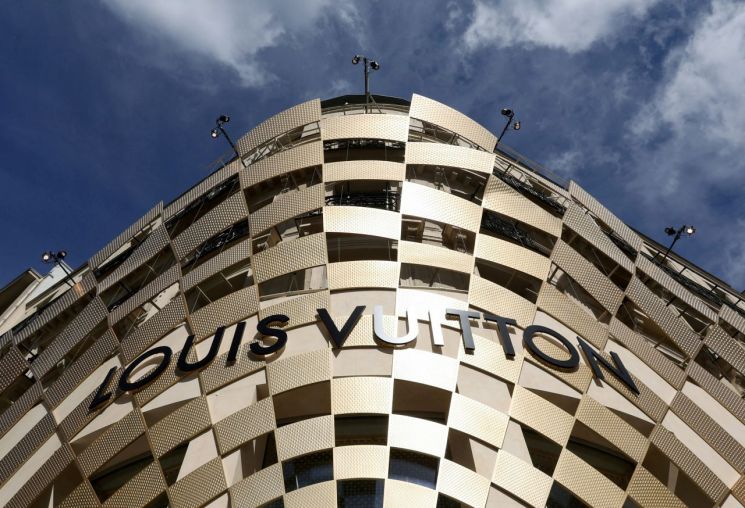
The reason Dewu achieved such high sales performance lies in its aggressive discount strategy. Dewu, China's largest luxury resale platform, mainly sells parallel-imported products that access luxury brands' direct distribution networks without the approval of official importers.
For example, a Cartier ring sold through China's official distribution channel at 18,200 yuan (approximately 3.43 million KRW) can be purchased on Dewu at about 66% cheaper. A Fendi handbag priced at 29,500 yuan (approximately 5.56 million KRW) was sold at half price on Dewu, and other popular luxury brand products from Louis Vuitton, Dior, Gucci, Prada, etc., are also traded at discounts of 20-40%.
Bloomberg analyzed, "In China, 'gray markets' like resale platforms are increasingly shrinking the official sales channels of luxury companies," adding, "Their discount offensives are enticing China's middle-class consumers, who have become more price-sensitive due to the economic downturn and real estate market collapse."
Luxury brands, already suffering from sluggish performance due to the slowdown in China's luxury consumption, are now under urgent pressure. For example, the world's largest luxury group Louis Vuitton Mo?t Hennessy (LVMH) posted sales of 20.98 billion euros (approximately 31 trillion KRW) in the second quarter, growing only 1% year-on-year. This contrasts sharply with a 21% sales growth rate just one year ago. In June, reports emerged that luxury brands such as Balenciaga, Versace, Givenchy, and Burberry were conducting tearful half-price discounts on Chinese e-commerce platforms including Tmall to dispose of excess inventory.
Bloomberg pointed out, "Some products sold on Dewu were priced surprisingly lower than official sales prices in Japan and France," suggesting that China's gray market has grown through arbitrage exploiting weak foreign currencies and low taxes.
Rehub explained in the report, "Some brands including Louis Vuitton have taken measures to curb the growth of the gray market," adding, "They are building systems to identify individuals selling items on resale platforms and blacklist them, while strengthening wholesale channels to track product inflows into China."
© The Asia Business Daily(www.asiae.co.kr). All rights reserved.
!["The Woman Who Threw Herself into the Water Clutching a Stolen Dior Bag"...A Grotesque Success Story That Shakes the Korean Psyche [Slate]](https://cwcontent.asiae.co.kr/asiaresize/183/2026021902243444107_1771435474.jpg)
















