A forest outpost to respond to the subtropical and warm-temperateization of the Korean Peninsula will be established in Wando, Jeollanam-do.
The Korea Forest Service announced on the 4th that it will create the National Subtropical Arboretum in Wando, Jeollanam-do.
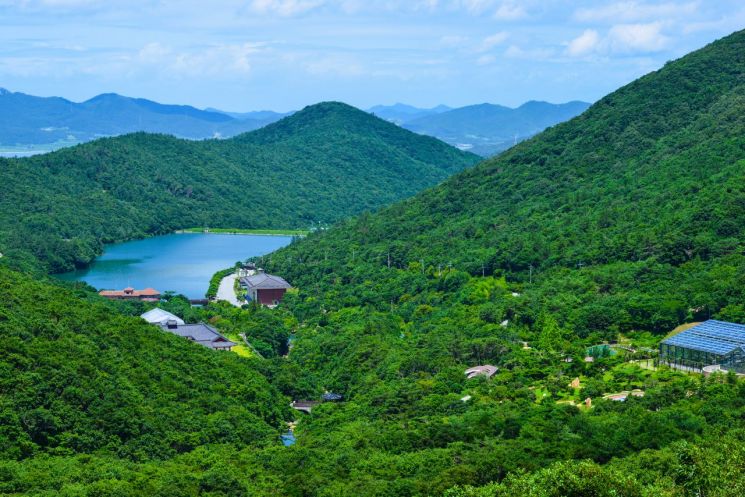 A view of 'Wando Arboretum' located in Wando-gun, Jeollanam-do. Provided by the Korea Forest Service
Wando-gun exhibits a typical subtropical climate with an average annual temperature of 14.33℃ and precipitation of 1510 mm. Especially due to the influence of the Jeju Warm Current and the West Korean Coastal Current, the humidity is high, providing optimal conditions for the growth of subtropical forests. This is also why 3,446 hectares (35%) of the total 9,852 hectares of subtropical forest area on the Korean Peninsula are concentrated in Wando.
The Korea Forest Service’s decision to establish the National Subtropical Arboretum in Wando is based on the judgment that, as the subtropical and warm-temperate zones of the Korean Peninsula approach, it is necessary to proactively create and cultivate subtropical and warm-temperate forests.
According to climate change scenarios for the Korean Peninsula, by 2100, the warm-temperate area in South Korea is expected to account for 21% of the entire national territory.
This indicates that the subtropical and warm-temperateization of the Korean Peninsula is currently progressing rapidly, and the Korea Forest Service believes that it is necessary to develop tree species suitable for the future climate conditions of the country and to take proactive measures considering the growth period of trees.
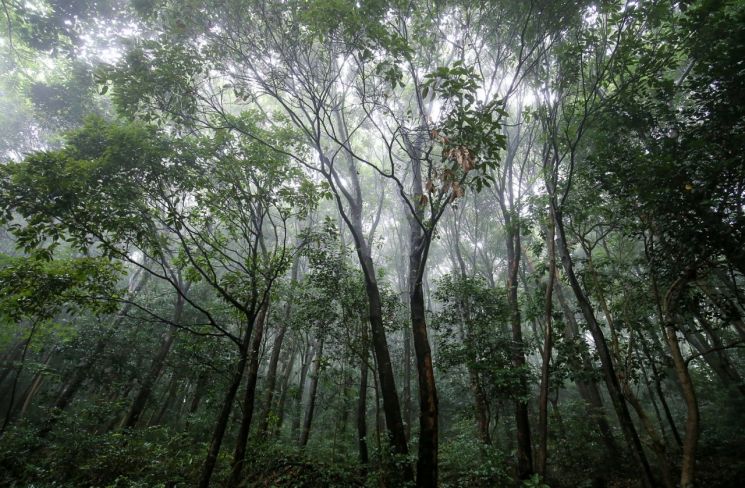
Above all, subtropical tree species are known to have many evergreen broadleaf trees, which have relatively excellent carbon absorption capacity. For example, the red oak tree, which is the most commonly inhabited and distributed species in Wando, can absorb 7.89 tons of carbon dioxide per hectare of plantation, showing superior carbon absorption and storage capacity compared to other species.
Accordingly, the Korea Forest Service plans to redevelop the existing Wando Arboretum into the National Subtropical Arboretum and utilize it as an outpost for research on forest genetic resources in the subtropical and warm-temperate zones and for developing promising species to prepare for warming. This signifies laying the foundation for proactive responses to future forest changes.
In addition, the plan includes discovering economically valuable species such as red oak, lacquer tree, and Japanese chestnut, improving them into large and straight trees, increasing their utilization as forest resources, and contributing to achieving international greenhouse gas reduction goals through the creation of subtropical forests.
The Korea Forest Service also plans for the National Subtropical Arboretum to function not only as a research institution but also as an operator of natural ecological programs that fully reflect the year-round green and warm climate. Through this, Wando is envisioned to become an experiential space where visitors can enjoy subtropical forests and the Dadohae (archipelago) together.
Jung Yeon-guk, head of the Arboretum Development Project Group at the Korea Forest Service, said, “The National Subtropical Arboretum has high preservation value as it fully retains the primitive state of subtropical forests,” and added, “The Korea Forest Service will strive to ensure that the largest subtropical botanical garden in Korea, which will lead the future forests of the Korean Peninsula, can be established in Wando.”
© The Asia Business Daily(www.asiae.co.kr). All rights reserved.
!["The Woman Who Threw Herself into the Water Clutching a Stolen Dior Bag"...A Grotesque Success Story That Shakes the Korean Psyche [Slate]](https://cwcontent.asiae.co.kr/asiaresize/183/2026021902243444107_1771435474.jpg)

















