Park Chan-dae "Emergency Medical System Virtually Collapsed"
Lee Jae-myung Visits University Hospital Emergency Room Following Han Dong-hoon
Growing Public Criticism Concerns Within Ruling Party
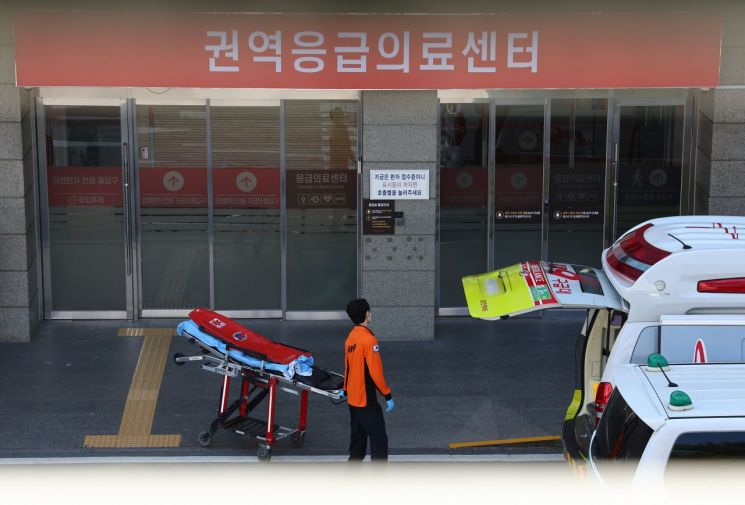
Regarding the prolonged medical crisis, criticism is pouring out not only from the opposition but also from the ruling party against the government's stubbornness, which claims that 'the severity of the medical field is exaggerated.' The government's response and countermeasures are considered complacent and detached from reality compared to the situations occurring in emergency medical settings. Voices of concern are emerging even within the ruling party, warning that the government's patchwork responses could increase harm to the public.
On the morning of the 4th, Park Chan-dae, the floor leader of the Democratic Party, proposed the formation of an emergency consultative body involving the ruling party, opposition, medical community, and government during a negotiation group speech at the National Assembly, pointing out, "The emergency medical system is in a critical situation on the verge of collapse. This is not the time to worry about pride or distinguish between ruling and opposition parties." He also emphasized, "The ruling and opposition parties must put their heads together, with the participation of the medical community and government, to achieve a social grand compromise," adding, "The only solution is to open dialogue from urgent solutions to the medical crisis to mid- to long-term medical reform plans."
The Democratic Party's Special Committee on Medical Crisis Measures plans to visit Korea University Anam Hospital in Seongbuk-gu, Seoul, on the afternoon of the 4th to examine medical personnel and emergency response capacity. Democratic Party leader Lee Jae-myung is also scheduled to attend. On the same day, Lee stated on social media, "If the medical crisis is blamed on doctors, then the collapse of people's livelihoods would be the fault of the public, and the economic crisis would be the fault of companies." The day before, Lee also criticized on his social media, "We must not gamble with the lives of the people," and called for "serious dialogue and swift decisions from the government."
Within the ruling People Power Party, opinions are divided between those who argue that the government should suspend the increase in medical school quotas for the 2026 academic year and negotiate with the medical community to resolve the medical crisis immediately, and those who believe the government's medical reform policies should be supported. However, since most ruling party lawmakers represent constituencies in Yeongnam, Chungcheong, and Gangwon regions, where medical environments are relatively poor compared to the metropolitan area, there is a tense atmosphere as concerns and complaints about medical issues from local residents continue.
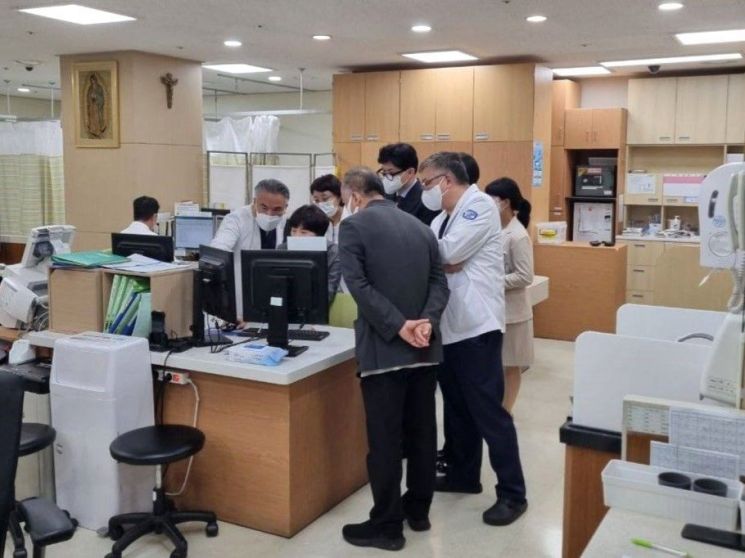
On the 29th of last month, about ten lawmakers from the party, including National Assembly Deputy Speaker Joo Ho-young, Kwon Seong-dong, Yoon Han-hong, Ahn Cheol-soo, Han Ji-a, and Ko Dong-jin, expressed concerns and criticisms regarding issues such as emergency room overcrowding and manpower shortages due to medical students not returning, including military doctors and public health doctors, during a closed-door discussion between the party and government officials held on the occasion of the People Power Party lawmakers' training session. On the same day, Ahn Cheol-soo suggested in an interview with SBS Radio that President Yoon Seok-youl should "visit an emergency room and spend about half a day talking with patients or ride along in an ambulance to properly understand the situation," criticizing the government's measures as detached from the field situation.
Han Dong-hoon, who proposed suspending the increase in medical school quotas for the 2026 academic year, also visited the emergency room of Yeouido St. Mary's Hospital at the Catholic University of Korea in Seoul on the 2nd in a closed session to check the status of emergency room operations and the emergency medical field. This move is interpreted as an attempt to indirectly refute the government's stance that the medical crisis is exaggerated by visiting the emergency medical field.
Voices supporting the government's medical reform are also emerging within the ruling party leadership. Kim Sang-hoon, chairman of the Policy Committee, mentioned at a floor countermeasure meeting held at the National Assembly the day before, "As the ruling party, the People Power Party will strongly support the government's medical reform, especially the first implementation plan announced by the Medical Reform Special Committee on August 30, and actively cooperate and support the ongoing special measures related to emergency medical care in preparation for Chuseok to ensure they are carried out without setbacks."
However, while opinions are divided within the ruling party, there are concerns that if the number of people harmed by the medical crisis increases, the government could face public criticism. According to a party support survey conducted by the polling firm Realmeter on behalf of Energy Economy Newspaper from the 29th to 30th of last month, targeting 1,008 voters aged 18 and over nationwide (97% wireless, 3% wired, automatic response method, random generation sampling with random phone calls, margin of error ±3.1 percentage points at 95% confidence level, response rate 2.6%, detailed information available on the Central Election Poll Deliberation Commission website), the People Power Party recorded 32.8%, down 4.2 percentage points from the previous week, while the Democratic Party recorded 42.2%, up 2.2 percentage points from the previous week. A ruling party lawmaker said, "When I go down to my constituency on weekends, I receive many complaints like 'The medical environment is already underdeveloped, and with medical personnel leaving, I worry that I won't be able to receive treatment when seriously ill,'" adding, "I think the government should change its stance proactively and persuade President Yoon."
On the other hand, the government explains that although the current emergency room staff is at about 73% of the usual level, making the situation difficult, there is no cause for concern about the collapse of emergency rooms or the medical system. Park Min-soo, the second vice minister of the Ministry of Health and Welfare, who started daily briefings from the previous day, appeared on CBS Radio on the same day and responded to the host's remark about distrust arising from differences in perception between the government and the public regarding medical realities by saying, "I clearly acknowledged that there are difficulties in the medical field. I am not denying that," and added, "I do not understand why expressions that increase public anxiety are used, such as saying medical institutions are closing and unable to treat patients."
© The Asia Business Daily(www.asiae.co.kr). All rights reserved.


















