Harris Takes Pro-Business Stance Ahead of Debate with Trump
With the U.S. presidential election just over two months away in November, the competitive tax cut strategies of the two major party candidates are drawing attention. Democratic presidential candidate Vice President Kamala Harris is set to unveil a pledge to increase tax credits for small businesses tenfold. This marks a clearer outline of Harris's 'Opportunity Economy' policy, which had previously faced criticism for lacking specificity.
According to Bloomberg and other sources on the 3rd (local time), Vice President Harris is expected to announce on the 4th at a campaign event in New Hampshire a plan to raise the current $5,000 (approximately 6.7 million KRW) cap on small business startup tax credits to $50,000. The intention is to alleviate the average startup cost burden of $40,000 for small businesses. She also plans to set a goal of receiving 25 million small business startup registrations during the four-year presidential term. So far, the Biden administration has recorded about 19 million small business startup registrations.
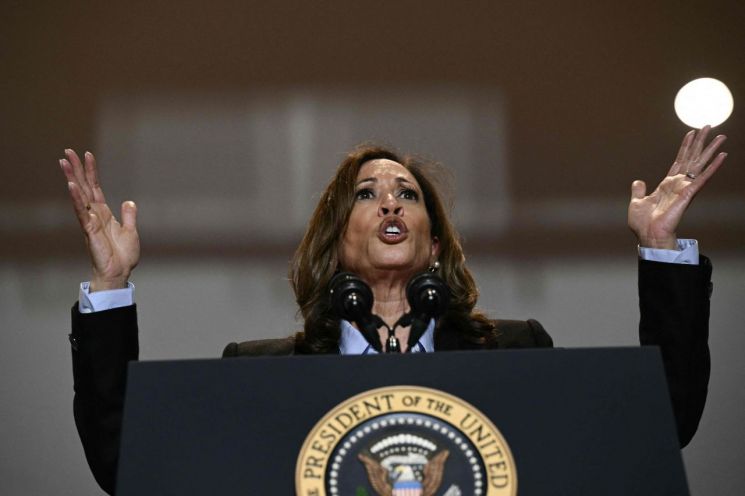
CNBC reported, "According to the Harris campaign explanation, new small businesses can spread out the tax credit benefits over several years or defer claiming the $50,000 tax credit until the company becomes profitable," but noted, "There was no detailed explanation regarding the criteria for startups and small businesses eligible for the benefits or the funding methods." Additionally, Vice President Harris plans to develop a standard tax credit method for small businesses to simplify complex administrative procedures and establish a 'Small Business Expansion Fund' to have regional banks cover interest costs incurred when startups expand their initial operations.
These pledges align with Vice President Harris's 'Opportunity Economy' policy platform. Last month, in an in-depth interview with CNN, when asked what she would do in her first year if she entered the White House, she said, "One of the most important priorities is to do everything possible to support the middle class," and added, "I will implement plans to build an Opportunity Economy." Most of the 'First 100 Days Economic Plan' she revealed ahead of the party convention, including child tax credits and $25,000 support for new homebuyers, also focuses primarily on protecting the middle class.
The middle-class vote in the U.S. is also a crucial segment for Republican presidential candidate former President Donald Trump. He has pledged tax exemptions on tip income and expanded child tax credits, while advocating for making permanent the corporate and income tax cuts set to expire at the end of next year. However, Vice President Harris maintains a tax increase stance on large corporations and the wealthy, including raising the current corporate tax rate from 21% to 28%.
The Wall Street Journal (WSJ) pointed out, "(The small business) tax credit expansion pledge is not necessarily partisan," noting, "Former Republican Representative Vern Buchanan introduced a bill to raise the tax credit cap to $20,000, which the Trump administration supported, while most Democrats opposed it."
CNBC evaluated, "Harris's tax credit proposal focused on small and medium-sized businesses could help counter Trump's (socialist frame) attacks while maintaining an image as a fighter against corporate greed," adding, "It provides ammunition to challenge Trump, who has positioned himself as a pro-business candidate, in the presidential debate hosted by ABC News on the 10th."
© The Asia Business Daily(www.asiae.co.kr). All rights reserved.

















