Improving Energy Efficiency in Aging Housing, Introducing Carbon Neutral Strategies in Redevelopment and Reconstruction
Applying Carbon Neutral Architecture in Gwangwoon University Station Area Development Project... Aiming for a Sustainable City
Accelerating Carbon Neutrality with Public and Private Buildings Targeting Zero Energy Ahead of Government Standards
Nowon-gu, Seoul (District Mayor Oh Seung-rok) announced that it has established Zero Energy Building (ZEB) guidelines to achieve carbon neutrality in the construction sector.
According to the Ministry of Environment, 68.3% of greenhouse gas emissions come from buildings. Additionally, according to the Korea Environment Corporation, large cities including Nowon-gu are classified as 'energy-consuming' areas with high greenhouse gas emissions from buildings (commercial, residential, public institutions). Therefore, the district considers a building-centered carbon neutrality strategy essential.
In particular, since the greenhouse gas emissions per unit area of old buildings are more than twice as high as those of new buildings, and as of 2022, old houses over 30 years old account for 47.6% (90,226 households) of all housing, ranking first among all autonomous districts in Seoul, achieving carbon neutrality in the construction sector is an urgent task for the district.
Accordingly, the district has determined that strengthened mandatory standards for zero energy buildings are necessary. Despite the government's postponement of mandatory ZEB implementation for private multi-family housing, the district decided to strengthen and apply the zero energy building roadmap not only to public buildings but also to private buildings.
First, public buildings will implement a zero energy building roadmap 1 to 2 years ahead of the national schedule. While the government plans to mandate ZEB grade 4 for public buildings over 500㎡ from 2025 and aims for grade 3 by 2030 without specifying the target size, the district set a goal to achieve grade 4 for public buildings over 1500㎡ starting in 2024 and grade 3 for buildings over 1500㎡ by 2028. These standards are already reflected in major public building projects currently underway in the district, such as the Taereung Eoullim Center and Junggye 1-dong Community Center.
A phased ZEB roadmap will also be implemented for newly constructed private buildings. While the government plans to mandate ZEB grade 5 for buildings with a total floor area of 1000㎡ or more and multi-family housing with 30 or more units between 2025 and 2029, the district aims to enforce this mandate starting in 2024. Furthermore, while the government plans to apply ZEB grade 5 to private buildings over 500㎡ from 2030, the district aims to mandate a higher standard of grade 4.
In addition, the district will promote carbon-neutral urban redevelopment and reconstruction. Based on the basic policy for revising the Sangye and Junggye district unit plans, the district plans to prepare separate guidelines that provide incentives such as priority review of redevelopment and reconstruction plans when ZEB construction is actively introduced. Moreover, carbon neutrality experts will be appointed within the rapid promotion team for reconstruction and redevelopment to support carbon-neutral urban development.
Carbon-neutral construction will also be applied to the Kwangwoon University station area development project, a key project of Nowon-gu. Currently undergoing preliminary certification for ZEB grade 5, it is expected to present a leading model for carbon-neutral redevelopment and reconstruction.
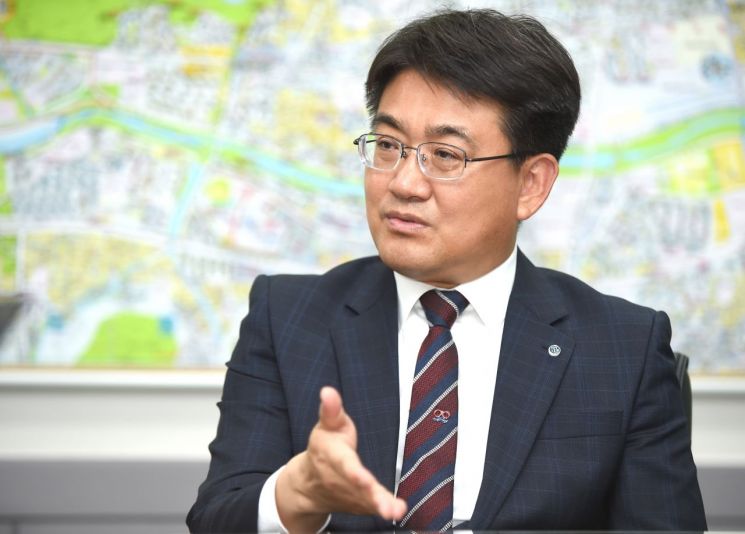
Oh Seung-rok, Mayor of Nowon-gu, said, "Since greenhouse gas emissions from buildings account for the majority of our district's total emissions, applying carbon neutrality in the construction sector is not optional but an essential task." He added, "We will continue to discover and promote various projects beyond the construction sector to become a leading model of a carbon-neutral urban city."
© The Asia Business Daily(www.asiae.co.kr). All rights reserved.


















