KCCI, Joint Investigation with Battery, Display, and Bio Associations
Companies Say "Direct Refund System Helps Timely Reinvestment"
Half Say "Low Corporate Tax Leads to Carryover of Tax Credit Amount"
#Company A, a secondary battery component manufacturer that made facility investments the year before last, did not generate operating profits in 2022 and 2023, resulting in no tax credits for two consecutive years. Company A stated, "Although we expanded the factory, it seems it will take more time to increase operating profits, so we will have to carry forward the tax credit amount for the time being," adding, "If the tax credit could be refunded in cash like in the United States, it would help stabilize management and actively establish investment plans."
#Display material company B recently considered postponing its line expansion plan. A representative from B said, "The outlook for operating profits this year is not good, and since the tax credit benefits cannot be received immediately, we felt burdened by the capital injection," adding, "We proceeded with the line expansion as planned, but if there had been a system to refund part of the investment amount in cash immediately, the investment decision would have been made more swiftly."
As the competition for leadership in advanced industries takes on the form of a national rivalry, industry voices are growing louder calling for the introduction of a 'direct refund system (Direct Pay)' that refunds the national strategic technology investment tax credit amount in cash. This is deemed necessary for management stability and investment inducement.
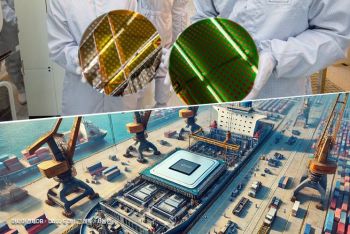
According to the Korea Chamber of Commerce and Industry on the 1st, a recent survey of 100 advanced industry companies receiving national strategic technology tax credits under the Restriction of Special Taxation Act, conducted together with the Korea Battery Industry Association, Korea Display Industry Association, and Korea Bio Association, found that 80% of companies responded that "the introduction of a direct refund system would help corporate cash flow, investment implementation, or expansion."
Under the current Restriction of Special Taxation Act, when designated as a national strategic technology tax credit target, large and medium-sized enterprises can receive a 15% tax credit on commercialization facility investment amounts, while small and medium enterprises receive 25%. The tax credit method is limited to 'corporate tax credit.' There have been consistent opinions that this is ineffective for advanced industry companies that find it difficult to secure sufficient operating profits due to large-scale initial investments or rapid market changes. In fact, 4 out of 10 respondent companies (38%) said that the "current corporate tax credit method" is ineffective because "the realization of the tax credit amount is not immediate, causing delays in timely investment."
Major countries such as the United States, France, and Canada directly refund the investment tax credit amount in cash to advanced companies regardless of operating profits. The United States, through the Inflation Reduction Act (IRA), allows the entire tax credit amount to be paid in cash or transferred to other companies. France, through the green industry investment tax credit implemented last March, offsets corporate tax for investments in advanced industries such as secondary batteries and refunds the remaining tax credit amount in cash. Canada introduced a clean technology investment tax credit in June that refunds up to 30% of capital investments related to clean technology in cash.
A Korea Chamber of Commerce and Industry official said, "Although tax credit amounts can be carried forward for 10 years if corporate tax reductions are not received, given the nature of advanced industries that require timely execution of large-scale investments, it is more desirable to allow immediate receipt of tax credit benefits," adding, "We hope the direct refund system will be implemented soon, referencing major countries' cases."
About half of the surveyed companies revealed they have experience carrying forward investment tax credit amounts. When asked if they had ever carried forward because the corporate tax paid was less than the tax credit amount, 50% of respondents answered "yes." By company size, large enterprises (90.9%) had significantly more carryforward experience. Medium-sized enterprises were at 33.3%, and small and medium enterprises at 54%. Regarding the possibility of carryforward considering this year's expected investment amount and operating profits, 51% answered "it is expected." The carryforward outlook was higher for large enterprises (81.8%) than for small and medium enterprises (60%) and medium-sized enterprises (30.8%).
Kang Seok-gu, head of the Korea Chamber of Commerce and Industry's survey division, said, "The industry's view is that under the current corporate tax credit method, an ironic situation arises where the more capital invested, the more limited the benefits," adding, "We hope the National Assembly and government actively take steps to introduce Direct Pay so that companies can immediately enjoy the effects of tax credits and create a virtuous cycle of timely reinvestment."
Regarding Direct Pay, the National Assembly currently has the "Partial Amendment to the Restriction of Special Taxation Act" bill, which was introduced by Kim Sang-hoon, chairman of the People Power Party Policy Committee, in July, pending.
© The Asia Business Daily(www.asiae.co.kr). All rights reserved.
![Clutching a Stolen Dior Bag, Saying "I Hate Being Poor but Real"... The Grotesque Con of a "Human Knockoff" [Slate]](https://cwcontent.asiae.co.kr/asiaresize/183/2026021902243444107_1771435474.jpg)
















