Gradual Reduction of Resident Doctors' Working Hours to 60 Hours per Week
The government will invest a total of 2 trillion won over five years, including 392.2 billion won next year, in the training and supply management of medical personnel to innovate the physician training system. The focus will be on enhancing training programs so that interns who begin training after obtaining their medical licenses can secure independent clinical capabilities, and on improving the excessive working hours of residents.
The Presidential Commission on Medical Reform held its 6th meeting on the 30th and deliberated and approved the "First Implementation Plan for Medical Reform," which includes these measures.
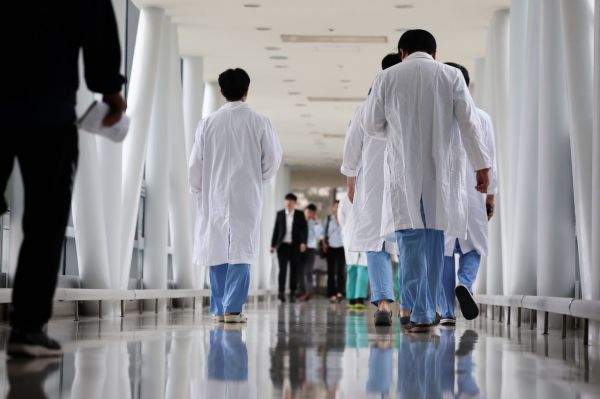
Up to 80 million won support for supervising specialists
To drastically improve the training environment and quality of education for residents, the government increased the budget for medical personnel training and proper supply management from 29.1 billion won this year to 392.2 billion won next year. The budget for support beyond training allowances also rose significantly from 3.5 billion won this year to 313 billion won next year.
In particular, emphasis was placed on strengthening the role of supervising specialists to solidify residents' training programs. Starting next year, supervising specialists will receive an annual allowance of up to 80 million won to dedicate working hours to closely guide residents. The government also plans to recommend the use of focused training hours so that residents can receive close supervision from supervising specialists without being assigned to hospital duties.
Clinical education training centers will also be established to supplement the lack of clinical practice opportunities in the field. Beginning next year with two centers at Kangwon National University and Gyeongsang National University, all national university hospitals (10 locations) will have such centers installed by 2028. Support for clinical skills education will also be expanded to 500,000 won per person, focusing on essential medical fields.
Intern system reform... Discussion on 'Clinical Training Physician System'
Measures have also been prepared to secure independent clinical capabilities for interns who start training after obtaining their medical licenses. Previously, interns rotated through various departments during training, which led to a lack of clear responsibility and made it difficult to acquire core clinical skills, causing dissatisfaction.
The government plans to expand opportunities for interns to participate in clinical care under the supervision of supervising specialists, focusing on low-difficulty medical procedures. The training period will maintain the current 4 to 5 years while setting a reasonable duration to acquire independent clinical capabilities.
Regarding fundamental innovations to the intern system, such as the 'Clinical Training Physician System,' which grants clinical authority only to doctors who have completed a certain period of training, the government will sufficiently gather opinions from the medical community and discuss the matter further.
24-hour limit on continuous training
To enable residents to acquire clinical skills they can apply in the field, a multi-institution cooperative training system will be introduced next year. Training opportunities will be provided not only for severe patients but also for those with moderate or less severe conditions, and support will be given to gain experience in regional and essential medical care.
To improve the training environment, continuous training hours for residents will be shortened to 24 hours, and weekly training hours to 72 hours. Following an evaluation of pilot project outcomes, the reduction of training hours will be institutionalized in 2026. The average weekly training hours will be gradually reduced to around 60 hours by 2031. Along with the reduction of training hours, the government will consider establishing guidelines for appropriate workloads per resident and significantly expand the payment of training allowances of 12 million won annually to residents in essential fields.
Efforts will also focus on establishing long-term measures for physician workforce training, including resident training. To set mid- to long-term directions and operate resident workforce training policies, the first comprehensive resident plan will be formulated next year. A national-level triennial training status survey will also be introduced to enable institutional improvements based on the actual training conditions.
A representative of the Medical Reform Special Committee said, "We will review ways to innovate the outdated workforce management system that has persisted since the enactment of the Medical Service Act in the 1960s to fit the changed era conditions," adding, "We will also examine measures to secure physicians' independent clinical capabilities linked to training system improvements and periodic management of disqualification reasons to enhance patient safety and medical quality."
© The Asia Business Daily(www.asiae.co.kr). All rights reserved.
![Clutching a Stolen Dior Bag, Saying "I Hate Being Poor but Real"... The Grotesque Con of a "Human Knockoff" [Slate]](https://cwcontent.asiae.co.kr/asiaresize/183/2026021902243444107_1771435474.jpg)










