Statistics Korea Announces Final Figures for '2023 Birth Statistics'
1 in 20 Births Are Non-Marital... Highest Ever Recorded
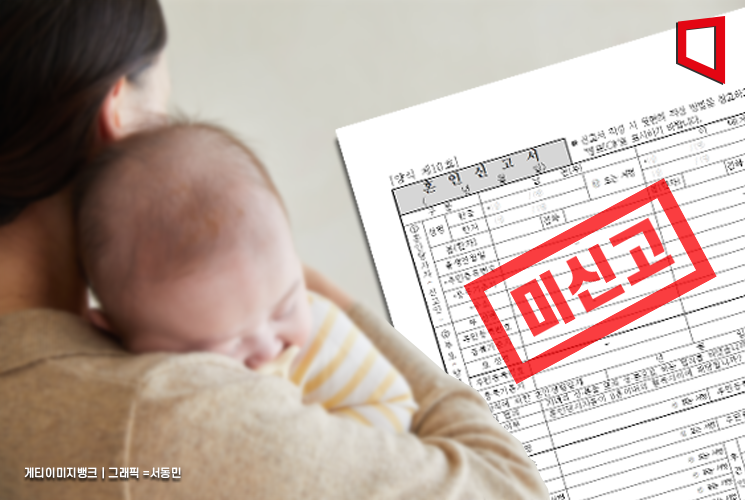
Among the 230,000 births last year, the proportion of babies born in 'non-marital relationships' reached an all-time high. This is interpreted as reflecting social phenomena such as couples maintaining a marital status without registering their marriage or an increase in cohabitation.
According to the '2023 Birth Statistics (Final)' released by Statistics Korea on the 28th, the number of 'non-marital births' last year was 10,900, marking the highest ever since related statistics began in 1981. The proportion of 'non-marital births' increased by 0.8 percentage points from the previous year, accounting for 4.7% of all births. The number of 'non-marital births' has been rising for three consecutive years, with 7,700 in 2021, 9,800 in 2022, and 10,900 last year. Meanwhile, 'marital births' accounted for 219,100, making up 95.3% of the total.
The total fertility rate, which refers to the average number of children a woman is expected to have in her lifetime, decreased by 0.06 from last year (0.78), reaching a record low. Fertility rates among women under 45 declined, while those aged 45 and over remained at similar levels.
The age-specific fertility rate of mothers (number of births per 1,000 women in the respective age group) was highest among women in their early 30s at 66.7, followed by late 30s at 43.0, and late 20s at 21.4. Compared to last year, fertility rates decreased by 6.8 in the early 30s group and by 2.7 in the late 20s group.
The average maternal age at childbirth rose by 0.1 years to 33.6 years compared to the previous year. The average paternal age at childbirth also increased by 0.1 years, reaching 36.1 years.
The total fertility rate by city and province was below 1.0 in all regions. Jeonnam and Sejong recorded the highest rates at 0.97, while Seoul (0.55) and Busan (0.66) had the lowest. Looking at the rates by city, county, and district, Yeonggwang County in Jeonnam had the highest rate at 1.65. Even the top-ranked area fell short of 1.7, meaning that all city, county, and district areas nationwide had fertility rates below 1.7.
© The Asia Business Daily(www.asiae.co.kr). All rights reserved.

















