Surgery, Treatment, and Anesthesia Fees Increased by 200% After Emergency Room Care
Only KTAS Level 1-2 Patients in Severe Dedicated ER... Mild Patients Distributed
The government will recruit more than 4,000 on-duty hospitals and clinics nationwide during the Chuseok holiday period to ensure that patients with mild symptoms can receive medical treatment. Additionally, emergency room specialist consultation fees will be increased by up to 250% for about two weeks before and after the holiday.
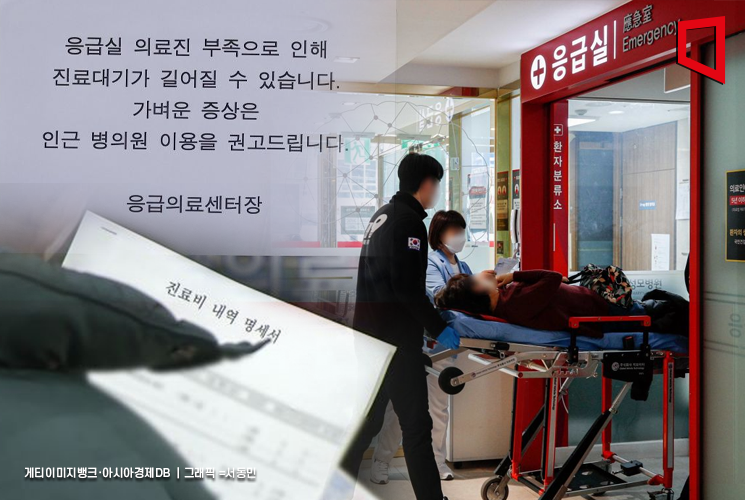
On the 28th, Cho Kyu-hong, Minister of Health and Welfare, held a briefing at the Central Disaster and Safety Countermeasures Headquarters (CDSCH) regarding the doctors' collective action, stating, "To ensure that emergency patient care is not disrupted even during the Chuseok holiday when hospitals and clinics are closed, we have designated September 11?25 as the 'Chuseok Holiday Emergency Response Week' to support emergency medical services."
First, to ensure that severe emergency patients receive timely treatment and to distribute patients according to severity, the government will operate at least one "Severe Dedicated Emergency Room" in each of the 29 emergency medical service zones nationwide.
In the Severe Dedicated Emergency Rooms, only severe emergency patients classified as KTAS (Korean Triage and Acuity Scale) levels 1?2 will be promptly treated. Even if patients classified as KTAS levels 3?5, which correspond to moderate severity (between severe and mild), are not treated there, it will not be considered a refusal of treatment. Patients with moderate or lower severity can receive treatment at regional emergency medical institutions and non-base regional emergency medical centers.
The government plans to increase the patient co-payment by up to 90% when mild and non-emergency patients use regional or local emergency medical centers, aiming to implement this within September.
To enhance emergency room treatment capacity, during the Emergency Response Week, the consultation fee for emergency room specialists will be raised from the current 150% increase to 250%, an additional 100 percentage points. For example, at a regional emergency medical center in a tertiary general hospital where the original consultation fee was about 40,000 KRW, the fee has been about 100,000 KRW since the 150% increase in February, and during the Emergency Response Week, it will be about 140,000 KRW.
Minister Cho also explained, "We will expand personnel cost support to secure staff capable of stably operating regional centers," and added, "We will also promote a 'pinpoint support' plan to provide substitute personnel such as military doctors and general practitioners, focusing on medical institutions urgently needing staff." He continued, "We will continue to flexibly apply emergency room staffing standards, which have been implemented since the emergency medical response period, allowing hospitals to operate emergency room dedicated personnel according to their circumstances without limiting to specialized departments."
Incentives will also be increased to ensure rapid admission and transfer after emergency room treatment. The fee for surgery, procedures, and anesthesia after emergency room treatment will be raised from the current 150% to 200% to enhance the capacity to accommodate severe emergency patients. Starting in September, institutions with excellent patient transfer acceptance rates will receive incentives based on evaluations.
Additionally, the government plans to operate more than 4,000 on-duty hospitals and clinics during the five-day Chuseok holiday period, which is about 400 more than during this year's Lunar New Year holiday, to improve medical accessibility for patients with mild symptoms.
Jung Dong-ryong, Director of the Central Emergency Medical Response Situation Room at CDSCH, explained, "There are fever clinics and COVID-19 cooperative hospitals starting operation from September, most of which have emergency rooms and can provide night or 24-hour treatment," adding, "We plan to select on-duty hospitals and clinics in cooperation with local governments, including about 160 hospitals that applied through the Hospital Association and the Pediatric and Child Hospital Association." He also added, "If the number of institutions open on specific holidays is significantly insufficient based on preliminary surveys, we will designate additional on-duty medical institutions."
To distribute mild patients, the "temporary emergency consultation fee increase," which was previously applied only to 408 emergency medical institutions, will be expanded to 112 emergency medical facilities.
Minister Cho urged, "We will provide information on medical institutions open during the holiday period, such as hospitals and clinics, through the Emergency Medical Portal and the Ministry of Health and Welfare and local governments. We will also promote clear information on which symptoms are considered mild and which medical institutions to visit in such cases." He appealed, "We ask the public to use this information and visit other medical institutions instead of emergency rooms for minor symptoms."
Meanwhile, the government expressed concern over the nationwide strike by the Korean Health and Medical Workers' Union (KHMU), which is set to begin tomorrow.
Minister Cho said, "It is fortunate that negotiations were dramatically concluded at 11 workplaces in seven hospitals," but added, "Given the public's great concern over another strike following the absence of residents, we ask for dialogue to resolve the issue." He also stated, "With the Nursing Act passed today in the National Assembly, we will be able to further strengthen the treatment and support system for nurses and other healthcare workers," urging, "Healthcare workers and employers should make concessions and resolve the situation through dialogue."
© The Asia Business Daily(www.asiae.co.kr). All rights reserved.












