Complex Rules and Scoring Methods "Good for Thinking Skills" Gaining Attention
Popular Enough for 4-Year-Olds to Attend Classes
Pro Leagues Transform Image from Gambling to Sports
Used as Themes in Dramas and Comics
Mahjong is becoming popular as private education for children in Japan. Once strongly associated with 'gambling,' mahjong is now gaining attention among Japanese mothers as a new educational tool, known to help improve children's thinking skills.
Recently, NHK reported that mahjong is at the center of the private education boom, with no empty seats in mahjong classes for children across Tokyo. NHK introduced a case of a children's mahjong class at a cultural center in Shinagawa Ward, Tokyo, explaining that the class is packed with students ranging from lower elementary to middle school, leaving no seats available. Due to high demand, the class set participation conditions requiring children to be able to read the kanji on mahjong tiles and sit still in their chairs, but within a year and a half of opening, the number of new members doubled in popularity. Even 4-year-olds attend the class, and some students come from Tochigi Prefecture, a two-hour drive from Tokyo, to take lessons.
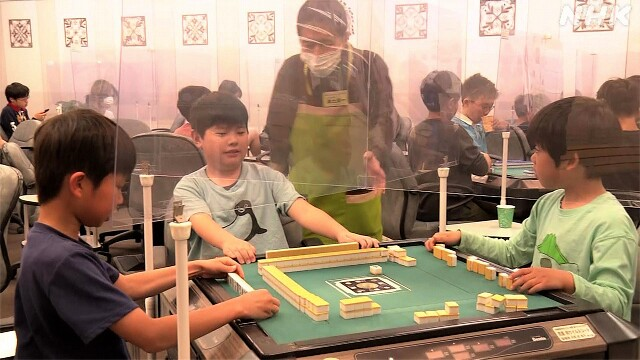 Children are attending a class at the children's Mahjong workshop held at the Shinagawa Ward Cultural Center in Tokyo. (Photo by NHK)
This popularity began as mahjong emerged as a brain sport in Japan. The complex rules and scoring system are gaining credibility for enhancing cognitive abilities. NHK cited a paper by Dr. Takefumi Higashijima of Yokohama City University Hospital, reporting, "Twenty children aged 6 to 15 who did not know the rules played mahjong for one year, and their average IQ increased from 106.05 to 113.75." It further explained, "The most significant improvement was in processing speed," adding, "Because players memorize tiles, think, and move their hands, it involves information processing, leading to improvements in short-term memory and concentration."
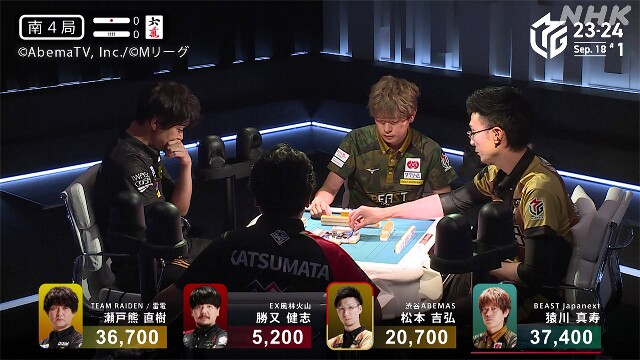
The normalization of mahjong, including the establishment of professional leagues, also influenced this trend. In Japan, mahjong parlors were strongly associated with gambling, to the extent that minors under 18 were prohibited from entering. However, six years ago, the mahjong tournament 'M League' was established, marking the beginning of change. The M League was created to cleanse mahjong's negative image and has secured a loyal fan base, with matches broadcast live on Abema, Japan's largest OTT channel's mahjong channel. It is also collaborating with Boss, a famous canned coffee brand sold by Suntory, and mahjong tiles featuring the Boss logo will be released starting next month.
Additionally, mahjong has become more familiar through TV dramas and manga. In the morning drama "Torani Tsubasa (Wings to the Tiger)," the female protagonist, a legal professional, is shown playing mahjong several times. When she expresses her intention to participate in a mahjong tournament hosted by a male senior, she is rejected with the comment, "What is a woman doing playing mahjong?" This becomes the catalyst for her to immerse herself in mahjong. Later, a serious conversation with her mother is opened up through playing mahjong, with scenes overlapping the exchange of tiles and their conversation drawing attention. Publisher Kodansha has been serializing the manga "Ponnomichi," about a high school girl enjoying mahjong, in a magazine since September last year.
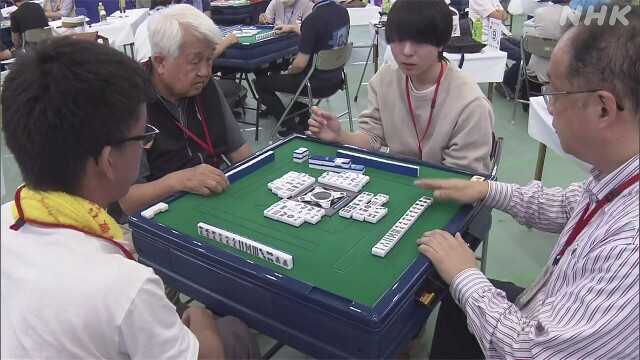 Players playing Mahjong regardless of age group at the "National Healthy Mahjong Tournament" held in Okayama Prefecture last September. (Photo by NHK)
According to the Leisure White Paper published by the Japan Productivity Center, the mahjong population increased from 4 million in 2020 to 5 million in 2022. Considering the rise in elementary school students starting mahjong as private education, the M League also established an elementary school league. Mahjong is beginning to take root in school club activities as well; at an elementary school in Chiba Prefecture, a "Healthy Mahjong Club" has been supported for 4th to 6th graders since last year.
NHK explained, "Mahjong is no longer just simple entertainment," adding, "It is being utilized in various ways, including as a communication tool and educational method."
© The Asia Business Daily(www.asiae.co.kr). All rights reserved.














