Democrats Also Take Notice After Trump's 2016 Election
Political 'Winning Formula' Despite Negative Economic Impact
The New York Times (NYT) reported on the 27th (local time) that tariff policy has emerged as a key pledge in this year's U.S. presidential election.
During the 2016 presidential election when former President Trump was elected, the U.S. political sphere did not pay much attention to tariffs. Mainstream politicians from both the Republican and Democratic parties believed that imposing taxes on imports would cause economic inefficiencies and that free trade was the best way to promote economic growth.
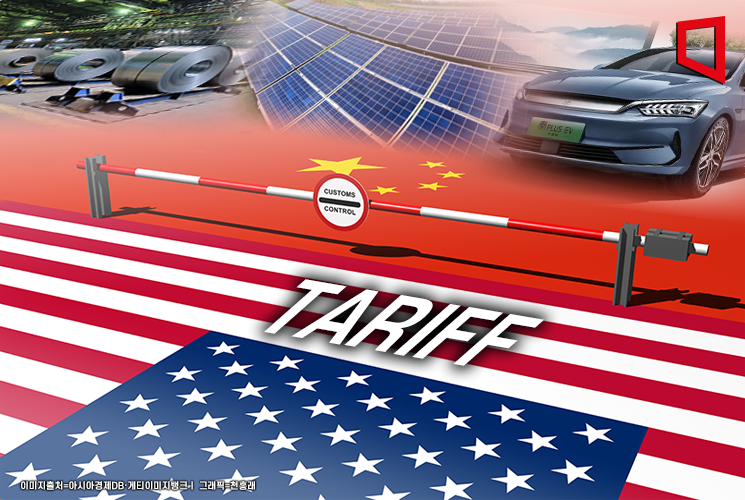
However, the atmosphere has changed now. Both former President Trump and Vice President Kamala Harris regard tariffs as an essential tool to protect American manufacturers from China and other global competitors.
The NYT described this as "a sharp reversal from the past several decades when most politicians fought to lower rather than raise tariffs."
Nick Yakobella, Senior Vice President of the tariff advocacy group "Coalition for a Prosperous America" (CPA), said, "Both parties are moving in the same direction on economic policy and trade issues," adding, "Regardless of who wins, the administration will focus on tariffs and industrial policy."
There are some differences between Vice President Harris's and former President Trump's tariff pledges. Trump's tariff policy is expected to be larger in scale and have a greater economic impact than the Biden administration's policy. Trump has pledged to impose a universal tariff of 10-20% on all imports and tariffs exceeding 60% on Chinese imports. He also announced plans to apply "reciprocity," imposing tariffs at the same level on countries that impose tariffs on the U.S.
Vice President Harris has not yet revealed specific tariff pledges, but Trump's proposals are considered stronger and more extensive. Harris referred to Trump's tariff policy as a "national sales tax, call it the Trump tax," stating that it would cost middle-class families $4,000 annually.
The Biden administration has maintained the Trump administration's tariff policy toward China. In May, it announced plans to increase tariffs on certain strategic Chinese industries, including imposing a 100% tariff on electric vehicles.
Inu Manak, Senior Trade Policy Researcher at the U.S. Council on Foreign Relations, commented, "Politicians from both parties are more likely to claim they can raise tariffs without negative consequences," adding, "When Vice President Harris criticizes former President Trump, she is not criticizing tariff policy itself but rather Trump's tariff policy."
The majority of economists believe that introducing tariffs at this level would lead companies to pass increased costs from tariffs onto consumers, causing inflation. Additionally, if other countries retaliate with tariffs, a trade war could erupt.
Ngozi Okonjo-Iweala, Director-General of the World Trade Organization (WTO), warned on April 10 that a universal 10% tariff "could lead to disorder that undermines the stability and predictability of trade."
Mary Lovely, an economist at the Peterson Institute for International Economics, said, "Tariffs seem to be positioned as a cure for manufacturing hollowing out, regional neglect, and income inequality," but added, "Unfortunately, tariffs do not solve any of these problems, and raising tariffs will worsen them."
However, the NYT analyzed that even if tariffs negatively impact the economy, they can be a "winning formula" politically. According to research published earlier this year by David Dorn, a professor at the University of Zurich, former President Trump's tariffs on China had little effect on employment in protected industries. Politically, however, the policy was successful, as support for Trump and the Republican Party increased in regions affected by the policy.
Professor Dorn stated, "Part of the support for the Republican Party may be because people appreciate the response to China."
© The Asia Business Daily(www.asiae.co.kr). All rights reserved.

















