Bank of Korea Governor Lee Chang-yong Proposes 'Regional Proportional Selection System'
"Prestigious Universities Should Select Students Proportional to Regional School-Age Population"
"To Alleviate Capital Region Concentration and Prevent Wealth Inheritance"
The fundamental cause of the invincibility myth of Gangnam real estate has been pointed out as excessive entrance exam competition. Excessive entrance exam competition is causing various social problems such as wealth inheritance, population concentration in the metropolitan area, and low birth rates, leading to calls for major universities like Seoul National University to select talents in proportion to the regional school-age population to alleviate these issues.
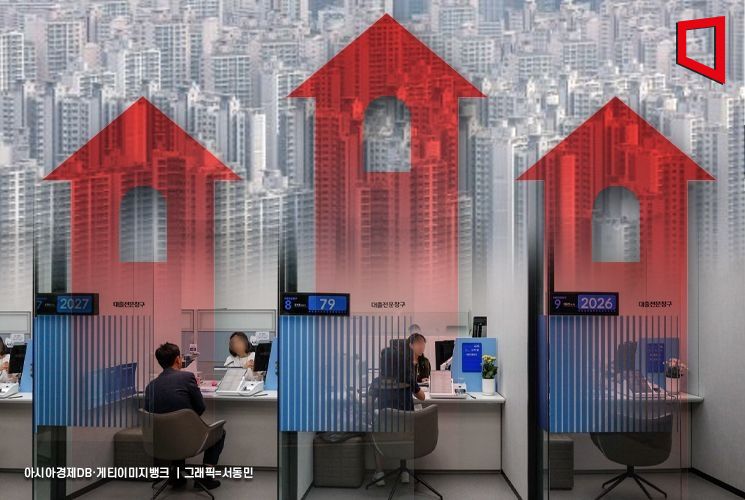
On the 27th, Lee Chang-yong, Governor of the Bank of Korea, held a symposium jointly with the Seoul National University Institute for National Future Strategy at the Woosuk Economics Hall of Seoul National University in Gwanak-gu, Seoul, where he made these claims. The symposium's theme was "Paradigm Shift in Regional Balanced Development Policy and Education Policy - Focusing on Administrative and Entrance Exam System Reforms."
At the event, Governor Lee stated, "The real estate prices in the metropolitan area do not go down and tend to surge sharply even with a small shock," adding, "The most important cause is the structure of our society where there is always latent excess demand, especially for Gangnam real estate."
He emphasized, "At the root of the excess demand for Gangnam real estate lies intense entrance exam competition," and explained, "As entrance exam competition becomes fierce and private education becomes important, when children reach school age, families move to Seoul, and then to Gangnam, and the next generation enters for the same purpose."
He continued, "In a situation where such excess demand persists, no matter how much you try to solve real estate problems through tax measures like property holding tax or other policy tools, it is not easy to resolve because landlords can simply pass on the costs through increased jeonse (long-term deposit lease) prices," and said, "The endless demand derived from educational zeal has solidified the myth of Gangnam real estate's invincibility."
Governor Lee added, "If monetary and fiscal policies are conducted in a way that only reduces short-term pain without trying to improve these structural constraints, the vicious cycle of worsening real estate and household debt problems, as seen over the past 20 years, will continue," and explained, "The recent Bank of Korea decision to hold the base interest rate also contains the intention to raise awareness that this vicious cycle is undesirable."
He then stated that more radical solutions like the regional proportional selection system, which the Bank of Korea unveiled that day, are necessary to solve this problem.
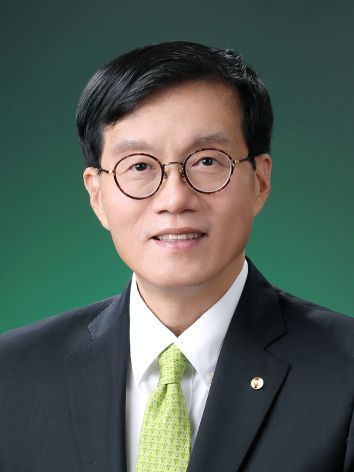
The regional proportional selection system is a system where universities voluntarily select most of their admission quotas based on the proportion of the regional school-age population, allowing them to autonomously choose selection criteria and methods.
Currently, some universities, including Seoul National University, operate similar systems such as regional balanced admissions, but the regional proportional selection system expands this to most of the admission quotas.
Governor Lee emphasized, "Among students admitted to Seoul National University, the proportion of those from Seoul (32%) is twice the proportion of the school-age population in Seoul (16%), and especially in the three Gangnam districts, it reaches three times (12% vs. 4%). Promoting diversity rather than having homogeneous students concentrated as now is better for alleviating wealth inheritance and for selecting students based on ability."
He explained, "The academic performance of students admitted through the current regional balanced admissions is not at all inferior to that of other students," and added, "The regional proportional selection system would not pose problems even from the perspective of excellence."
He also said, "If professors at Seoul National University, Yonsei University, and Korea University make a decision, this proposal could create a significant ripple effect and serve as a starting point to break away from the bad balance, even without changes to government policies or legislation," adding, "The government only needs to support this and grant more autonomy without changing the law."
Governor Lee concluded, "We no longer have the luxury to wait for a favorable time to push for restructuring; we are at a point where we must endure pain and implement structural reforms," and said, "I hope that reforming the entrance exam system will be the starting point for change so that our children can live a better tomorrow than today."
© The Asia Business Daily(www.asiae.co.kr). All rights reserved.
![From Bar Hostess to Organ Seller to High Society... The Grotesque Con of a "Human Counterfeit" [Slate]](https://cwcontent.asiae.co.kr/asiaresize/183/2026021902243444107_1771435474.jpg)

















