Texas Manufacturing Outlook Survey
"Gradual Increase in Sales of High-Price Protein Alternative Sausages"
Recently, an analysis has emerged suggesting that the increase in sausage sales in the United States may be a signal of an economic slowdown.
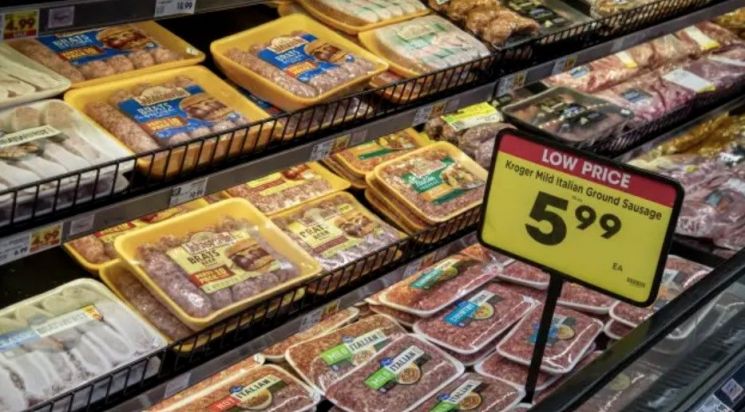
On the 26th (local time), the Federal Reserve Bank of Dallas released the results of the 'Texas Manufacturing Outlook Survey,' which surveyed executives from 125 manufacturers in Texas between the 13th and 21st. Citing food industry insiders, it reported that as the economy slows, sales of sausages for dinner are growing moderately.
Respondents in the Dallas Fed survey stated, "The sausage sector tends to grow when the economy weakens," adding, "Sausages are a good alternative to high-priced proteins and can increase consumers' food budgets."
Due to accumulated inflation reducing purchasing power, consumers are turning their attention to sausages, which are processed meat products relatively cheaper than fresh meat. Although inflation dropped to 2.9% last month, falling below 3% for the first time in 3 years and 4 months and moving toward the central bank's target of 2%, prices for groceries and various living expenses have already risen significantly compared to several years ago.
CNBC reported, "Consumers without concerns tend to choose generally more expensive proteins like steak or chicken," while "price-sensitive consumers will look for sausages or lower-cost alternatives."
The food industry has already detected signs of slowing consumer spending, raising concerns about an economic downturn. McDonald's announced that due to consumers cutting back on dining out amid high inflation, its global same-store sales in the second quarter fell 1% year-over-year to $6.49 billion, marking the first decline in four years since 2020. This is a result of rising raw material and labor costs pushing prices up, and the depletion of excess savings accumulated during the COVID-19 pandemic, reducing consumers' spending capacity.
Americans are tightening their belts by cutting back on food expenses amid sustained high prices. According to the U.S. Department of Agriculture, last year, U.S. household grocery spending decreased by an average of 3.1% compared to the previous year.
Another respondent from the Texas food industry in the Dallas Fed survey stated, "We are preparing for a recession."
CNBC analyzed, "Although annual inflation has fallen close to levels considered healthy by economic policymakers, prices overall have risen compared to several years ago," diagnosing that "this has left ordinary Americans feeling bitter about the national economic situation."
© The Asia Business Daily(www.asiae.co.kr). All rights reserved.

















