Announcement of New Related Regulations
Protectionism Claims Strengthen in Canadian Cabinet
Canada is set to impose new tariffs on Chinese electric vehicles, aluminum, and steel, Bloomberg reported on the 26th (local time).
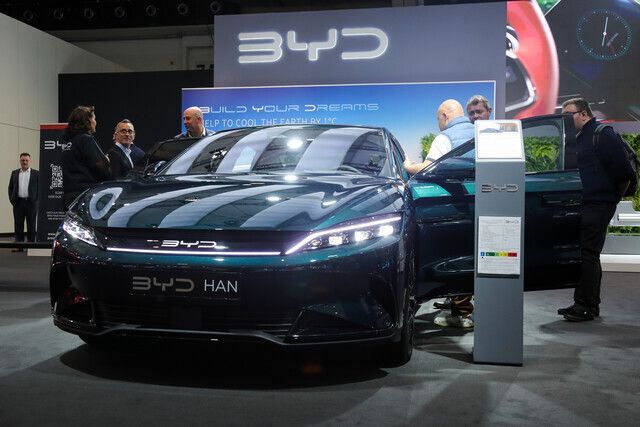 At the 100th Brussels Motor Show press preview, people are examining a Chinese BYD electric car.
 [Photo by Xinhua=Yonhap News]
Bloomberg, citing a source familiar with the matter, stated that a 100% tariff will be imposed on electric vehicles and a 25% tariff on steel and aluminum.
Canada is an export-driven economy heavily reliant on trade with the United States, having exported most of its compact car production to the U.S. last year. Until now, Canada has closely monitored the Biden administration's moves to impose high tariff barriers on Chinese electric vehicles, batteries, solar cells, steel, and other products.
With Prime Minister Justin Trudeau expected to announce the details soon, Canada’s move is interpreted as an effort to align with Western allies such as the U.S. and the European Union (EU), which have announced additional tariffs on Chinese electric vehicles.
Finance Minister Chrystia Freeland warned in June that China’s state-led automotive industry policies have created unfair competition for domestic companies, signaling forthcoming tariff measures.
According to Statistics Canada, imports of Chinese electric vehicles surged from 100 million Canadian dollars (approximately 98.2 billion KRW) in 2022 to 2.2 billion Canadian dollars (approximately 2.16 trillion KRW) last year.
The EU has decided to impose tariffs of up to 46.3% on electric vehicles produced in China starting around November. The U.S. has also announced plans to raise tariffs on Chinese electric vehicles from 25% to 100%.
Finance Minister Chrystia Freeland, while signaling the tariff measures, also suggested that tariff negotiations could expand beyond electric vehicles to other sectors after July.
© The Asia Business Daily(www.asiae.co.kr). All rights reserved.
![Clutching a Stolen Dior Bag, Saying "I Hate Being Poor but Real"... The Grotesque Con of a "Human Knockoff" [Slate]](https://cwcontent.asiae.co.kr/asiaresize/183/2026021902243444107_1771435474.jpg)
















