Posted a long message on SNS to inform about the current emergency room situation
Exposed emergency room cycling and the resurgence of COVID-19
"I work alone at the Regional Emergency Center. This is a regional center in the heart of Seoul that treats about sixty patients a day. And during each duty (on-call shift), I am the only doctor."
Professor Namgung In, an emergency medicine specialist at Ewha Womans University Mokdong Hospital, well known as a doctor and writer, revealed through a lengthy post on his Facebook on the 23rd that "my current work symbolizes the collapse of the emergency medical system." He added, "The current medical system is a ticking time bomb, and my desperate efforts to hold it back only prove that ticking bomb exists."
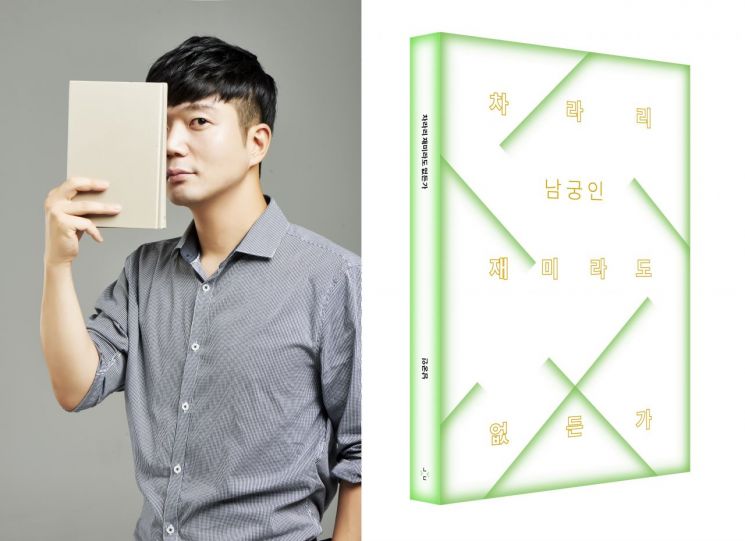
Professor Namgung told Yonhap News, "All the residents have left, so there is no one," and "Among the specialists, eight remain, but one of them is an elderly professor who cannot take night shifts," describing the hospital situation. The Regional Emergency Medical Center is a medical institution designated by the government among tertiary general hospitals or general hospitals with more than 300 beds for treating severe emergency patients. Since the medical vacancy crisis that began in February, severe patients are effectively being treated alone at night.
He also shared a recent case of 'emergency room ping-pong' he witnessed. Professor Namgung said, "Not long ago, there was a traffic accident in the middle of Seoul at midnight, and a young patient's limbs were severely damaged, with blood pressure dropping. It was a severe trauma, and additional injuries were likely to be found upon examination." At first, he refused treatment. He continued, "An hour later, I was told that all hospitals in Seoul and Gyeonggi Province had refused the patient, so I accepted and saved him. A professor working in the control room personally called and said, 'If you don't want this case to be reported in the media tomorrow, please accept and save the patient.' Currently, in our country, if limbs are severely damaged, there is nowhere to treat them."
Professor Namgung also expressed concerns about the resurgence of COVID-19. He said, "COVID-19 is still a serious illness, but no one cares or pays attention to hospitalizing those patients anymore. Isolation guidelines have disappeared, and there is no reimbursement (for medical services)." He emphasized, "Is it acceptable to simply admit COVID-19 patients next to other patients? Common sense says no. Isolation rooms are still needed as before." He also lamented, "Half of those tested are positive for COVID-19, but isolation rooms remain insufficient, critical patients cannot be sent home, and other hospitals refuse to accept them."
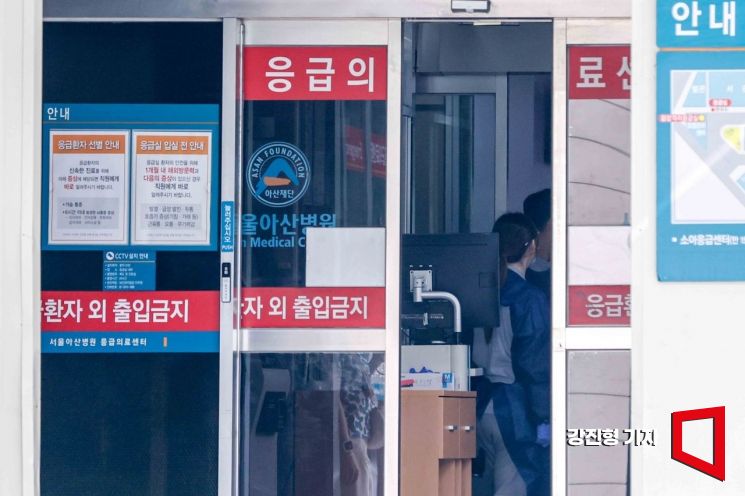 On the 4th of last month, when professors at Seoul Asan Medical Center began reducing medical services, medical staff were busy moving around in the emergency room of Seoul Asan Medical Center in Songpa-gu, Seoul. Photo by Jinhyung Kang aymsdream@
He also revealed other difficulties he faces in the emergency room. Professor Namgung said, "I admitted an elderly patient with poorly controlled blood sugar who had cognitive decline, but since the levels were not bad, hospitalization was unnecessary." He added, "When I told the guardian that hospitalization was not necessary and they could take the patient home, the guardian opened their phone right in front of me and reported to the police, saying 'The doctor is kicking the patient out of the hospital.'" He continued, "Have you ever experienced someone reporting you to the police right in front of you? No matter how irrational the behavior, it is extremely humiliating." He confessed, "While the emergency room was overwhelmed, the police came, listened to the guardian's complaint, and investigated me. I really could not work calmly."
Professor Namgung also explained, "The higher the medical institution, the more staff leave, causing emergency rooms to close." He said, "Then patients flood other hospitals, and those hospitals also close." He added, "Since a few days ago, our hospital also had a night shift vacancy. If I alone come in additionally, the emergency room can operate, so I volunteered for extra work." He said, "Yesterday (the 22nd) was not on the duty roster, but I came to work, and as soon as I arrived, I saved a critically ill patient who barely survived a fire in Bucheon. And today, I have to stay up all night again."
Professor Namgung also said his health has deteriorated due to excessive workload. He said, "I am in my early forties with 11 years of specialist experience. I endure this work thanks to my experience and stamina," but added, "There is not even a minute to rest during work, and briefly eating at the staff cafeteria at night is a luxury." He continued, "Earlier this year, I had a herniated disc, and recently my right eye vision has worsened and my right arm feels numb." He said, "I thought I couldn't endure this for even a month, but now (the medical vacancy) has lasted over six months. This collapse is confirmed. There is no way out." Finally, he concluded, "Emergency medicine doctors who voluntarily take on this work now are like a joke," and "Ambulances circle endlessly beyond regions, and medical staff burnout has become routine. Tonight, I will be alone again at the regional center."
© The Asia Business Daily(www.asiae.co.kr). All rights reserved.

![Clutching a Stolen Dior Bag, Saying "I Hate Being Poor but Real"... The Grotesque Con of a "Human Knockoff" [Slate]](https://cwcontent.asiae.co.kr/asiaresize/183/2026021902243444107_1771435474.jpg)
















